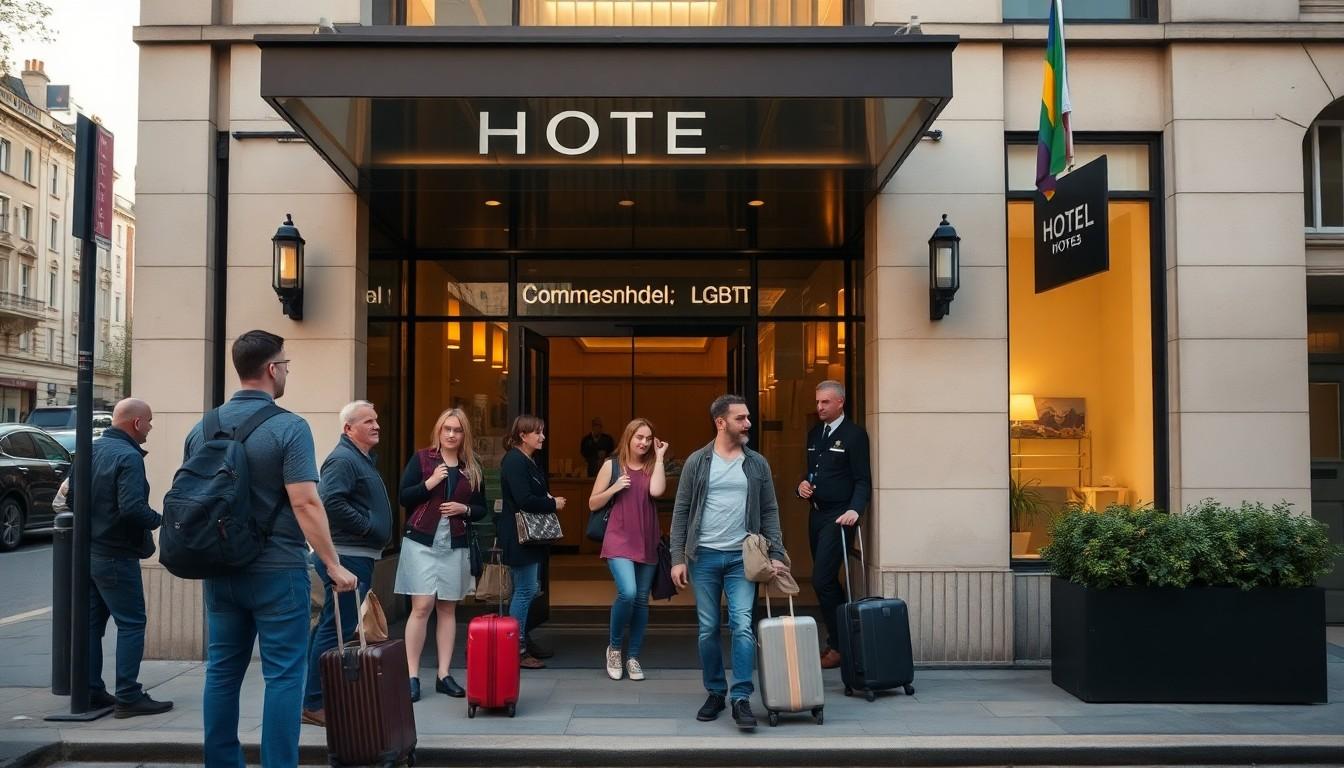
LGBTQ+ travellers in Britain are weighing freedom against personal safety, with new Booking.com research showing that only around one in three feels able to be fully out on holiday. The findings highlight the quiet calculations behind travel, from scanning a restaurant terrace to choosing a destination, while also pointing to practical signs of progress.
Essential Takeaways
- Only 34 per cent feel openly LGBTQ+ abroad: That compares with 76 per cent who are out to close friends.
- Safety shapes decisions: More than a third would hide their identity to visit a dream destination, while 46 per cent check their surroundings before showing affection.
- Trans travellers face particular strain: They were the only group in the research to say travel fears have worsened in recent years.
- Positive experiences still matter: Three quarters reported at least one affirming moment, including correct pronouns, Pride flags or gender-neutral facilities.
- Hospitality can improve: Booking.com's Travel Proud programme offers free inclusivity training for accommodation providers.
Why LGBTQ+ travellers are still editing themselves abroad
A holiday is supposed to loosen the rules. Yet for many LGBTQ+ travellers, the first question isn't where to find the best food or the prettiest view. It's whether holding a partner's hand will attract attention.
Booking.com's research, reported by Attitude, found that just 34 per cent of LGBTQ+ people in Britain say they're out when travelling, despite 76 per cent being open with close friends. That gap feels significant because it shows how quickly familiar confidence can give way to caution in an unfamiliar setting.
The survey included more than 1,000 LGBTQ+ travellers in the UK. Booking.com also found that 36 per cent would conceal their identity if doing so meant reaching a bucket-list destination. In other words, the dream trip can still come with a private compromise. According to Booking.com, similar concerns are visible internationally, where many LGBTQ+ travellers also make decisions around visibility and safety.
The quiet calculations behind a “relaxed” trip
Travel anxiety doesn't always arrive as a dramatic incident. Sometimes it's a quick scan of a hotel lobby, a pause before using a partner's name or a decision to keep affection private. Nearly half of respondents said they look around before showing any sign of queer affection, while 37 per cent said they travel more cautiously than they did a few years ago.
That caution can affect the whole shape of a break. Travellers may research neighbourhoods more closely, select accommodation with inclusive reviews or avoid places where local attitudes feel uncertain. Booking.com's Travel Proud material frames this as a shared responsibility for the industry, rather than something individual travellers should have to solve alone.
The pattern also echoes research from Australia, where Booking.com found that many LGBTQ+ travellers conceal their identity overseas. It suggests this isn't simply a British concern, but part of a broader tension between the promise of unrestricted travel and the reality of judging each new environment.
Trans travellers face an especially difficult journey
The research identifies trans travellers as particularly affected by travel anxiety. They were the only group surveyed to say their fears had become worse in recent years, a finding that gives extra weight to questions about documentation, public facilities and the possibility of confrontation.
That concern comes amid continuing debate over trans rights in Britain. A recent Supreme Court ruling on the meaning of “woman” under the Equality Act, followed by updated guidance on single-sex spaces, has intensified uncertainty for some trans people. A travel advisory issued by the Trans Exile Network and partner organisations also warned that the wider climate could affect people considering a move to the UK.
For travellers, these issues aren't abstract. They can influence whether someone books a shared spa, uses an airport toilet or feels comfortable explaining a passport detail. Good travel advice therefore needs to cover more than destinations and prices. It should include how accommodation handles names, identification, accessibility and complaints.
There are encouraging signs, too
The picture isn't entirely bleak. Three quarters of respondents reported at least one positive LGBTQ+ experience while travelling, and 47 per cent believe acceptance has improved in recent years. Small signals often make the biggest difference: staff using the right pronouns, a visible Pride flag, a gender-neutral bathroom or an LGBTQ+ employee who helps a guest feel understood.
These details may look modest on a booking page, but they can change the emotional temperature of an entire stay. A warm welcome doesn't erase wider worries, yet it can offer a welcome exhale after a long journey.
Booking.com's Travel Proud programme aims to support that shift by providing free inclusivity training for accommodation providers. The wider Global Sustainable Tourism Council discussion around the programme also reflects a growing expectation that responsible tourism should include LGBTQ+ inclusion, not treat it as a decorative extra.
How travellers and hotels can make holidays feel safer
For travellers, a little preparation can bring reassurance without turning a holiday into a research project. Check recent guest reviews for comments about staff behaviour, look for clear equality policies and contact the property directly with practical questions before booking. If you're travelling with medication, identity documents or specific accessibility needs, keep essential information easy to reach.
It's also worth separating official guidance from online guesswork. Government travel advice, reputable LGBTQ+ organisations and local community groups can offer a more useful picture than a single alarming post. And if a destination feels wrong, changing plans isn't an overreaction. It's sensible travel.
Accommodation providers have an equally important role. Clear policies, respectful language and properly trained staff cost far less than making guests feel they need to disappear. The best welcome is often quiet and ordinary: a booking handled correctly, a question answered without fuss and a couple allowed to enjoy their holiday like everyone else.
Feeling safe shouldn't be a luxury add-on to seeing the world.
Source Reference Map
Story idea inspired by: [1]
Sources by paragraph:
- Paragraph 1: [2], [6]
- Paragraph 2: [2], [3]
- Paragraph 3: [2], [6]
- Paragraph 4: [2], [6]
- Paragraph 5: [3], [6]
- Paragraph 6: [5], [6]
- Paragraph 7: [2], [4]
- Paragraph 8: [4], [7]
- Paragraph 9: [2], [3]
- Paragraph 10: [2], [7]
- Paragraph 11: [3], [6]
- Paragraph 12: [4], [7]
- Paragraph 13: [2], [3]
- Paragraph 14: [2], [3]
- Paragraph 15: [4], [7]