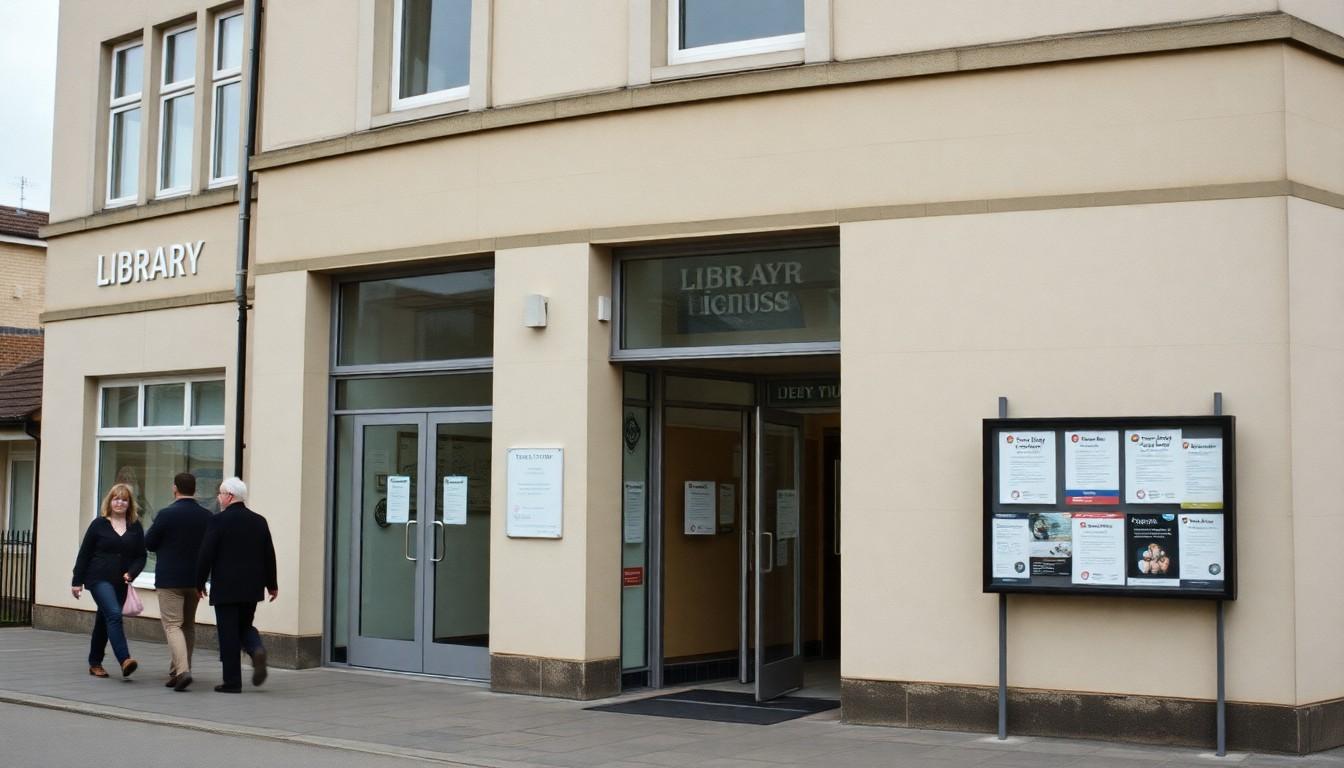
Residents are questioning how Staffordshire libraries can host councillor surgeries while Pride displays remain paused. The dispute has put the county's library display policy under scrutiny, with campaigners arguing that LGBTQ+ visibility belongs in welcoming public spaces, while the council says displays should focus on books, learning and local services.
Essential Takeaways
- Display policy: Staffordshire County Council says library displays are being reviewed and should support core services, reading and learning.
- Political activity questioned: Councillor Alec Sandiford says surgeries in libraries appear inconsistent with restrictions on Pride displays.
- Public response: More than 5,100 people have signed a petition opposing limits on LGBTQ+ and other awareness displays.
- Council position: Officials say libraries remain open to everyone and councillors can meet residents there, provided materials aren't politically branded.
- Wider concern: The row has reignited debate about whether community recognition is educational, political or both.
Why councillor surgeries have become part of the dispute
At first glance, this might look like a disagreement about posters and display boards. But the argument has quickly become much bigger: who gets to use a public library's space, and what counts as political activity?
Stafford Borough Council member Alec Sandiford has challenged the county administration over councillor surgeries held in libraries. He argues that if Pride displays are considered political, residents may reasonably ask why elected representatives can meet constituents in the same buildings.
The point has a certain uncomfortable neatness. A library can feel quiet and neutral, with its shelves, study tables and soft public-service atmosphere, but it's also a civic space where people seek help, information and connection.
What Staffordshire County Council says about displays
The council says the review concerns library display space rather than access to the buildings themselves. During the review, displays that don't promote the core library offer or wider council services have been paused.
Councillor Hayley Coles, deputy leader and cabinet member for communities and culture, said Staffordshire libraries are intended to provide books, digital resources, advice, activities and council services. The stated aim is a consistent approach focused on reading, learning and practical support.
That position reflects a familiar public-sector balancing act. Libraries need to feel welcoming to a broad audience, but decisions about which displays appear on their walls can still carry a strong message, especially when one community's visibility is affected more visibly than another's.
Why Pride campaigners say neutrality isn't neutral
Campaigners and supporters of the petition say Pride, LGBTQ+ History Month and similar displays aren't party-political material. They describe them instead as opportunities for education, representation and community engagement.
The distinction matters. A display about LGBTQ+ history, local people or available support services isn't the same as an election leaflet or a campaign poster, although both may involve public debate. Removing the former in the name of neutrality can leave residents wondering whose experiences are considered suitable for a public building.
The issue has also prompted questions about consistency. Sandiford has asked whether displays linked to Carers Week, Armed Forces Week, Remembrance and other awareness events could face the same treatment. That wider comparison is likely to keep the debate alive, because a rule feels fairer when people can clearly see how it applies across the board.
What the petition says about local feeling
More than 5,100 people have signed an online petition calling for the policy to be reversed. It says libraries and other council services should be able to recognise LGBTQ+ communities and other protected groups during awareness and heritage months.
That response suggests the row has travelled well beyond a single branch or noticeboard. For many residents, the display itself is a small but visible sign that a public building acknowledges them. A blank wall may seem insignificant to one visitor, yet feel notably cold or excluding to another.
Stone Library has also featured in reporting about Pride material being removed, adding a tangible local detail to what might otherwise sound like a technical policy review. These disputes often become emotional precisely because the objects involved are so ordinary: a poster, a book display, a handful of flags.
The practical question for library users
For residents, the most useful thing to watch is how the final policy is written. Clear criteria should explain what counts as a library service, an educational display, a community notice or political promotion, rather than relying on broad labels.
Anyone concerned about the change can check Staffordshire County Council updates, contact their local library or councillor, and ask whether the same rules apply to all awareness campaigns. It may also be worth distinguishing between displays, room bookings and councillor surgeries, since the council says these are governed separately.
Libraries work best when their rules are easy to understand and their spaces feel open without becoming chaotic. The challenge for Staffordshire is showing that neutrality means consistency, not simply removing anything likely to provoke disagreement.
A public library can be calm and welcoming without being silent about the communities it serves.
Source Reference Map
Story idea inspired by: [1]
Sources by paragraph:
- Paragraph 1: [4], [6]
- Paragraph 2: [5], [6]
- Paragraph 3: [2], [4]
- Paragraph 4: [3], [7]
- Paragraph 5: [2], [4]
- Paragraph 6: [3], [7]
- Paragraph 7: [5], [6]
- Paragraph 8: [4], [5]
- Paragraph 9: [2], [6]
- Paragraph 10: [3], [7]
- Paragraph 11: [2], [4]
- Paragraph 12: [5], [6]
- Paragraph 13: [2], [3]
- Paragraph 14: [4], [7]
- Paragraph 15: [2], [6]
- Paragraph 16: [3], [5]
- Paragraph 17: [4], [7]
- Paragraph 18: [2], [3]