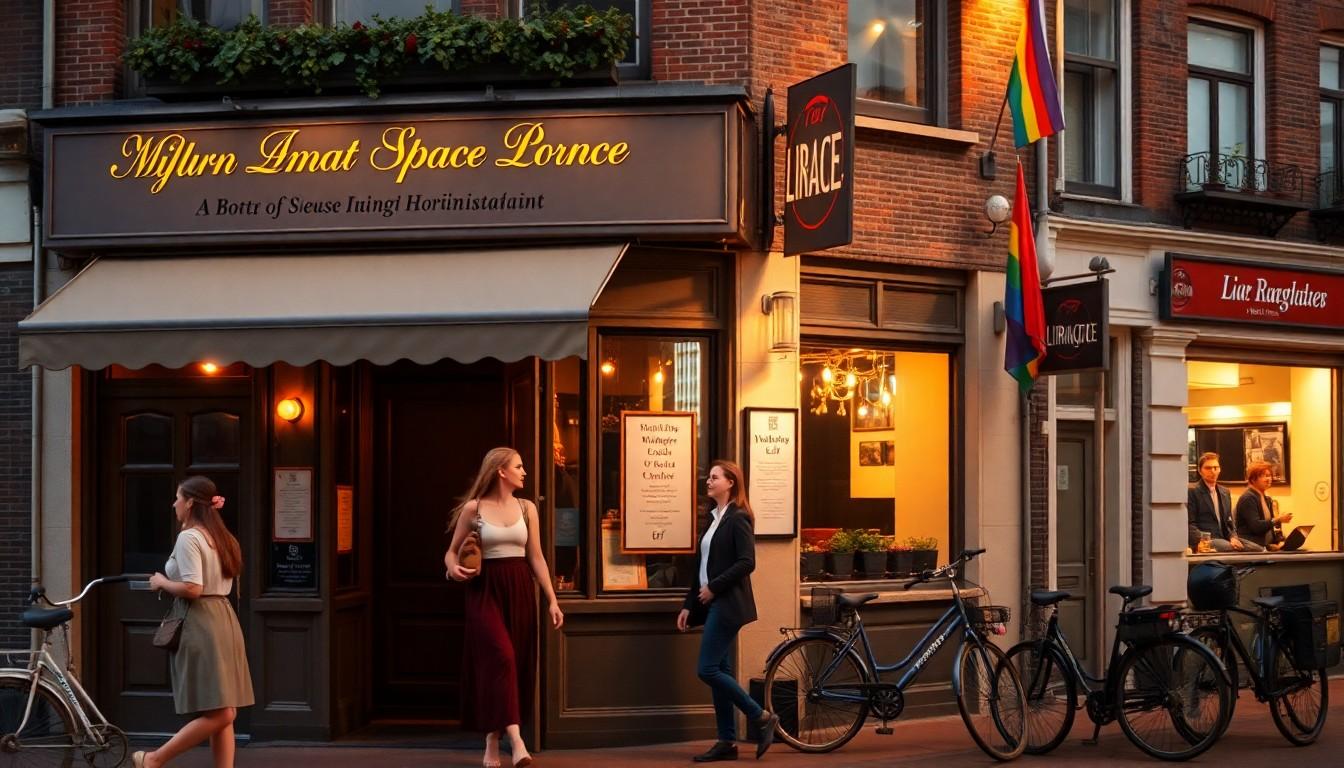
Visitors are rediscovering the story of Güner Kuban, the restless entrepreneur behind Homolulu, an Amsterdam club that welcomed lesbian women while making room for gay, bisexual and straight guests too. Opened in 1975, the Kerkstraat venue became a bistro, piano bar and nightclub where people could relax, connect and be themselves.
Homolulu offered more than a night out
Before “safe space” became everyday language, Homolulu was already putting the idea into practice. The Amsterdam venue created a warm, lively refuge for lesbian women, while keeping its doors open to a much wider crowd.
According to Het Parool, politicians, artists and performers passed through its rooms. Yet the club's real appeal wasn't simply visibility or glamour. It was the feeling that guests could arrive without having to explain themselves, which remains a powerful promise for any nightlife venue.
- Opened in 1975: Homolulu began in Amsterdam's Kerkstraat.
- Welcoming atmosphere: Lesbian women were central to its community, but gay, bisexual and straight visitors were welcome too.
- More than a club: The venue combined a bistro, piano bar and nightclub.
- Kuban's wider legacy: She later wrote a novel and opened another club in Miami.
- A stage revival: Orkater is preparing a theatre production about Kuban and Homolulu for April 2027.
Who was Güner Kuban?
Kuban's life was international long before she settled in Amsterdam. She was born in Athens, spent part of her childhood in Istanbul and later lived in Switzerland, Paris and West Germany. Sources including Ileri Gazetesi and Odatv also highlight her Circassian heritage and family connection to Çerkes Ethem, an Ottoman-era military figure.
That background helps explain the unusual breadth of her story. Kuban wasn't shaped by one city or a single cultural identity, and Homolulu reflected that fluidity. It felt less like a conventional community hall and more like a cosmopolitan meeting point with music, conversation and plenty of personality.
Her sexuality was clear to her from a young age, according to published accounts of her life. But she didn't necessarily frame it as a political campaign. Her approach was more personal and self-directed, a distinction that makes her story feel strikingly modern.
A businesswoman with plenty of energy
Homolulu began with Kuban and her partner Tonny Meerhof, whom she met in West Germany. Their relationship was central to the club's story, but the project also demanded commercial instinct, stamina and a willingness to take risks.
A longtime friend described Kuban in accounts reported by Het Parool as energetic, forceful and convinced of what she wanted. That combination can be difficult in ordinary business, let alone in nightlife, where success depends on atmosphere as much as spreadsheets. In Homolulu's case, her strong personality appears to have been part of the venue's electricity.
Meerhof died of leukaemia in 1980. Two years later, Kuban published the autobiographical novel De kleur van liefde, which addressed the taboo surrounding homosexuality in Turkey. Turkish media sources also revisit her writing, public image and unconventional personal history.
From Amsterdam to Miami, her story kept moving
Homolulu closed in 1997, but Kuban didn't settle into a quiet retirement. She moved to Miami and opened another club, Honolulu, extending a pattern that had already defined her life: whenever one chapter ended, she appeared ready to begin another.
Reports about Kuban also mention her interest in the supernatural and her belief that she came from another planet. Whether taken literally or as part of her flamboyant self-mythology, those details add colour to a life that was never likely to fit neatly into a standard biography.
This is also why her story travels well beyond Amsterdam's nightlife history. It combines migration, queer culture, romance, entrepreneurship and performance. There are plenty of clubs in old photographs, but fewer whose founder remains such a vivid character in her own right.
Why Homolulu still matters now
The forthcoming Orkater production, scheduled to premiere in April 2027, will bring Kuban and Meerhof's relationship back into public view. Director Ada Ozdogan has described Kuban's drive and continuing creative ambitions as a source of fascination.
The timing feels deliberate. As Ozdogan noted in comments reported by Het Parool, renewed pressure on LGBTQ+ acceptance makes stories about welcoming spaces especially relevant. Homolulu wasn't presented as a manifesto, but its everyday openness carried a quiet political force.
There is something reassuring in that legacy. Sometimes a safe space begins not with a slogan, but with a door, a piano, a drink and someone determined to make room for others.
Homolulu's story shows how one welcoming club can outlive its walls.
Source Reference Map
Story idea inspired by: [1]
Sources by paragraph:
- Paragraph 1: [3], [6]
- Paragraph 2: [2], [4]
- Paragraph 3: [3], [7]
- Paragraph 4: [5], [6]
- Paragraph 5: [2], [7]
- Paragraph 6: [3], [5]
- Paragraph 7: [6], [7]
- Paragraph 8: [2], [4]
- Paragraph 9: [5], [6]
- Paragraph 10: [3], [7]
- Paragraph 11: [2], [6]
- Paragraph 12: [4], [7]
- Paragraph 13: [3], [5]
- Paragraph 14: [2], [7]