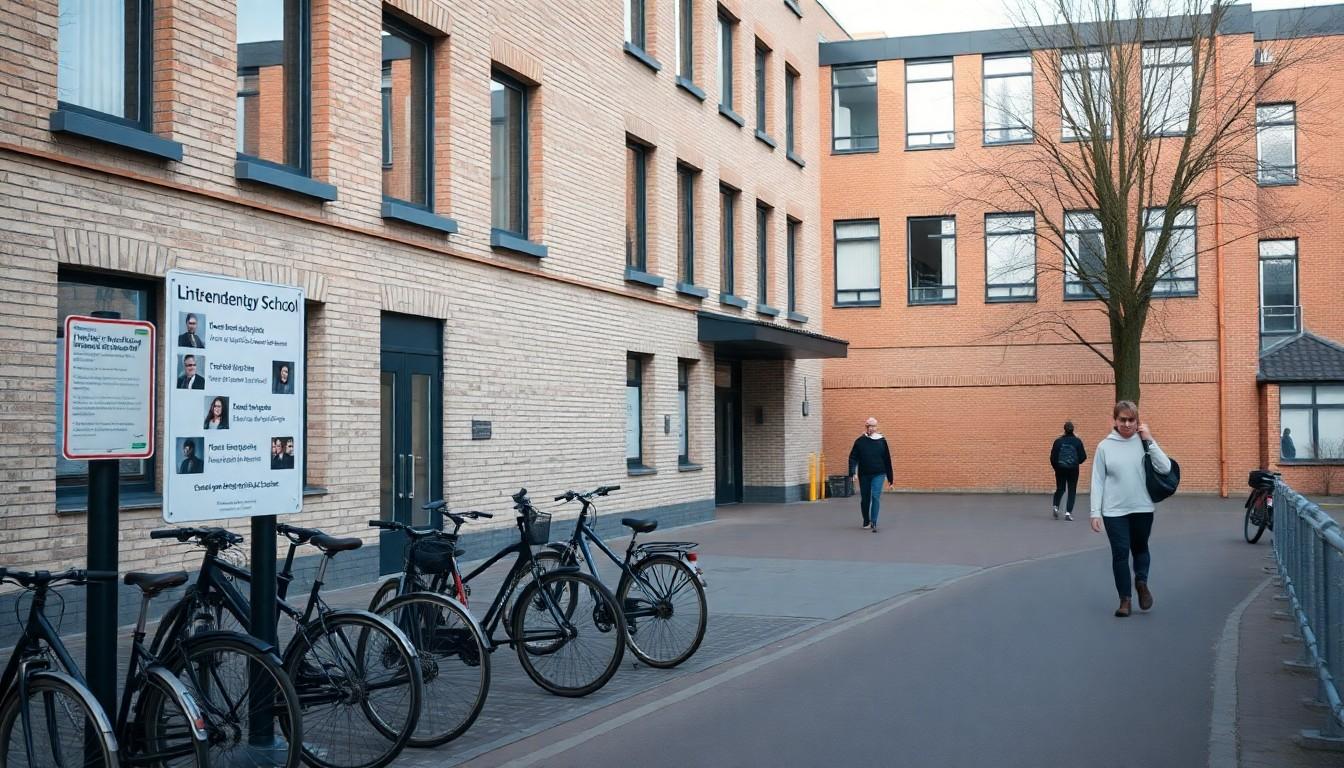
Dutch politicians are warning about a sharp fall in homosexuality acceptance among teenagers, with Amsterdam showing striking differences between schools. The debate is widening beyond percentages, asking what is driving the shift and whether schools, councils and national authorities are acting quickly enough to protect LGBT pupils from bullying and exclusion.
Essential Takeaways
- Acceptance is falling: National research found fewer young people expressing positive attitudes towards homosexuality.
- Amsterdam is sharply divided: Reported school-level figures range from 89 per cent acceptance at one school to just 9 per cent at another.
- Some groups face greater risk: Boys, vocational-track pupils and teenagers from migrant backgrounds appear less accepting on average.
- Schools need more than slogans: Politicians and campaigners are calling for earlier, practical action against bullying and discrimination.
- The causes are contested: Social media algorithms, online misogynist spaces, far-right ideas, religion and wider feelings of exclusion have all entered the discussion.
A worrying change is showing up in classrooms
The most troubling detail isn't simply that acceptance has declined. It's how unevenly that decline appears to be distributed. In Amsterdam, figures reported by The Telegraph show a gap between schools where homosexuality is accepted by the vast majority of pupils and others where the figure is only a small minority.
That kind of contrast changes the conversation. It suggests that a teenager's experience may depend heavily on their school, neighbourhood, peer group and online world, rather than on a single city-wide trend. For an LGBT pupil, the difference can feel less like a statistic and more like whether the corridor feels safe.
NRC reported that schools are making efforts, but that increasingly fewer young people describe homosexuality in positive or ordinary terms. The message is uncomfortable: good intentions may be present, yet the current approach isn't consistently changing attitudes.
Why the numbers are so different
Amsterdam's reported results point to a patchwork problem. Acceptance was much higher in some schools than in others, while lower levels were particularly associated with schools in outer districts. Boys, vocational pupils and young people with a non-Dutch background were identified as groups requiring closer attention.
Those categories shouldn't be treated as explanations in themselves. They are indicators of where support and careful research may be needed, not labels for individual teenagers. Young people are shaped by family life, friendship groups, religious communities, local pressures and the content served to them online.
The Netherlands has traditionally been seen as relatively progressive on LGBT rights, but that reputation can make setbacks easy to underestimate. As NL Times reported, the government launched further research into falling LGBTQIA+ acceptance among Dutch youth, reflecting concern that the trend has several overlapping causes.
Social media is part of the picture, not the whole story
Amsterdam councillors have pointed to algorithms, online "manosphere" communities and far-right ideas as possible influences. These spaces can reward outrage, mockery and rigid ideas about gender, while recommendation systems may keep serving increasingly extreme material once a young person has shown interest.
But online influence doesn't happen in a vacuum. A teenager who feels lonely, overlooked or uncertain may be especially vulnerable to communities offering simple answers and a clear group identity. That is why wider youth wellbeing matters alongside education about sexuality and gender.
The debate also touches on migration and religion, subjects that require precision rather than sweeping claims. Research cited by NL Times found that young people from migrant backgrounds were, on average, less likely to express a positive attitude towards homosexuality. That finding may help target support, but it shouldn't be used to portray entire communities as uniformly hostile.
Schools need practical tools and confidence
The political criticism is focused on pace. Amsterdam's education alderwoman Esmah Lahlah said there is no room for exclusion, bullying or discrimination, but also acknowledged that existing measures are not enough. Councillors want concrete steps now rather than waiting passively for another set of figures.
That could mean clearer anti-bullying procedures, better staff training, reliable reporting routes and regular lessons that treat LGBT lives as part of everyday society rather than a once-a-year topic. Schools also need to know what happens after a pupil reports abuse. A poster is easy to put up; building trust takes longer.
The sharp variation between schools makes targeted work particularly important. A city-wide campaign may raise awareness, but schools with very low acceptance could need sustained support, involvement from parents and community organisations, and a closer look at what pupils are experiencing both online and offline.
Better monitoring must lead to visible action
The call for improved monitoring has merit. Reliable, current data can show where attitudes are deteriorating and whether particular interventions are working. It can also prevent officials from relying on an overly flattering national image.
Still, monitoring shouldn't become a comfortable substitute for action. NL Times later reported that acceptance of homosexuality had increased in some areas, even as attitudes towards wider LGBTIQA groups showed a decline. That mixed picture is a reminder that progress isn't automatic and that the wording of surveys matters.
For pupils and families, the immediate test is simple: can young people be themselves without being mocked, threatened or isolated? The answer should not depend on which side of Amsterdam they live in, or which school gate they walk through.
A safer school starts with honest data, consistent support and action that pupils can actually feel.
Source Reference Map
Story idea inspired by: [1]
Sources by paragraph:
- Paragraph 1: [3], [4]
- Paragraph 2: [4], [7]
- Paragraph 3: [3], [5]
- Paragraph 4: [4], [7]
- Paragraph 5: [5], [6]
- Paragraph 6: [2], [3]
- Paragraph 7: [5], [7]
- Paragraph 8: [2], [4]
- Paragraph 9: [3], [5]
- Paragraph 10: [4], [7]
- Paragraph 11: [2], [5]
- Paragraph 12: [3], [6]
- Paragraph 13: [5], [6]
- Paragraph 14: [6], [7]