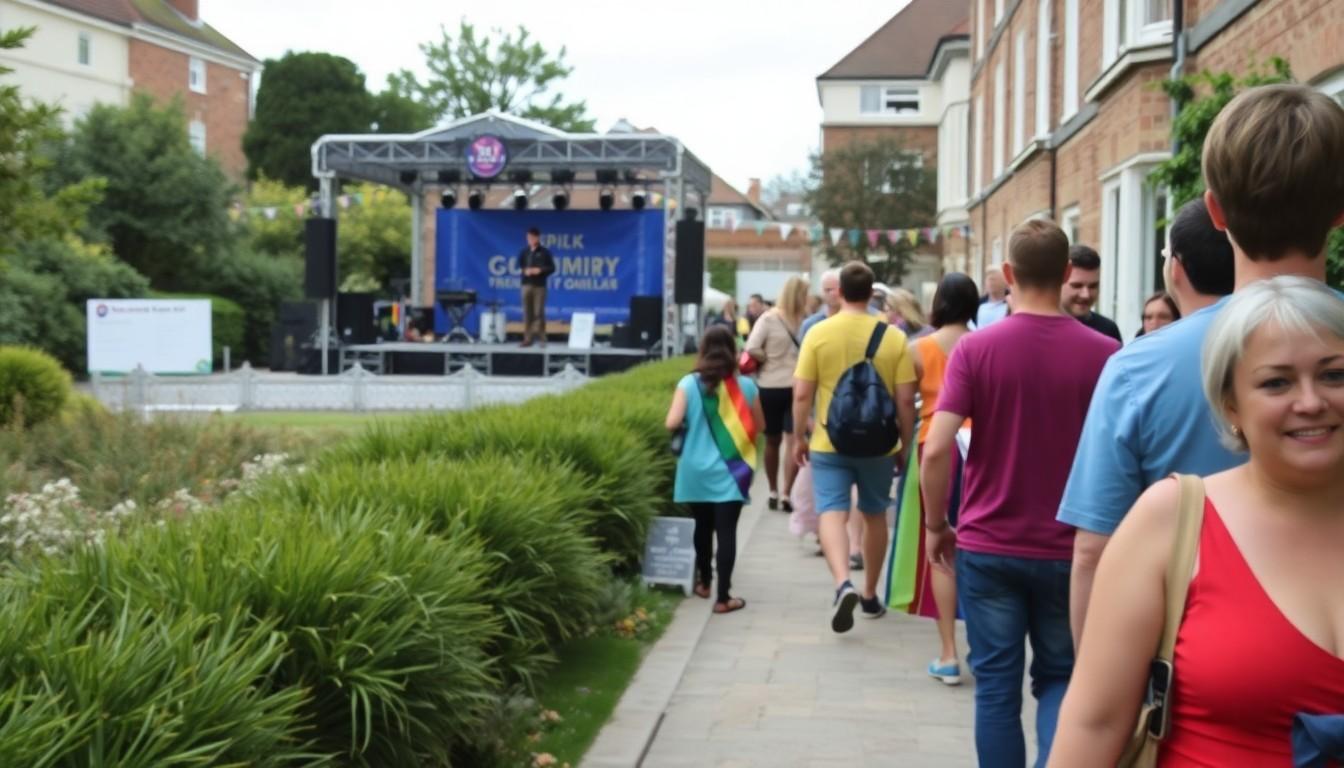
Brighton’s first Dyke Pride drew around 3,000 people to St Ann’s Well Gardens in Hove, turning a modest local gathering into a joyful celebration of lesbian culture, solidarity and belonging. With live entertainment, activism and thoughtful access measures, the free event offered a warm reminder that community-led Pride still matters.
Essential Takeaways
- A remarkable turnout: Attendance far exceeded the organisers’ original target of 500 people.
- Community at the centre: DJs, cabaret, speakers and local groups shaped a lively, welcoming programme.
- Accessibility mattered: A hearing loop, BSL interpreters, open stage access and rest space helped more people take part.
- Grassroots by design: Volunteers ran the free event without corporate sponsorship.
- More may follow: Organisers hope to make Brighton Dyke Pride an annual fixture.
A small target becomes a 3,000-person celebration
The strongest image from Brighton’s first Dyke Pride is the sheer scale of the response. What began with an attendance goal of 500 people grew into a gathering of roughly 3,000 at St Ann’s Well Gardens, with music, cabaret and conversation filling the Hove park.
That turnout suggests there was a real appetite for an event centred specifically on lesbian culture and community. According to The Argus, the day was organised by a small team with volunteer support, giving the celebration a distinctly grassroots feel rather than the polished atmosphere of a major commercial festival.
Joy, belonging and a sense of village
The event’s emotional heart was belonging. Emily Payne, one of the co-founders, told The Argus that joy could feel radical in the current climate, describing the experience of finding herself part of a village after initially feeling uncertain about where she fitted within the community.
That sentiment helps explain why the day resonated beyond its entertainment programme. Alongside DJs and performers, attendees heard from activist speakers and took part in community-focused activities, creating space for both celebration and reflection.
Brighton already has a well-established Pride tradition, while organisations such as Trans Pride Brighton continue to support LGBTQ+ communities across the city. Dyke Pride added another layer, offering a focused space for people who wanted to see lesbian identity and experience placed firmly at the centre.
Accessibility was part of the celebration
A festival can feel welcoming in theory, but the practical details are what make inclusion real. Organisers included a hearing loop, British Sign Language interpreters, unrestricted barrier access to the stage and generous areas where chronically ill attendees could rest.
Jen Benyovits, a co-founder, said the response to those measures had been overwhelming. The emphasis on space, comfort and access also reflected the event’s wider ambition to uplift people who are often pushed to the margins, rather than treating accessibility as an afterthought.
That approach sits naturally alongside the work of Brighton-based community organisations, including Trans Pride Brighton and Brighton Gay Men’s Chorus. Their presence, alongside Brighton Bear Weekend and Worthing Pride, helped underline the idea that Pride events are strongest when local groups support one another.
Solidarity held firm when protesters arrived
A small group of protesters attempted to disrupt the gathering, but left after about an hour. Attendees responded by chanting “LGB WITH THE T!”, turning an uncomfortable interruption into a visible show of solidarity.
It was a reminder that the event wasn’t only about music, colour and a sunny afternoon in the park. For many people, Pride remains both celebration and public statement, particularly when communities feel under pressure.
The support from groups such as Brighton and Hove Pride and Worthing Pride also points to a wider network of local LGBTQ+ events. Each has its own character, but together they create a more connected calendar of community activity across Sussex.
Could Dyke Pride become a Brighton tradition?
Organisers hope to return next year, and the response gives them plenty of encouragement. Edie-Mea McCartney, co-organiser and founder of Dyke Mart Brighton, said the day felt wonderful and that community was at its heart, with new friendships forming throughout the event.
That grassroots spirit may be the key to its future. Running a free gathering without corporate sponsorship is challenging, but it also allows the organisers to shape the day around participation, access and local relationships.
Donations are being accepted to help fund future events. If Brighton Dyke Pride returns, it won't simply be repeating a successful first outing. It will be building on a day that showed how quickly a community can gather when it feels seen.
A joyful first chapter could be the start of a lasting Brighton tradition.
Source Reference Map
Story idea inspired by: [1]
Sources by paragraph:
- Paragraph 1: [2]
- Paragraph 2: [2], [3]
- Paragraph 3: [2]
- Paragraph 4: [2], [4]
- Paragraph 5: [2]
- Paragraph 6: [2], [4], [6]
- Paragraph 7: [2]
- Paragraph 8: [2], [5], [7]
- Paragraph 9: [2]
- Paragraph 10: [2], [3], [7]
- Paragraph 11: [2]
- Paragraph 12: [2], [4]
- Paragraph 13: [2]
- Paragraph 14: [2], [3]
- Paragraph 15: [2]
- Paragraph 16: [2]