LGBTQ+ advocates gathered in Washington for the 2026 LGBTQ Victory Fund National Champagne Brunch, where Kentucky Governor Andy Beshear received an allyship award and delivered a forceful message about protecting trans people, resisting discrimination and winning with principle. His appearance offered a useful snapshot of where the movement, and its political allies, may go next.
Essential Takeaways
- Beshear was honoured for allyship: The Kentucky governor received the Allyship Award at the national brunch.
- His message was blunt: He argued that LGBTQ rights shouldn't be traded away for favourable polling or electoral convenience.
- State politics still matter: Victory Fund leaders stressed that local and state offices often control the policies affecting daily life.
- The event looked ahead: Beshear's appearance fuelled interest in his potential 2028 presidential ambitions, even as he played down the speculation.
- The mood stayed upbeat: Bright clothes, lively conversation and a celebratory setting softened an otherwise tense political backdrop.
Andy Beshear puts principle before political calculation
The most striking message from the brunch was simple: LGBTQ rights shouldn't become a bargaining chip. Speaking to attendees and journalists, Beshear argued that politicians who abandon vulnerable communities for short-term advantage aren't showing real conviction.
That position has particular weight because he leads Kentucky, a state where Donald Trump remains highly popular. Beshear has presented his support for LGBTQ people as part of a broader governing philosophy centred on dignity, welcome and equal treatment, rather than as a narrow campaign strategy. The Advocate reported that his record has helped make him a prominent Democratic voice on LGBTQ issues beyond traditionally liberal states.
His argument is also unusually direct in an era of cautious political language. Rather than describing inclusion as a tactical necessity, he framed discrimination as wrong in itself. For supporters, that's reassuring. For strategists, it's a reminder that voters may respond to conviction when it's connected to real life.
A celebratory brunch with a serious backdrop
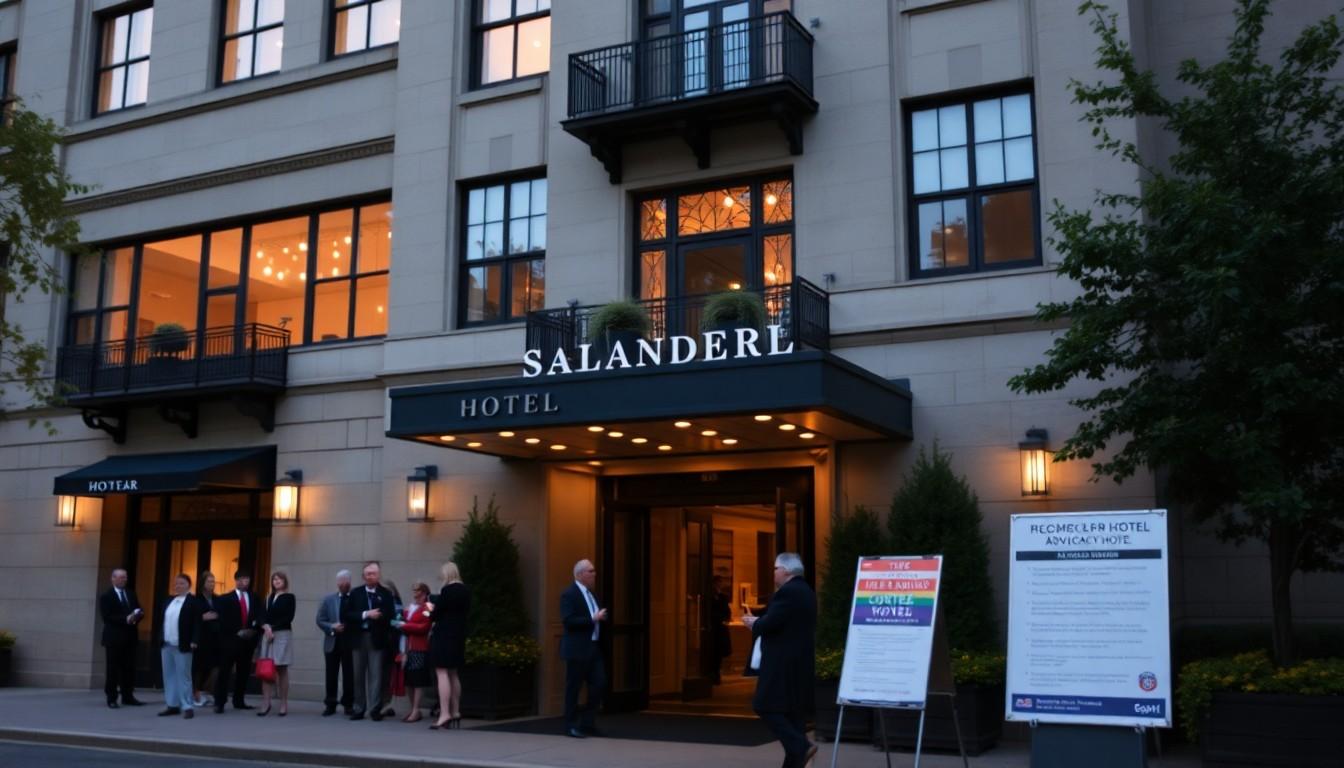
The National Champagne Brunch brought together LGBTQ elected officials, allies and activists at Washington's Salamander Hotel. According to the LGBTQ+ Victory Fund, the annual gathering is designed to celebrate progress while supporting the next generation of LGBTQ political leaders.
The atmosphere was festive, with colourful outfits, floral displays and a menu that included seafood paella and waffles. Yet the warmth in the room contrasted sharply with the national political climate, particularly for transgender Americans facing a growing number of legal and political challenges.
That contrast gave the event its emotional charge. Guests weren't simply celebrating a successful year; they were gathering to reinforce a network under pressure. The result felt less like a formal political dinner and more like a community taking a breath before getting back to work.
Why state and local races remain crucial
National headlines can make Washington feel like the centre of every LGBTQ rights battle, but the brunch repeatedly brought attention back to statehouses and local councils. Victory Fund President Evan Low said the organisation is concentrating on races where lawmakers often make decisions about education, healthcare, public services and civil rights.
That focus is practical. A supportive governor, mayor or state legislator can influence policy quickly, even when federal politics are hostile. Kentucky's recent political battles illustrate the point, with Beshear using executive power and public advocacy to oppose measures he believed would harm LGBTQ young people.
The Kentucky Justice and Public Safety Cabinet has also highlighted wider state-level initiatives and funding decisions that affect vulnerable communities. For voters, the lesson is straightforward: a candidate's position on LGBTQ rights matters at every level, not just during presidential elections.
Faith, family and a wider appeal
Beshear's approach stands out because he often discusses LGBTQ inclusion through the language of faith. He presents religious belief as a reason to protect neighbours and support families, not to exclude people who live or love differently.
That framing could help explain why his message travels beyond the usual Democratic coalition. Eugene Daniels, speaking to the Washington Blade, said Beshear has a talent for turning issues often dismissed as "cultural" into questions about family, safety and everyday responsibility.
It's a smart rhetorical shift. Many voters may not follow legislative details, but they understand what it means for a child to feel safe at school or for a family to be treated with dignity. Beshear's politics work best when those large principles become recognisable human moments.
What Beshear's profile means for 2028
His attendance inevitably prompted questions about a possible 2028 presidential bid. Beshear has repeatedly avoided making the brunch about personal ambition, insisting that the argument for LGBTQ equality should stand regardless of future elections.
Still, the interest is understandable. A Democratic governor with a strong approval rating in a Republican-leaning state offers a different model from the familiar national political playbook. The Advocate noted that his record and public profile have made him a figure of interest among Democrats looking for a coalition-building candidate.
Whether that leads to a presidential campaign remains uncertain. For now, Beshear's importance lies in the example he offers: a politician can defend LGBTQ rights, speak in moral as well as political terms and still compete in difficult territory. That's a message supporters are likely to carry well beyond one brunch.
A lively room can't erase a hostile political climate, but it can remind people that solidarity is still a source of strength.
Source Reference Map
Story idea inspired by: [1]
Sources by paragraph: