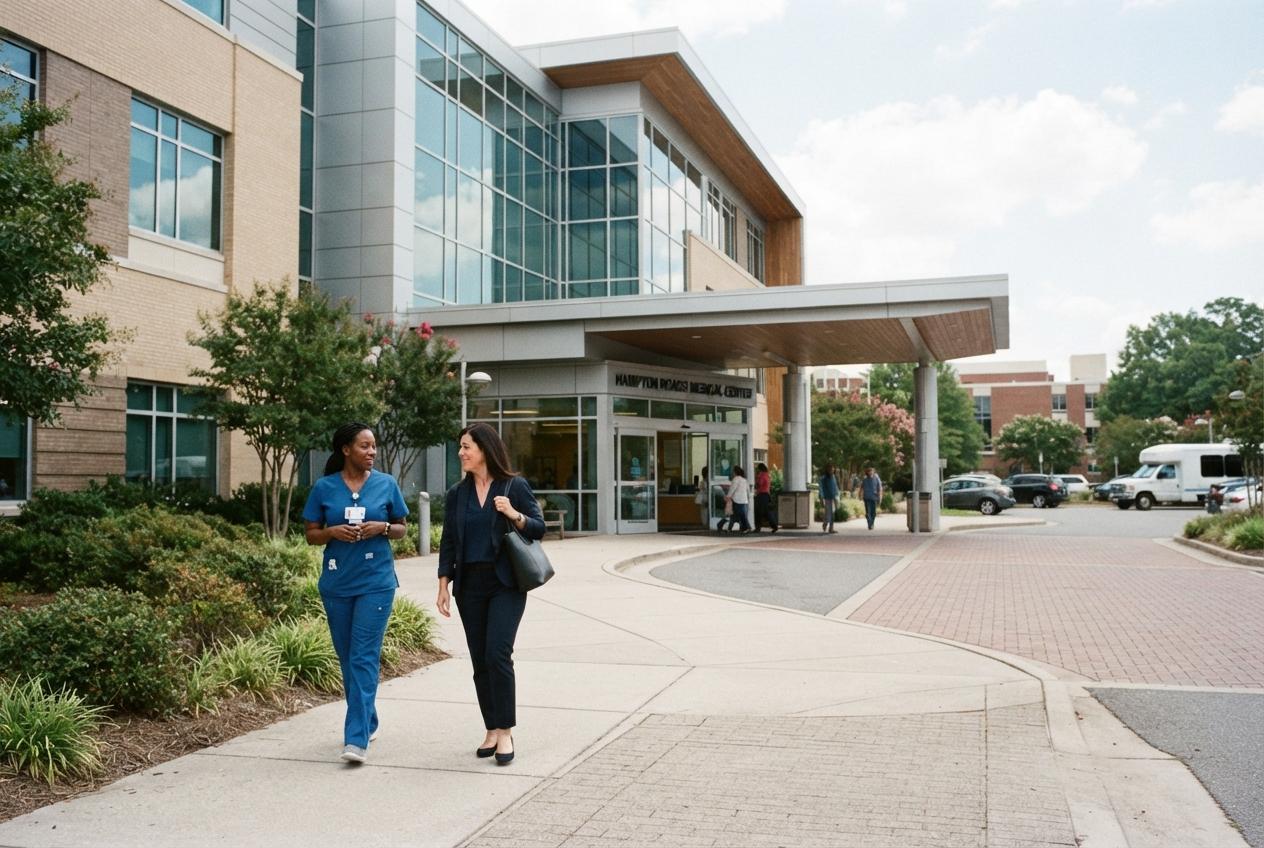
Residents across Hampton Roads are seeing fresh signs of LGBTQ+ inclusion, from Sentara hospitals earning national recognition to a free careers expo at Old Dominion University. The developments matter because they connect healthcare, employment and local business discovery, giving LGBTQ+ people and allies more practical ways to find welcoming services and workplaces.
Essential Takeaways
- Sentara recognised: All 12 Sentara Health hospitals in Virginia and North Carolina received a 2026 high performer designation for LGBTQ+ inclusive care.
- Practical changes: Sentara highlights staff training, non-discrimination policies and more inclusive patient records and communication.
- Careers event: Outwork757's free expo takes place on 16 September at ODU, with employers, public bodies and non-profits attending.
- Wider visibility: The Hampton Roads Greenbook has added a searchable LGBTQ+ category for self-identified businesses and allies.
Sentara puts inclusive care in the spotlight
The strongest signal comes from Sentara's 12 hospitals, which have all received the 2026 high performer designation from the Healthcare Equality Index. The recognition measures areas including patient services, workforce policies and community engagement, according to Sentara's announcement.
That matters beyond a certificate on a wall. Healthcare can feel especially personal when patients are unsure whether staff will understand their identity, use the right language or treat a partner and family member with respect. Sentara says it has strengthened non-discrimination policies, expanded LGBTQ+ cultural competency training and added more inclusive practices to everyday clinical work. [2]
The organisation also points to questions about sexual orientation and gender identity in electronic medical records. Used thoughtfully, that information can help teams communicate more appropriately, although the real test is always how comfortably and respectfully patients experience those systems in practice. [4]
What the recognition means for patients
The designation is designed to assess more than public messaging. It looks at how hospitals support LGBTQ+ people as patients and employees, while also considering whether inclusion is reflected in training and community relationships. That gives the award a useful practical angle for people comparing healthcare providers.
For patients, small details can make a large difference: being asked for a preferred name, seeing forms that reflect different families and knowing that staff understand pronouns without making a fuss. Sentara's approach suggests that inclusive care is increasingly being built into routine workflows rather than treated as a one-off initiative. [6]
Still, recognition isn't the end of the conversation. Patients may want to ask how a particular clinic handles records, visitors, privacy and specialist referrals before booking an appointment. A calm, direct question can reveal more than a polished badge.
A free careers expo comes to ODU
Healthcare isn't the only area seeing movement. Outwork757 will hold a free careers expo from 11am to 3pm on 16 September at Old Dominion University's Webb Center, welcoming LGBTQIA people and allies looking for inclusive employers. [3]
The event is expected to bring together corporations, small businesses, government agencies and non-profit organisations. That mix should make it more useful than a standard recruitment fair, particularly for jobseekers who want to explore volunteering, public service or smaller employers alongside traditional corporate roles.
ODU's announcement frames the expo as an opportunity to meet organisations directly. That face-to-face element can be valuable: a quick conversation may reveal how a workplace handles benefits, staff networks, flexible working or day-to-day culture in a way a careers page can't. [5]
How to make the most of an inclusive job fair
Arrive with a short introduction, a few copies of your CV and two or three questions that matter to you. You might ask whether the organisation has an LGBTQ+ staff network, how inclusion training works or who supports employees if concerns arise.
It's also worth noting which employers talk concretely about policies rather than relying on broad slogans. Look for specifics around equal benefits, recruitment, progression and workplace conduct. A friendly stand is encouraging, but clear information is much more useful.
If you're not ready to apply, treat the expo as research. Collect names, listen to how representatives speak about inclusion and follow up afterwards. Sometimes the best career move starts with a low-pressure conversation and a cup of slightly-too-strong event coffee. [7]
Local directories make welcoming businesses easier to find
The Hampton Roads Greenbook has also added a searchable LGBTQ+ category, allowing businesses and organisations to identify themselves as LGBTQ+-owned, LGBTQ+-led or allies. The directory covers sectors including food, retail, healthcare, finance, legal services, property and non-profit work.
Because listings are voluntary, the category isn't a formal guarantee or rating system. Instead, it's a discovery tool that can help residents, visitors and organisations find businesses whose ownership, leadership or community links align with their needs.
Taken together, the directory, hospital recognition and careers expo point to a broader shift in how inclusion is communicated locally. Visibility is useful, but the details behind it still matter most: respectful service, fair policies and a willingness to welcome people consistently. [2], [3]
Inclusive services are easiest to trust when good intentions are matched by everyday action. [4], [5]
Source Reference Map
Story idea inspired by: [1]
Sources by paragraph: