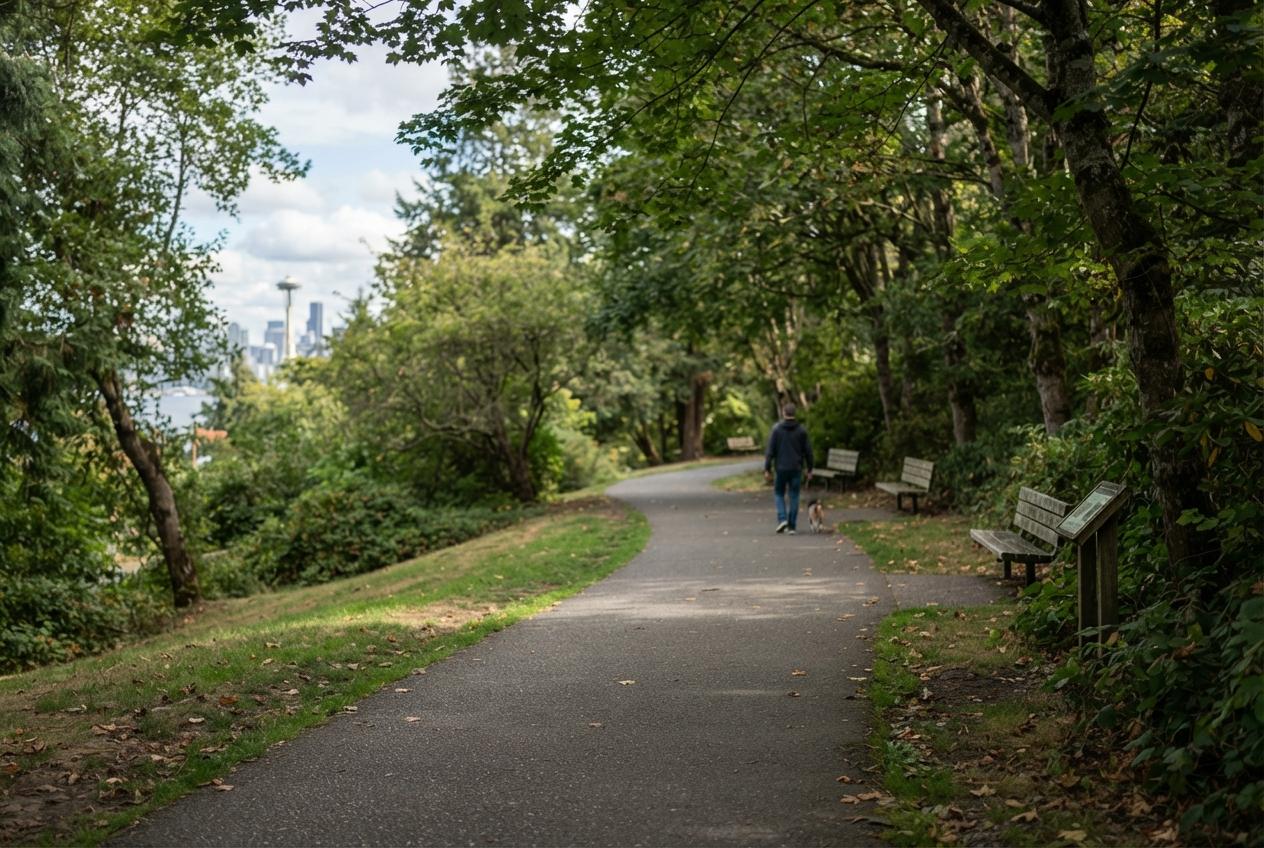
Seattle’s Denny Blaine Park has won formal recognition as an LGBTQ+ landmark, affirming decades of queer community life around its clothing-optional beach. The decision matters as the city weighs the park’s long-term future, balances access with public safety, and invites residents to help shape what happens next.
Essential Takeaways
- Historic recognition: Seattle City Council has formally acknowledged Denny Blaine Park’s importance to LGBTQ+ residents.
- Clothing-optional setting: Nudity remains legal in Seattle, while behaviour that crosses into harassment or public sexual conduct is not.
- A divided landscape: A fence currently separates the upper grassy area from the beach below.
- Planning continues: Seattle Parks is developing a long-term plan and seeking public input.
- A welcoming third space: Visitors value the beach’s relaxed, communal feel, with respect and consent at its centre.
Seattle finally acknowledges a landmark queer space
The most important change at Denny Blaine Park isn't physical. It's official.
Seattle City Council has recognised the waterfront park's long LGBTQ+ history, giving public weight to what generations of gay and trans Seattle residents have already understood. The beach isn't simply a place to sunbathe without clothes. For many visitors, it's a rare third space where people can relax, socialise and feel visible without having to explain themselves.
Seattle Parks describes Denny Blaine as a public park with both grassy areas and a beach, while local preservation efforts have focused on its cultural and community value. That combination gives the site an unusually warm, lived-in atmosphere, where towels, sunscreen and conversation matter as much as the view. (Seattle Parks; Seattle Parks Foundation)
Why the park became a battleground
Denny Blaine's future has been contested for years, particularly as nearby property owners and other residents pushed for changes to the site. A proposed children's playground became a flashpoint, raising uncomfortable questions about whose vision of a public park gets prioritised.
Critics of the proposals have argued that replacing or reshaping the beach would erase a long-standing queer gathering place. Supporters of redevelopment have focused on broader family access and park improvements. As Seattle Metro News reported, the city is now looking at the park through a longer-term planning process rather than treating the dispute as a one-off neighbourhood quarrel. (Seattle Metro News; Seattle Parks Foundation)
That distinction matters. Public parks should evolve, but evolution shouldn't quietly become sanitisation. Denny Blaine's character is part of its value, and the softly bohemian feel is precisely why people keep returning.
What visitors need to know about the clothing-optional beach
Seattle's rules make an important distinction between simple nudity and conduct that disturbs, threatens or targets other people. Being unclothed isn't automatically unlawful, but visitors are still expected to respect personal space and avoid sexual behaviour in public.
A court ruling clarified that the park should remain open, while also urging more effective enforcement against genuinely inappropriate conduct. Axios reported that confusion over the rules had led to problems, including situations where people were challenged for being nude even though nudity itself was permitted. (Axios; TravelGay)
For first-time visitors, the etiquette is refreshingly straightforward: don't stare, ask before taking photographs, keep a respectful distance and leave sexual activity out of a shared public space. Bring water, sunscreen and a towel, and remember that consent applies to conversation and contact just as much as it does anywhere else.
The park’s next chapter is being planned now
The city is preparing a long-term plan for Denny Blaine, with public comments forming part of the next stage. That process could influence everything from access and maintenance to signage, safety measures and how the beach's history is represented.
Seattle Parks' project information shows that the planning process is intended to gather community views before decisions are settled. That makes public participation more than a box-ticking exercise, especially for people who worry that a formal recognition could be followed by gradual changes that make the space less welcoming. (Seattle Parks; Seattle Metro News)
The practical lesson for visitors and supporters is simple: keep an eye on the city's consultation details and submit comments before the stated deadline. A short, specific note about access, LGBTQ+ heritage, respectful enforcement or the need to protect the clothing-optional beach can carry more weight than a general complaint.
Recognition is meaningful, but protection will matter more
The council's resolution is a welcome signal, particularly after years in which the park's identity was treated as a problem to solve. A pride flag or interpretive sign could help mark the site's history, but the strongest memorial would be a park that remains open, safe and recognisably itself.
That means enforcing rules consistently, rather than confusing nudity with misconduct. It also means listening to the people who have used and cared for Denny Blaine over time, including LGBTQ+ residents whose memories can't be replaced by a polished plaque.
For now, the park's future is still unsettled. But this formal recognition gives Seattle a chance to do something rare in urban planning: preserve a community's living history instead of merely commemorating it after the fact.
Protecting Denny Blaine's character could be Seattle's most meaningful next step.
Source Reference Map
Story idea inspired by: [1]
Sources by paragraph: