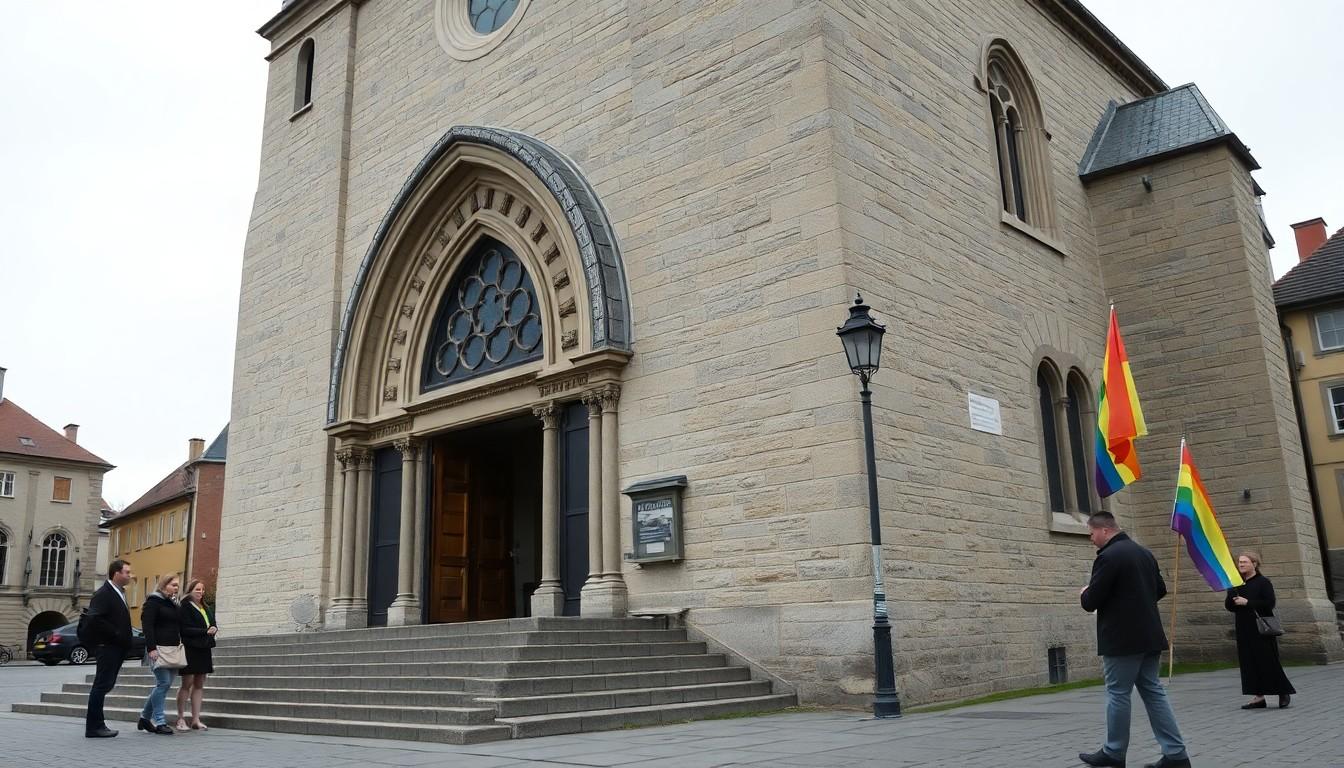
Sweden’s Church of Sweden is facing renewed pressure over same-sex marriage, as a group of priests challenges proposals that could make officiating same-sex weddings a universal job requirement. The dispute matters well beyond church ceremony: it raises questions about conscience, religious autonomy and how a modern institution handles deep disagreement.
Essential Takeaways
- A long-running dispute: Same-sex marriage has been permitted in Sweden since 2009, but clergy have not all been required to conduct these ceremonies.
- Priest appointments vary: Swedish Radio reported that most bishops have accepted trainee priests who decline to officiate same-sex weddings.
- Pressure is mounting: Critics say proposed changes could remove the existing room for conscientious objection.
- The argument is constitutional as well as theological: Supporters of a common policy say equal treatment is essential, while opponents warn that compulsory ceremonies could undermine religious freedom.
- The wider church is watching: The decision could affect relations between the Church of Sweden and other Christian denominations.
Why the Church of Sweden is divided
The row centres on a deceptively simple question: should every priest be expected to marry every legally eligible couple? In practice, the answer touches employment rules, theology and the independence of a national church.
Sweden introduced same-sex marriage in 2009, bringing civil marriage law into line for opposite-sex and same-sex couples. The Church of Sweden later adopted same-sex wedding ceremonies, but its internal arrangements left some discretion to individual clergy and dioceses. That compromise has now begun to look increasingly fragile.
According to Sweden Herald, only a minority of bishops have required prospective priests to promise that they will conduct same-sex weddings. Swedish Radio reported that a majority have continued to accept trainees who hold a conscientious objection, creating an uneven national picture.
A compromise that was never quite settled
The Church of Sweden's position has evolved gradually rather than through one decisive break. Public commitments have encouraged priests to welcome couples regardless of sex, yet recruitment and ordination practices have not always imposed identical obligations across all dioceses.
That gap has made the issue particularly awkward. A couple may be legally entitled to marry in a church, while the priest they approach may decline and arrange another celebrant. For supporters of a universal requirement, that can feel inconsistent and unequal. For traditional clergy, it preserves the difference between respecting a couple's civil rights and personally leading a ceremony they cannot affirm.
Christian Concern reported that Swedish political debate has included calls for ministers to be required to conduct same-sex marriages. Meanwhile, reporting from Anglican Ink suggested that the question could become a formal employment condition, rather than a matter left largely to diocesan practice.
Equal treatment versus freedom of conscience
The strongest argument for a single rule is straightforward. If the Church of Sweden presents itself as an institution open to same-sex couples, opponents say it shouldn't allow individual priests to create a patchwork of access. A common requirement could also make expectations clearer for congregations, candidates and couples.
The counterargument is just as direct. Religious organisations commonly contain competing interpretations, and forcing every priest to perform the same rite may turn a theological disagreement into a professional exclusion test. Sweden Herald reported on proposals concerning the right to deny priestly jobs to applicants who won't conduct same-sex weddings, highlighting how quickly the dispute can move from ceremony to employment.
This is why the debate feels more serious than a disagreement over rota management. It asks whether equality requires identical participation from every minister, or whether a plural church can offer the same service while allowing conscientious alternatives.
What the bishops' differing views reveal
The bishops' split is significant because it shows that the disagreement isn't confined to a few outspoken priests. Different dioceses appear to be balancing institutional policy and individual conscience in different ways, leaving the church without one clear practical standard.
Swedish Radio's account indicates that most bishops have accepted trainee priests who refuse to marry same-sex couples. Sweden Herald likewise reported that only a few bishops have made willingness to conduct such ceremonies a firm requirement. That distinction matters: a church can formally support same-sex marriage while still allowing variation in how clergy are selected and deployed.
For couples, the immediate effect is likely to be administrative rather than dramatic. They may need to check whether a particular priest will officiate, then arrange another celebrant if necessary. It isn't the smoothest system, but it is more transparent than discovering the disagreement on the day of a wedding.
The next decision could reshape the church
Any move to make same-sex marriage an absolute requirement for priests would probably settle one question while opening several others. It could clarify recruitment, but it might also push traditional clergy towards independent congregations or other denominations.
The Church of Sweden's relationships with churches abroad could become part of the calculation too. Anglican Ink noted that the employment debate has implications beyond Sweden, particularly for churches that remain divided over same-sex marriage. In a church already navigating different theological traditions, a hard line could make cooperation more difficult.
For now, the dispute remains a test of whether Sweden's national church can hold together legal equality, pastoral welcome and genuine doctrinal disagreement. That balance is uncomfortable, but it may be the only route that avoids turning every wedding into a culture-war referendum.
It's a debate about marriage on the surface, but conscience and church freedom sit at its heart.
Source Reference Map
Story idea inspired by: [1]
Sources by paragraph: