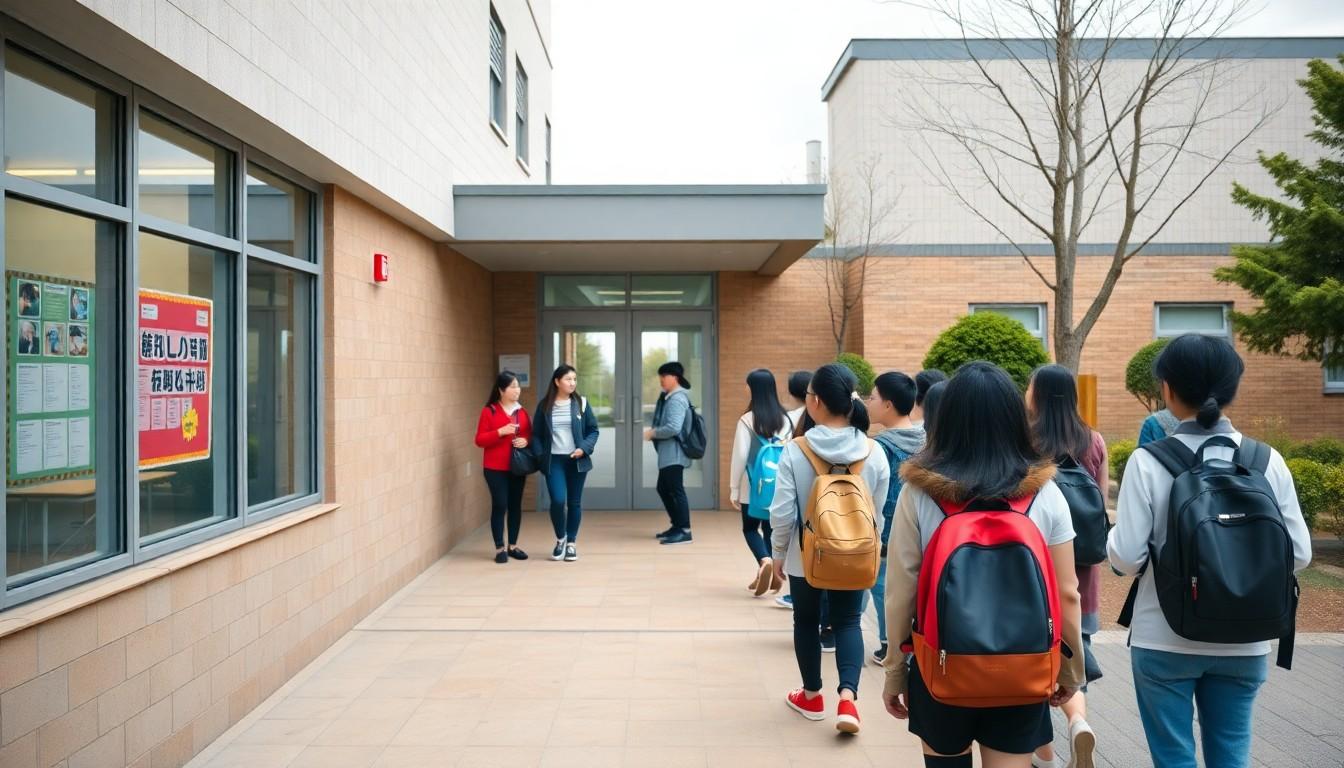
Teachers in South Korea have formed the first LGBTQ+ committee within the Korean Teachers and Education Workers Union, hoping to give queer students the support many say they never found at school. The new national network is challenging everyday gender divisions, anti-LGBTQ+ bullying and the quiet isolation that can push young people away from education.
Essential Takeaways
- A first for the union: The Sexual Minorities Committee is the Korean Teachers and Education Workers Union’s first dedicated LGBTQ+ body.
- A growing network: About 100 teachers and supporters are involved across seven regional branches.
- Gender rules can sting: Class numbers, uniforms, forms, queues and toilets often force pupils into a rigid male-or-female system.
- The impact is serious: Survey findings cited in the report show higher levels of depression and school departure among LGBTQ+ young people.
- One trusted adult matters: The committee wants every LGBTQ+ pupil to encounter at least one teacher who offers acceptance and practical help.
A new committee sends a simple message
The most striking idea behind South Korea’s new LGBTQ+ teachers’ committee is also the simplest: queer people are already part of school life.
The committee, launched within the Korean Teachers and Education Workers Union, brings together LGBTQ+ educators and colleagues who support them. Its members hope their presence will reassure pupils who may otherwise feel invisible, exposed or entirely alone.
That matters because schools aren't neutral spaces for every child. As the Korea Times reported, routine practices can repeatedly remind transgender and non-binary pupils that official systems recognise only two categories.
Everyday school routines can become barriers
For many pupils, exclusion doesn't arrive as one dramatic confrontation. It appears in small, repeated instructions: choose “male” or “female” on a form, stand in the boys’ or girls’ line, use a gendered toilet, or wear a uniform that doesn't fit your identity.
One elementary school teacher, identified as Mo, challenged a numbering system that separated pupils by gender. The teacher argued that the arrangement encouraged competition between boys and girls, even during ordinary classroom games.
The concern is backed by survey findings from South Korea’s National Human Rights Commission. The Korea Times reported that 32.6 per cent of LGBTQ+ young people identified gender-based divisions in uniforms, class numbers, queues and physical education as their biggest difficulty at school.
Why recognition can affect attendance and wellbeing
A school can feel physically safe while still communicating that a pupil doesn't quite belong. When a young person is repeatedly asked to deny or disguise part of themselves, the emotional toll can build quietly, affecting friendships, confidence and attendance.
The report cited research showing that 17.4 per cent of LGBTQ+ students had left at least one school, while 69 per cent reported symptoms of depression. Those figures sit starkly against the national school dropout rate cited for 2024.
There are wider lessons here, too. Research and reporting on education inequality frequently show that leaving school is rarely caused by one factor alone. Family pressure, bullying, poverty and institutional exclusion can overlap, making a responsive teacher an important source of stability rather than merely a friendly extra.
Teachers are being asked to respond without enough support
Anti-LGBTQ+ comments are often dismissed as jokes, which makes them harder to challenge. A pupil asking a classmate whether they’re gay may sound casual, but the question can carry ridicule, threat or the pressure to disclose something deeply personal.
Teachers can also hesitate because complaints may be intense and official guidance may be unclear. The committee criticised the Education Ministry after references to sexual minorities were removed from a handbook addressing hateful and discriminatory language, according to the Korea Times.
That leaves individual teachers trying to navigate a sensitive issue alone. A clear policy, staff training and confidential reporting routes would give schools a stronger foundation than expecting one brave teacher to improvise every response.
The power of one teacher
At the committee’s launch, LGBTQ+ youth activist Seo-young described how different life might have felt if even one teacher had offered acceptance and said their identity wasn't their fault. It’s a painful reminder that support doesn't need to be elaborate to be life-changing.
The committee says 48.6 per cent of LGBTQ+ young people had never encountered a teacher who supported sexual minorities during their school years. Its central ambition is therefore modest in wording but substantial in practice: help students meet someone who stands on their side.
Mo, the committee’s inaugural chairperson, said they had never met such a teacher as a student. Now, they’re teaching in a classroom themselves. That reversal gives the campaign its emotional force: educators who once lacked support are trying to become the adults they needed.
What safer schools could look like
Practical change can begin with small decisions. Schools can review whether forms, registers and group activities genuinely need gender divisions, provide private and appropriate facilities, and make clear that homophobic and transphobic harassment will be addressed rather than waved away.
Teachers don't need to know every answer before offering support. Listening without judgement, protecting confidentiality and connecting a pupil with trusted pastoral or specialist help can make an immediate difference.
The committee’s growth suggests that demand exists among educators as well as students. Its work won't settle every argument about school policy, but it could make one crucial message easier to hear: LGBTQ+ pupils are not asking to be invented or explained. They’re asking to be recognised.
A supportive teacher can change the atmosphere of an entire school.
Source Reference Map
Story idea inspired by: [1]
Sources by paragraph:
- Paragraph 1: [2], [3]
- Paragraph 2: [4], [5]
- Paragraph 3: [2], [6]
- Paragraph 4: [7], [2]
- Paragraph 5: [3], [4]
- Paragraph 6: [2], [7]
- Paragraph 7: [5], [6]
- Paragraph 8: [2], [4]
- Paragraph 9: [3], [7]
- Paragraph 10: [2], [5]
- Paragraph 11: [4], [6]
- Paragraph 12: [2], [7]
- Paragraph 13: [3], [5]
- Paragraph 14: [2], [4]
- Paragraph 15: [6], [7]
- Paragraph 16: [2], [3]