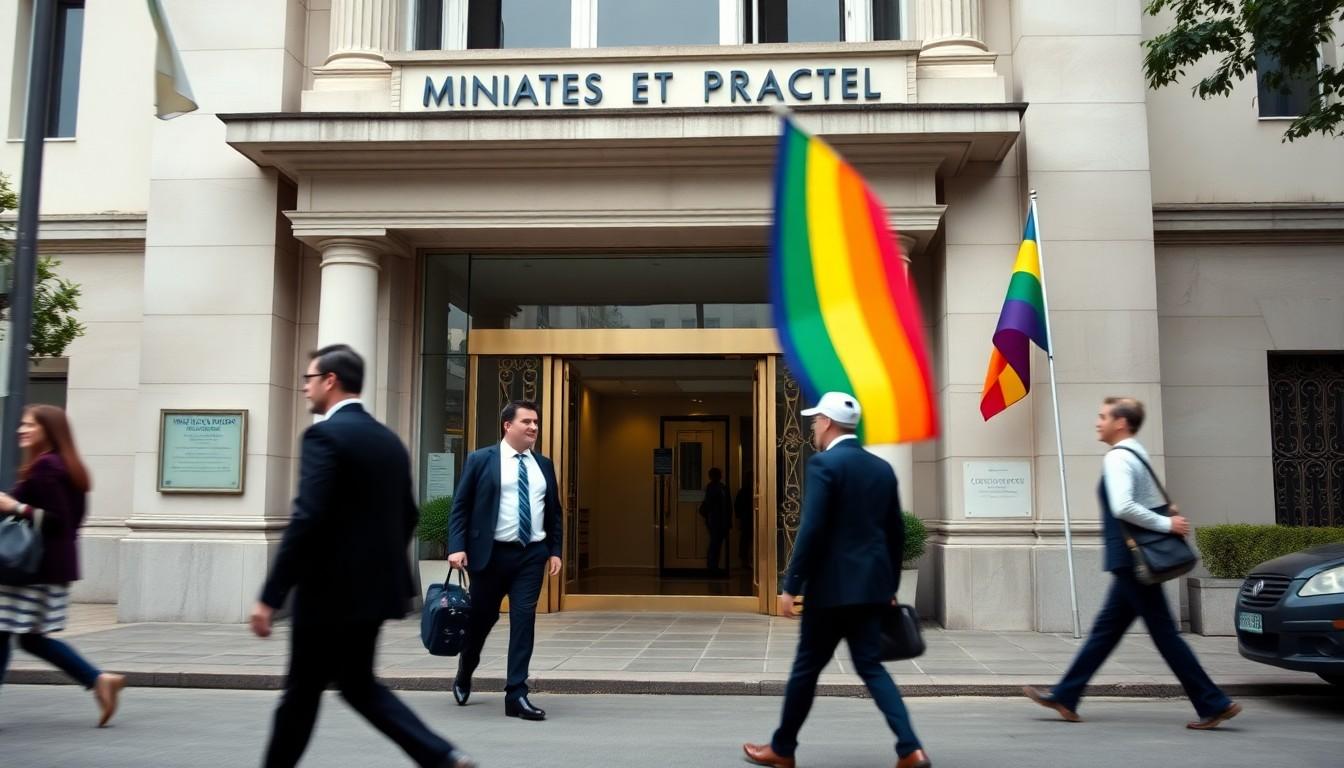
Colombia has withdrawn from the Equal Rights Coalition, the world’s largest intergovernmental alliance focused on LGBTIQ+ rights, prompting questions about what the move means at home and abroad. The decision doesn’t immediately alter legal protections, but campaigners say it sends a troubling political signal at a sensitive moment.
Essential Takeaways
- A formal withdrawal: Colombia ended its membership on 17 September through a letter to the coalition’s leadership.
- No clear reason given: The Foreign Ministry thanked partners but didn’t explain why it was leaving.
- Rights remain legally protected: Existing constitutional safeguards and court rulings on equality, marriage and adoption are unaffected.
- Campaigners weren’t consulted: Caribe Afirmativo criticised the decision and warned of reputational damage.
- The wider signal matters: Analysts see the move as part of a broader conservative shift in Colombia’s foreign policy.
Colombia has stepped away from a major rights alliance
The announcement was brief, but its political weight is harder to ignore. Colombia has left the Equal Rights Coalition, a voluntary partnership of about 40 governments working on diplomacy, legislation, public policy and protection for LGBTIQ+ people.
The Foreign Ministry confirmed the decision in a formal letter sent to the coalition’s executive committee and Spain, its co-chair. As ColombiaOne and Agencia API reported, the message expressed thanks to Spain and civil-society groups but offered no detailed explanation for the departure.
That silence has become part of the story. According to reporting by The Bogotá Post, Vice-Minister Pedro Roa described the alliance as “not a priority” during a virtual meeting, while characterising Colombia’s membership as a project inherited from the previous government.
Why the phrase “not a priority” is drawing criticism
Governments regularly reshuffle diplomatic commitments, and membership of the coalition isn’t legally binding. Still, experts argue that leaving mid-term is more than a routine administrative adjustment.
Daniel Bonilla, academic director of the Global Future School at Fundación Universitaria CEIPA, told The Bogotá Post that describing the decision as a matter of priorities effectively softens what is an openly political choice. Colombia had voluntarily joined the coalition and was serving in a leadership role when it withdrew.
The timing adds to the unease. Colombia and Spain had held state seats since 2025, while Colombian organisation Caribe Afirmativo represented civil society. As the International Business Times and Vanguardia reported, the departure therefore means Colombia has stepped back not merely from membership, but from an active position in a prominent international forum.
The legal protections at home haven’t disappeared
For LGBTIQ+ Colombians, the immediate legal picture remains unchanged. Leaving the coalition doesn’t overturn Constitutional Court rulings or remove protections linked to same-sex marriage, adoption or discrimination.
Vice-Minister Pedro Agustin Roa argued that Colombia still has a strong legal and constitutional framework protecting people on the basis of sexual orientation. The coalition itself is voluntary, rather than a treaty approved by Congress, so the withdrawal doesn’t automatically change domestic law.
But legal continuity isn’t the same as political reassurance. Bonilla told The Bogotá Post that the significance may lie less in what the decision changes today and more in what it could make acceptable in the future. That’s why symbolic gestures can feel far from symbolic to communities already watching political language closely.
Advocacy groups say they were left out
Caribe Afirmativo said it wasn’t consulted before the government announced the withdrawal. Its director, Wilson Castaneda, described the move as the clearest action yet against LGBTI rights under the new administration.
The national ombudsperson, Iris Marin, also criticised the decision and called for clarification that leaving the coalition doesn’t weaken the state’s responsibility to protect marginalised people. Reporting by ColombiaOne and El Rio Times highlighted the concern that international positioning can influence how seriously governments treat discrimination and violence at home.
That concern is set against stark figures. The Attorney General’s Office recorded 68 killings of trans women between 2024 and April 2026, while Colombia’s forensic institute reported 148 killings of LGBTIQ+ people in 2025. The message from rights advocates is blunt: when discrimination is normalised, it can have painfully real consequences.
A small diplomatic move with a wider political meaning
Colombia’s withdrawal comes after the election of conservative President Abelardo de la Espriella, who campaigned on traditional family values while promising to respect Constitutional Court decisions. That combination, analysts say, helps explain why the decision is being read as part of a broader ideological repositioning.
Bonilla told The Bogotá Post that the move looks less like an isolated foreign-policy tweak and more like the international expression of a domestic “cultural battle”. Other reports, including those from El Rio Times and Vanguardia, place it alongside closer alignment with the Trump administration and renewed ties with Israel.
Colombia is unlikely to trigger an immediate regional domino effect. Even so, its departure fits a wider pattern in which governments in Argentina and El Salvador have taken a more sceptical view of multilateral gender and human-rights frameworks. For supporters of the coalition, that makes Colombia’s empty seat feel conspicuous.
For now, the country’s legal protections remain in place. The real test will be whether the withdrawal stays a one-off diplomatic decision or becomes the first sign of a deeper retreat from international LGBTIQ+ advocacy.
It’s a symbolic departure, but the next steps will show how much it truly means.
Source Reference Map
Story idea inspired by: [1]
Sources by paragraph: