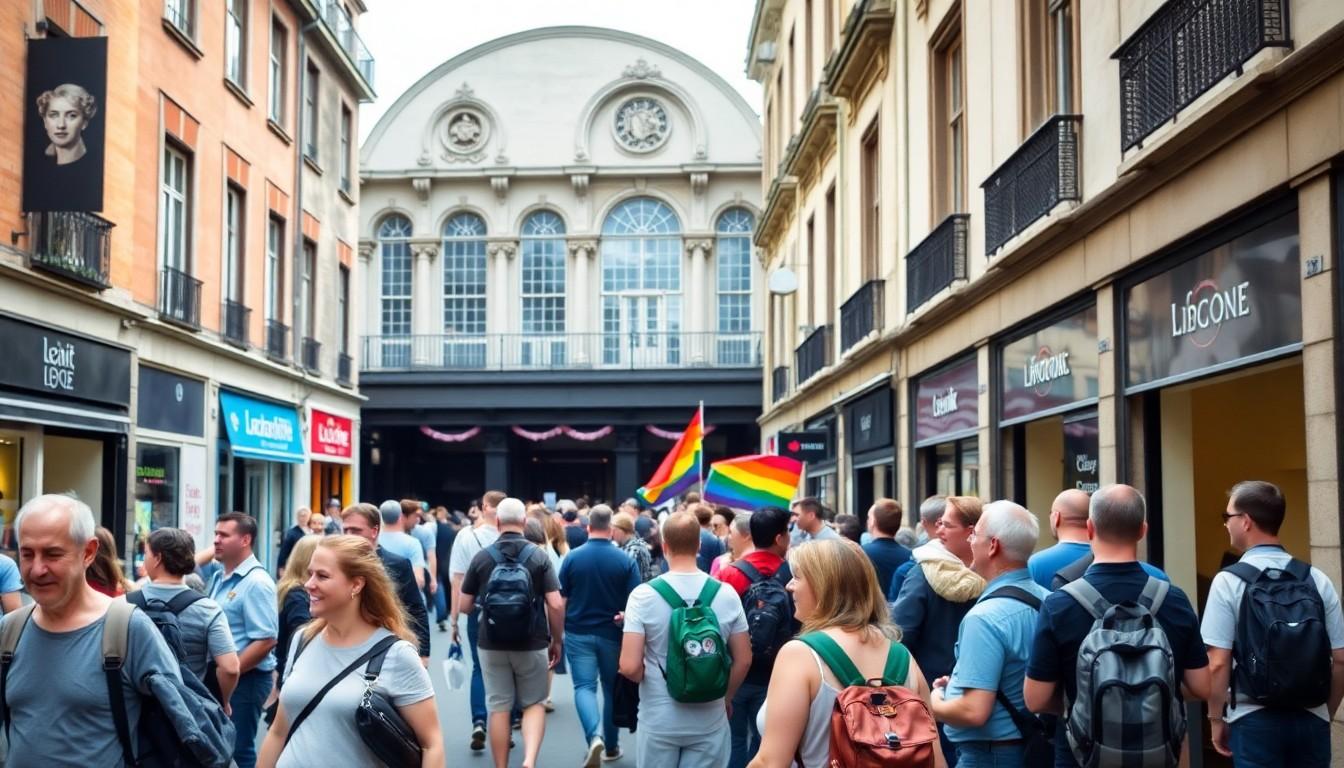
Travellers are turning Pride celebrations into full European city breaks, pairing colourful events with museums, food, nightlife and famous landmarks. Madrid, London, Berlin and Amsterdam stand out for different reasons, while new tourism figures suggest these celebrations are becoming serious economic forces as well as memorable cultural experiences.
Essential Takeaways
- Madrid makes a major impact: Pride is closely linked with Chueca, nightlife, gastronomy and the wider city experience.
- London adds landmark appeal: Visitors can combine Pride in London with museums, theatres, shopping and historic sights.
- Berlin feels more alternative: Christopher Street Day brings together activism, creativity, history and nightlife.
- Amsterdam offers a unique setting: Canal events, cycling routes and compact neighbourhoods make exploring easy.
- The spending is substantial: Recent reports put Pride-related tourism across four European cities at more than 403 million euros, while Madrid's reported impact was especially striking.
Pride is becoming a reason to book the whole trip
The strongest change is simple: visitors aren't travelling only for a parade anymore. They might arrive for a concert or community event, then stay on for a museum afternoon, a long lunch and an evening wandering through a lively neighbourhood.
That makes Pride especially useful for cities with plenty to offer beyond the main programme. According to Europa Press, Pride celebrations in Madrid, Amsterdam, London and Cologne generated more than 403 million euros in tourist spending in 2026, underlining how cultural events can feed hotels, restaurants, transport and attractions. [2]
It also explains why these celebrations feel increasingly like part of a city's normal tourism strategy. A colourful weekend can fill rooms and restaurants, but it can also encourage visitors to see a destination through its local character rather than ticking off landmarks and leaving.
Madrid leads with scale, warmth and late nights
Madrid remains one of the most compelling Pride travel destinations in Europe because the celebration fits naturally into the city's rhythm. Chueca is the obvious focal point, but the appeal spreads through the historic centre, museums, restaurants and famously sociable nightlife.
The city is also showing just how much money Pride can generate. Tribuna Madrid reported an economic impact of 1.124 billion euros for Madrid's 2026 celebration, with tourist spending rising sharply. [3] Rainbow Magazine similarly described the event as a record-breaking moment for the capital, reinforcing Madrid's position as a heavyweight in event-led tourism. [4]
For visitors, the best approach is to build in breathing space. Explore the Prado or Royal Palace earlier in the day, pause for tapas, then follow the evening atmosphere rather than trying to plan every minute. Madrid rewards a little spontaneity, especially when the streets are busy and your dinner booking suddenly feels far too early.
London pairs Pride with an entire world-class city
London's advantage is variety. Pride in London sits inside a vast cultural ecosystem, so travellers can move from a public celebration to a West End show, a riverside walk, a museum visit or a food market without ever feeling they've left the event behind.
The Mayor of London's office has supported Pride in London through a multi-year arrangement covering 2023 to 2027, reflecting the celebration's established place in the capital's public calendar. [7] Official city information also highlights the broader importance of supporting Pride and inclusive cultural activity across London. [6]
That breadth makes London a particularly easy choice for mixed-interest groups. One person can browse galleries, another can chase restaurants and a third can spend the afternoon around the main festivities. The practical catch is distance: London is enormous, so check transport routes and allow extra time when choosing accommodation.
Berlin brings history and creativity into the picture
Berlin offers a different kind of Pride break. Christopher Street Day is closely associated with the city's alternative spirit, creative scenes and political history, giving the experience a more textured feel than a straightforward party weekend.
Visitors can combine the event with Museum Island, Brandenburg Gate, street art districts and neighbourhoods known for independent bars and late-night venues. That mix is what makes Berlin so appealing for travellers who want culture with a rougher, more energetic edge.
It's also a city where context matters. A visit can move from celebration to serious historical reflection within a short journey, so leave room for both. Berlin isn't polished in the conventional city-break sense, but its honesty is part of the attraction.
Amsterdam makes the canals part of the celebration
Amsterdam's Pride is visually distinctive because the city itself becomes part of the event. Canal-side crowds, boats, bridges and narrow historic streets create a setting that feels unmistakably local rather than easily transplanted to another destination.
The city is compact enough for visitors to combine canal cruises, museums, cycling and neighbourhood walks with Pride activities. Its cultural attractions add depth, while the waterways provide that instantly recognisable backdrop that keeps appearing in travel photographs.
The main practical advice is to book early and expect busy public spaces. Amsterdam's central streets can feel wonderfully alive, but they can also become crowded, particularly around major events. A quieter hotel slightly beyond the centre may offer better sleep without putting you too far from the action.
The numbers show why event tourism matters
Pride's tourism value extends well beyond ticket sales or one busy parade day. Hotels benefit from longer stays, restaurants gain extra custom, transport systems carry more passengers and local shops can reach international visitors who might not otherwise have chosen the city.
Mercado & Eventos also reported the 403 million euro tourism figure across four European cities, showing how Pride can operate as a broad destination economy rather than a single attraction. [5] Madrid's much larger reported total suggests that scale, length of programme and the wider strength of a city's visitor offer all matter.
For travellers, that means an event-based trip can be both purposeful and flexible. Choose a city whose everyday personality matches your interests, check the official programme, reserve accommodation early and plan a few non-event activities. The celebration may be the reason you book, but the city is what turns the weekend into a proper holiday.
Pride travel is likely to keep growing as visitors look for trips built around culture, community and shared experiences. Madrid, London, Berlin and Amsterdam prove there isn't one formula: the best destination is the one whose atmosphere feels right for you.
It's a small shift in planning, but it can turn one spectacular day into a much richer city break.
Source Reference Map
Story idea inspired by: [1]
Sources by paragraph:
- Paragraph 1: [2], [5]
- Paragraph 2: [3], [4]
- Paragraph 3: [6], [7]
- Paragraph 4: [2], [5]
- Paragraph 5: [3], [4]
- Paragraph 6: [6], [7]
- Paragraph 7: [2], [5]
- Paragraph 8: [3], [4]
- Paragraph 9: [2], [5]
- Paragraph 10: [3], [4]
- Paragraph 11: [6], [7]
- Paragraph 12: [2], [5]
- Paragraph 13: [3], [4]
- Paragraph 14: [2], [5]
- Paragraph 15: [6], [7]