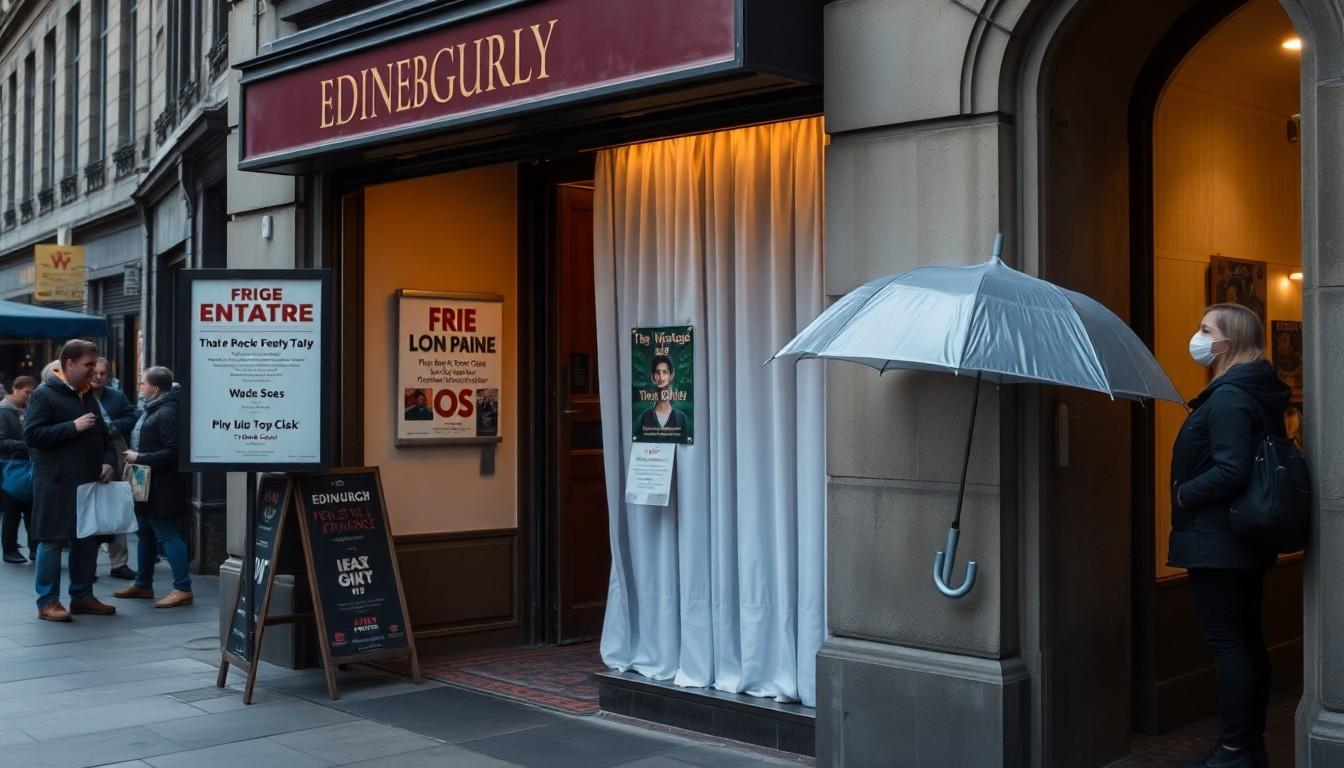
Audiences are discovering a funny, fiercely personal account of homophobic violence at Underbelly Bristo Square, where Linus Karp turns a shocking Soho assault into bold, inventive theatre. The show matters because it pairs uncomfortable facts about rising anti-queer hate crime with warmth, theatrical mischief and a determined belief that humour can challenge hatred.
Essential Takeaways
- A personal story: Karp revisits a violent homophobic attack in Soho in July 2024.
- Serious, but not sombre: The production uses comedy without softening the reality of hate crime.
- Inventive staging: Video screens, audience participation, sound cues and a flexible set keep the show visually lively.
- A wider message: The incident becomes a lens on the continuing danger faced by queer communities.
- Current status: The Edinburgh Fringe run has now finished.
A shocking incident becomes the starting point
The central event is brutally simple. While walking through Soho, Linus Karp was struck with an umbrella during a homophobic attack, with the weapon breaking under the force of the assault. The threat that followed made the incident even more frightening, turning an everyday city walk into a moment of genuine danger.
That immediacy gives the show its emotional charge. Karp isn't presenting an abstract discussion about prejudice; he's asking the audience to sit with something that happened to him, then examining the fear, anger and absurdity left behind. Reviews from the Edinburgh Fringe have similarly highlighted the production's balance between personal testimony and theatrical comedy. According to The Queer Review, the show places Karp's experience within a broader conversation about queer safety and public violence.
Comedy doesn't make the story feel smaller
Awkward Productions' familiar playfulness remains firmly in place, but this time the jokes sit beside material that's much more exposed. Karp pokes fun at his own personality, including traits that suggest a certain flair for self-regard, yet the laughter never erases the seriousness of the assault.
That tonal contrast is one of the production's strengths. A joke can release tension, while the next statistic or recollection reminds the audience why the story needs telling. Theatre Weekly's Fringe coverage also noted the show's ability to combine humour with a direct look at the damage caused by hate crime, rather than treating comedy as an escape from the subject.
Screens, scripts and audience participation keep it moving
The staging is far more elaborate than the title might suggest. Video screens display data, personal lists and sections of text for selected audience members to read, drawing the room into the mechanics of the story. Some participation inevitably creates small mistakes, but those slips become part of the evening's live energy.
Sound design and a versatile set add another layer, making the production feel carefully built rather than simply conversational. The Edinburgh Fringe listing places the show at Underbelly Bristo Square, while Fringe coverage from Binge Fringe also points to the production's mix of theatrical devices and direct address. There is even a brief puppet appearance, although it may feel like one flourish too many.
The umbrella is only part of the story
What makes this more than a dramatisation of one assault is the way Karp connects his experience to a pattern of hostility facing queer people in the UK and beyond. The production uses hard data to show that the incident wasn't an isolated freak occurrence, but part of a wider rise in hate and intimidation.
That context gives the personal material a public purpose. Karp's story remains at the centre, yet it becomes a way to recognise the experiences of others who have been threatened, attacked or made to feel unsafe. Reviews gathered by comedy and theatre listings, including Comedy.co.uk's Fringe page, frame the show as both a personal performance and a response to a broader social climate.
A generous answer to an ugly act
The production's most striking idea is that hatred shouldn't be answered with more hatred. Karp and Joseph Martin lean into love, laughter and theatrical invention, creating a response that's defiant without becoming vindictive.
That doesn't mean the show is gentle. It looks directly at violence and the rhetoric that can encourage it, while refusing to let the attacker control the emotional shape of the story. As Lisa in the Theatre and other Fringe reviewers have reflected, the result is an unusually open piece of theatre, one that turns vulnerability into connection.
The Edinburgh run may be over, but the show's central question remains uncomfortably current. How do you respond when a public space becomes dangerous simply because of who you are? Karp's answer is to tell the story loudly, make room for laughter and bring the audience into the conversation.
It's a fierce, funny reminder that telling the truth can be an act of solidarity.
Source Reference Map
Story idea inspired by: [1]
Sources by paragraph: