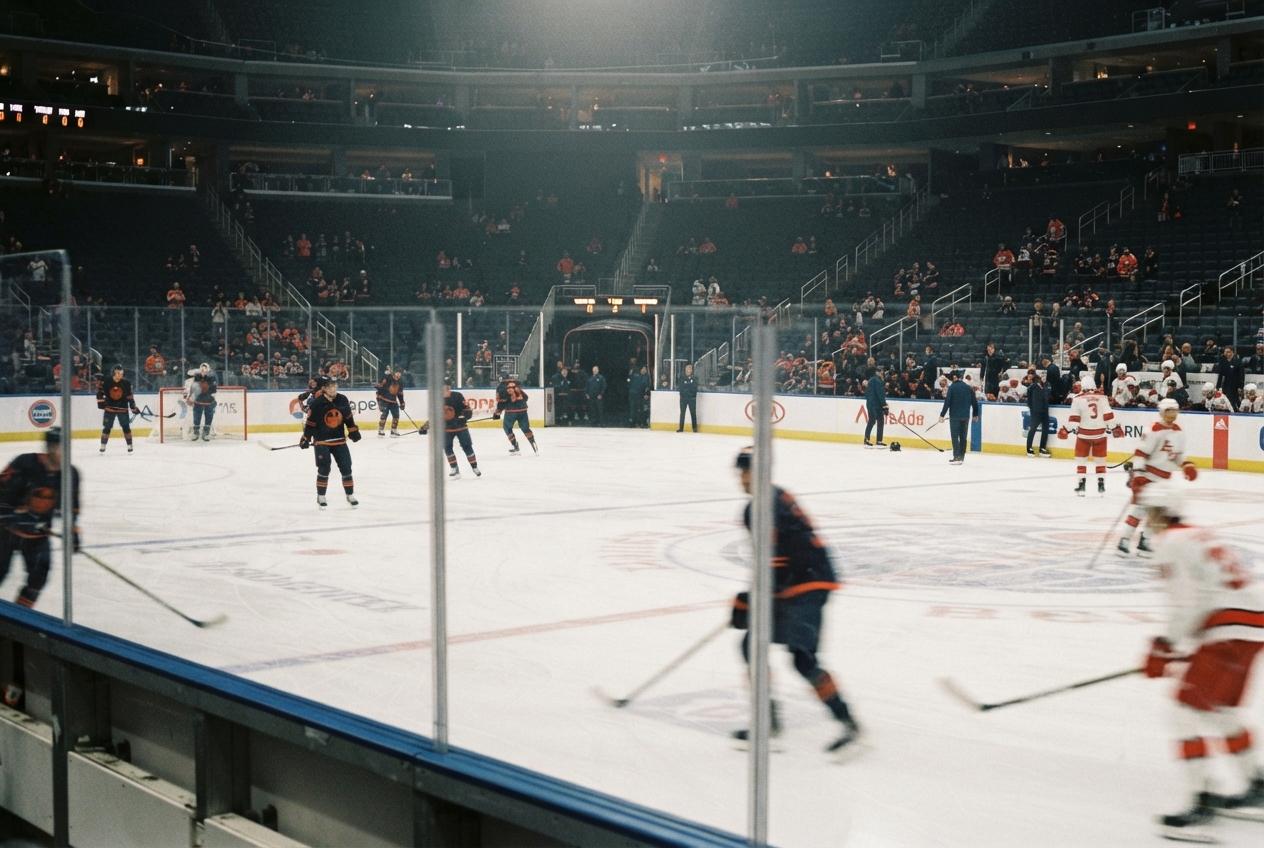
Viewers are turning Heated Rivalry into more than a steamy sports drama, with the series attracting new hockey fans from the UK, Australia and beyond. Its appeal lies in the charged romance between rival players, but also in the bigger question it raises: could a more openly inclusive NHL ever become reality?
Essential Takeaways
- A romance with reach: Heated Rivalry has brought queer viewers and curious newcomers to hockey.
- The central hook: Shane Hollander and Ilya Rozanov balance fierce competition with a secret relationship.
- A wider conversation: The drama has renewed debate about why no openly gay NHL player has yet come out.
- A growing audience: Viewer enthusiasm has spread well beyond Canada and the United States.
- More than escapism: The series imagines a sports culture where love, masculinity and belonging can coexist.
A hockey drama that escaped the rink
The most striking thing about Heated Rivalry isn't simply that it features two male hockey players in love. It's that the show understands the sport's particular atmosphere: the hard boards, the locker-room bravado and the almost ritualised worship of toughness.
That combination gives the romance its spark. Shane and Ilya aren't outsiders looking in on hockey. They're among its brightest stars, which means every glance carries risk and every private meeting feels like a tiny act of rebellion. Rotten Tomatoes lists the series as a major television title, while IMDb's audience-facing listing has helped cement its visibility among viewers searching for the next big sports romance.
The result is a show that can work for committed hockey followers and people who previously couldn't tell a power play from a penalty shot. That's a rare trick. The rink becomes both setting and pressure cooker.
From Rachel Reid's novels to a screen sensation
The series grew from Rachel Reid's Game Changers books, a set of LGBTQ+ hockey romances that imagine professional sport without forcing queer characters to disappear into the background. Heated Rivalry, the second book, supplied the central relationship and the rivalry-driven structure.
On screen, the story follows Shane Hollander and Ilya Rozanov, two elite players whose attraction begins early and survives years of competition, secrecy and carefully maintained public images. They date women, perform rivalry for the cameras and keep their real connection hidden, even as affection gradually becomes impossible to dismiss.
That backstory matters because the show isn't presenting secrecy as a glamorous lifestyle. It's showing the exhausting calculations behind it. Who can be trusted? Which hotel is safe? What happens if a camera catches the wrong expression? For many viewers, those details make the fantasy feel emotionally grounded rather than merely glossy.
Why the chemistry travelled so far
Hudson Williams and Connor Storrie give the series its pulse. Their performances make Shane and Ilya's attraction feel instinctive, awkward and occasionally messy, rather than polished into something too perfect to believe.
That chemistry has been amplified by the show's marketing and by social platforms, where clips, stills and fan reactions have turned individual moments into shared events. JustWatch tracks where viewers can stream the series, making it easier for international audiences to find it, while coverage from Axios shows that the fascination has reached local fan communities far from the show's Canadian roots.
There’s also a useful cultural twist here. Heated Rivalry has attracted queer viewers, hockey devotees and plenty of people who simply enjoy an intense love story. It doesn't ask everyone to arrive with the same reason for watching. Some come for the sport, some for the romance and some for the sheer spectacle of two supposedly unshakable rivals losing control around each other.
The bigger question: could hockey change?
The real world remains more complicated. North American professional hockey has made visible progress on inclusion, but an openly gay active NHL player still hasn't emerged. That gap is why the series feels both comforting and provocative: it offers the public declaration many viewers want, while reminding us how distant that moment may still be.
In Heated Rivalry, the imagined future is reassuringly direct. Teammates, coaches and management can support a player's identity without the entire organisation collapsing into crisis. The fantasy isn't that prejudice vanishes overnight. It's that a player's talent, contract and right to a private life don't become bargaining chips.
That idea may be one reason the show has resonated beyond its romance. Sport has long sold audiences stories about courage under pressure. Here, courage isn't only winning a final or playing through injury. Sometimes it's telling the truth when everyone has told you that silence is safer.
Season two has plenty to live up to
The first season's success has created an obvious challenge for what's next. Marie Claire's coverage of Heated Rivalry season two reflects the level of interest surrounding the continuation, while IMDb and Rotten Tomatoes give viewers a central place to follow the show's status, cast and reception.
A second season will need to preserve the intimacy that made the first so compelling. Bigger stakes, new locations and more public attention could all add drama, but the series works best when the noise falls away and the characters are left with an uncomfortable question: what do they actually want when they stop performing for everyone else?
For now, the show's influence is already clear. It has made hockey feel newly available to audiences who once saw it as a closed, aggressively masculine world. That's not a small cultural shift. Sometimes a television romance opens the door, and viewers discover a whole sport waiting on the other side.
It's a fantasy, but one that makes a more welcoming hockey world easier to picture.
Source Reference Map
Story idea inspired by: [1]
Sources by paragraph: