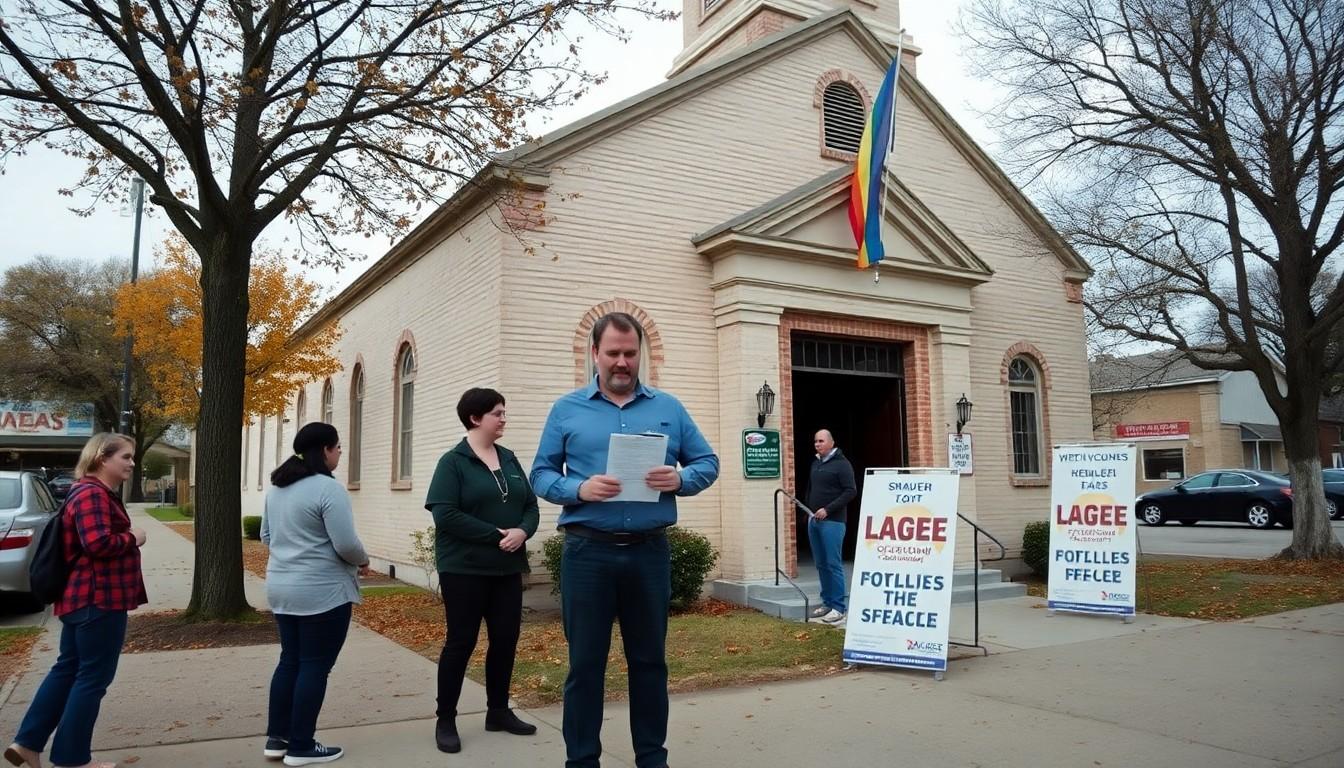
Southlake residents are watching a local dispute unfold after the Texas city council rejected a permit for Pride Kel-So 2026, an LGBT festival planned at an Episcopal church. The decision has drawn attention because organisers had backing from the host congregation, while opponents raised concerns about last year’s event and the atmosphere it created.
Essential takeaways
- Permit rejected: Southlake City Council unanimously declined the request for the planned 3 October festival.
- Church support: St Martin-in-the-Fields Episcopal Church had agreed to host the gathering.
- Earlier recommendation: The city’s Planning and Zoning Commission had recommended approving the application.
- Community divide: Supporters described the festival as welcoming, while opponents cited concerns about protests, drag performances and public tension.
- Reason remains unclear: Several reports said the council did not provide a detailed public explanation for its decision.
A church-backed Pride event hits a council roadblock
The strongest detail in the Southlake Pride festival dispute is the contrast between the venue’s welcome and the council’s refusal. St Martin-in-the-Fields Episcopal Church had offered its grounds for Pride Kel-So 2026, a setting organisers said reflected the congregation’s commitment to inclusion. KERA reported that the council nevertheless voted unanimously against the permit. [2], [3]
The event, titled “Pride Kel-So 2026: No One Left Behind”, was due to take place on 3 October. Organisers planned a community festival featuring Sharon Herrera from LGBTQ SAVES, an organisation focused on creating supportive spaces for LGBT young people. [4], [6]
For many readers, the venue is part of what makes the story notable. A church hosting a Pride gathering isn't an everyday image in every Texas community, but the Episcopal congregation said welcoming neighbours was central to its approach. [6], [7]
Why did Southlake council reject the permit?
The council's vote followed public comments from residents on both sides of the application. Reporting from CBS Texas and The Dallas Express described the decision as unanimous, but the available accounts offered little detail about a specific legal or administrative reason for the refusal. [3], [5]
That lack of explanation has become a central part of the controversy. LGBTQ Nation reported that organisers were questioning the decision and weren't treating it as the end of the matter. The uncertainty leaves residents asking whether the decision was based on event management, public safety, political pressure or another permitting issue. [4]
The Planning and Zoning Commission had previously recommended approval, making the final reversal more striking. In practical terms, it means an event can clear one stage of the local process and still be stopped by elected officials at the final hurdle. [2], [5]
Supporters see community welcome, opponents see rising tension
The congregation's support was expressed in openly inclusive terms. The Rev Ellen Singer said the church was excited to host the festival and linked the decision to its mission of loving neighbours and welcoming everyone. [1], [6]
Opposition focused less on the church itself and more on what residents said happened at the previous Pride Kel-So event. Paul Segal argued that the festival had created friction and was beginning to resemble a protest. He also objected to drag performers who appeared at the earlier gathering. [1], [7]
That disagreement reflects a familiar pattern around Pride events in the United States. Supporters tend to describe them as celebrations and safe community spaces, while critics often frame them as political demonstrations or public-order concerns. In Southlake, those competing interpretations collided at a single permit hearing. [3], [4]
What organisers and residents should watch next
For organisers, the immediate question is whether Pride Kel-So can be moved, appealed or resubmitted with revised arrangements. Reports said supporters weren't giving up, although the next procedural step wasn't fully clear. [4], [5]
A practical issue will be the permit framework itself. If officials later point to traffic, security, crowd management or venue conditions, organisers may need to provide more detailed plans. If no clear reason emerges, however, the dispute is likely to remain focused on transparency and consistency in local decision-making. [2], [3]
Residents will also be watching how future applications are handled. Clear written criteria, consistent enforcement and a straightforward explanation can matter almost as much as the decision itself, particularly when an event touches on identity, religion and public expression. [4], [5]
A small Texas decision with a wider resonance
Southlake's vote is local, but the argument is much bigger than one festival date. It raises questions about how municipalities balance free expression, public safety, religious hospitality and political pressure when a community event becomes contentious. [2], [4]
The church's involvement adds another layer. For supporters, it shows faith communities can offer practical solidarity; for opponents, it intensifies concerns about what public events should look like in a shared civic space. Either way, the debate is unlikely to disappear simply because one permit was denied. [6], [7]
The next chapter may depend on whether organisers challenge the decision or seek another venue. For now, Southlake has become the latest example of how quickly a neighbourhood festival can turn into a national culture-war story. [3], [4]
Explore the decision, the competing arguments and any next steps with an eye on what the council explains publicly.
Source Reference Map
Story idea inspired by: [1]
Sources by paragraph:
- Paragraph 1: [2], [3]
- Paragraph 2: [4], [6]
- Paragraph 3: [6], [7]
- Paragraph 4: [3], [5]
- Paragraph 5: [2], [5]
- Paragraph 6: [4], [5]
- Paragraph 7: [1], [6]
- Paragraph 8: [1], [7]
- Paragraph 9: [3], [4]
- Paragraph 10: [4], [5]
- Paragraph 11: [2], [3]
- Paragraph 12: [4], [5]
- Paragraph 13: [2], [4]
- Paragraph 14: [6], [7]
- Paragraph 15: [3], [4]