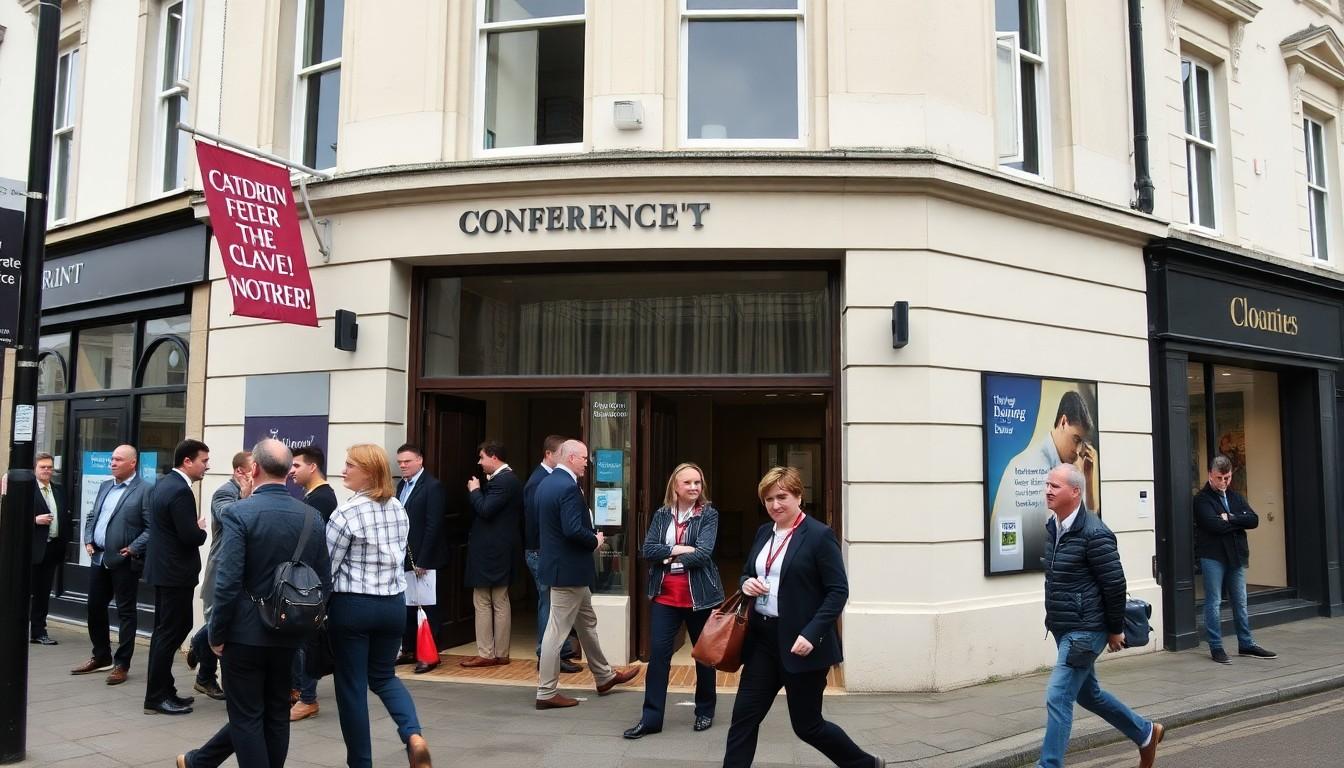
Liberal Democrat members have voted in Brighton to reject the Equality and Human Rights Commission’s guidance on transgender people and single-sex spaces. The move calls for a revised approach that protects women’s rights while avoiding what the party says is an unworkable, discriminatory system for trans people using everyday public facilities.
Essential Takeaways
- Conference vote: Liberal Democrat members overwhelmingly backed a motion calling the current EHRC code discriminatory and unworkable.
- What changes are sought: The party wants revised guidance and a cross-party parliamentary review of trans rights.
- Why it matters: The code affects toilets, changing rooms and other single-sex services where gender-neutral alternatives may not exist.
- Political significance: The Lib Dems are the first of Westminster’s three largest parties to formally reject the guidance.
- Inside the party: Supporters say the rules fuel fear and exclusion, while opponents argue the party must accept the Supreme Court’s ruling.
A decisive vote in Brighton
The vote was emphatic. Liberal Democrat delegates at the party’s annual conference in Brighton backed a motion describing the EHRC guidance as discriminatory and impractical, putting the issue firmly on the party’s political agenda.
The decision places the Lib Dems ahead of Labour and the Conservatives in openly calling for a new framework. The Greens have already taken a similar position, according to the Guardian, but this remains a notable intervention from one of the larger parliamentary parties.
Ed Davey, the Liberal Democrat leader, told the BBC he broadly supported the motion and believed the existing guidance was not fit for purpose. That backing gives the conference vote more weight than a symbolic grassroots protest. [4]
Why the EHRC code has become so controversial
The Equality and Human Rights Commission issued its updated code after the Supreme Court ruled that the legal definition of a woman is based on biological sex. The guidance is designed to help organisations apply that ruling while managing access to single-sex services.
In practice, critics say it could exclude transgender people from toilets and changing rooms that match their gender, particularly where separate gender-neutral facilities aren't available. That creates a difficult reality for schools, leisure centres, shops and public venues, where space and staffing are hardly limitless.
The EHRC has presented the code as a way to clarify obligations for service providers. Guidance from the Association of School and College Leaders also highlights how complicated implementation can be in education settings, where privacy, safeguarding and inclusion often collide in one busy corridor. [5], [7]
The Lib Dem argument: rights shouldn't be a culture war
Supporters of the motion say the debate has been framed too narrowly, as if the rights of women and trans people must inevitably compete. Lucas North, who proposed the motion, argued that both sets of rights could be protected without turning trans people into political symbols.
Rebecca Jones, a trans woman and another speaker in favour, described the emotional cost of the current atmosphere. She said trans people can feel watched and unsafe in public spaces, even as politicians continue to use language about dignity and respect.
That concern sits alongside reports of rising anti-trans hate crime, making the practical consequences feel more immediate than an argument about wording in a policy document. The Lib Dems' own campaign material presents the issue as part of a wider push to restore trans rights rather than abandon protections for women. [3], [4]
Not everyone at conference agreed
The motion wasn't without opposition. Mark Johnston, a councillor from Reigate, warned that reopening the issue could distract the party from its wider electoral mission, including the effort to prevent Nigel Farage becoming prime minister.
His argument was essentially one of political realism: the Supreme Court ruling is settled, so the party should focus on preparing for government rather than revisiting a divisive question. Zoe Hollowood made a related case, saying the motion risked telling women they were being treated as less important and was out of step with public priorities.
Those objections reveal the challenge now facing the Lib Dems. A strong conference majority doesn't remove the need for detailed policy, especially when local authorities and service providers are left to interpret rules affecting real people in crowded, everyday spaces. [2], [6]
What happens next for public services?
The motion calls for a revised EHRC code and a dedicated cross-party parliamentary committee to examine how the law can better protect trans people. That doesn't instantly change the rules for toilets, changing rooms or other single-sex facilities, but it does set a clear direction for the party.
The practical test will be whether a replacement approach gives organisations usable instructions rather than another layer of political argument. Schools, councils, gyms and community venues need guidance that is clear, lawful and workable on the ground, not merely language that sounds reassuring from a conference platform.
For trans people, meanwhile, the stakes are personal and immediate. A policy debate that looks technical in Westminster can determine whether someone feels able to use a changing room, attend a class or simply leave the house without anxiety.
The Liberal Democrats have now chosen their side of that argument. The harder work will be turning a powerful conference message into rules that people can actually live with. [3], [5], [7]
It's a small-looking policy dispute with very real consequences in public life.
Source Reference Map
Story idea inspired by: [1]
Sources by paragraph: