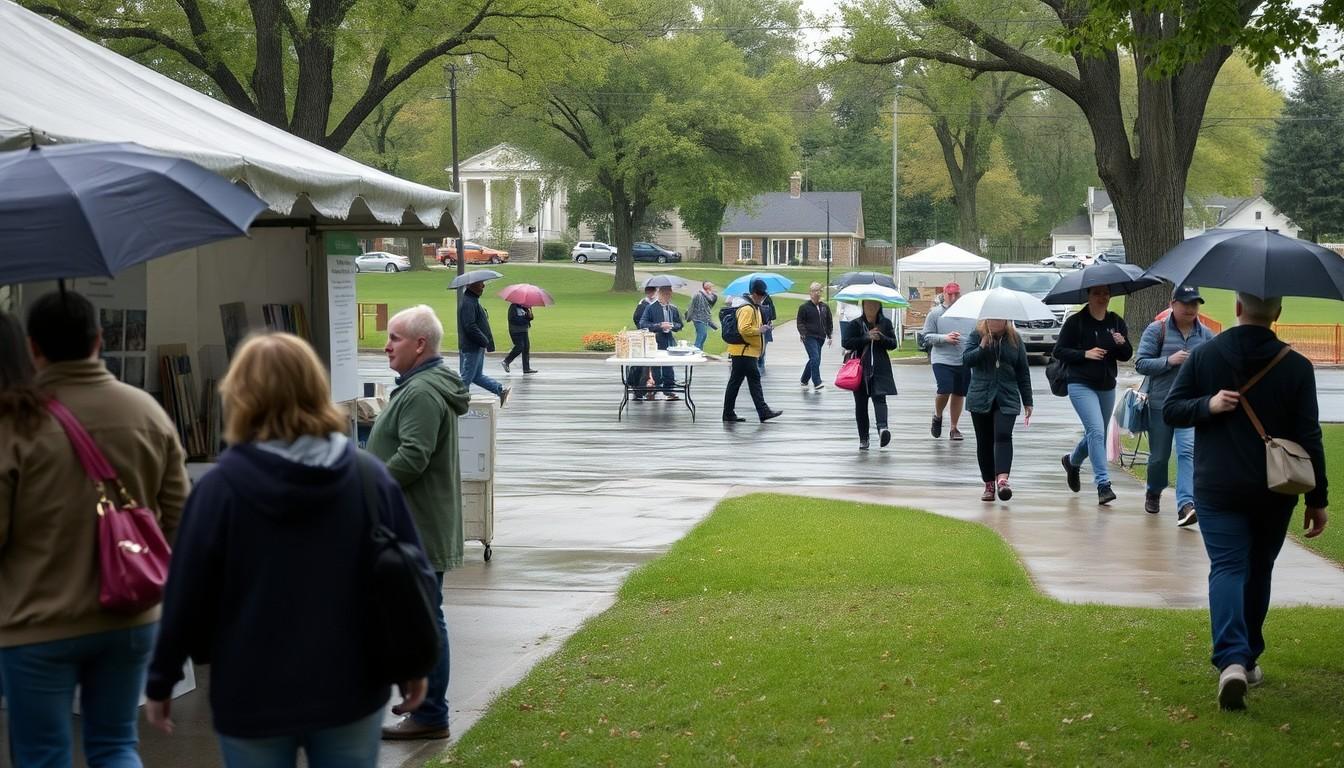
Rain clouds couldn't dim Quincy, Illinois's sixth annual Pride in the Park, where families, performers, charities and LGBTQ+ advocates gathered for a free day of connection, creativity and visibility. The popular event's growing programme, welcoming atmosphere and strong local support offered a bright reminder of how community celebrations can keep moving forward.
Essential Takeaways
- Free and welcoming: The alcohol-free festival was open to everyone and powered by volunteers, sponsors and donations.
- More to explore: Libraries, health organisations, advocacy groups, performers and independent makers filled the park.
- A global guest: The NOH8 Campaign returned with its travelling photo shoot and anti-bullying message.
- Weather-proof spirit: Light rain did little to dampen the relaxed, colourful atmosphere.
- A growing tradition: Organisers say new volunteers, social events and community partnerships are helping shape the future.
Grey skies, bright colours and a strong turnout
A little drizzle couldn't flatten the mood at Pride in the Park in Quincy. Rainbow flags fluttered around Clat Adams Park, families settled near the gazebo and visitors moved between stalls, performances and community information tables with the easy rhythm of a summer gathering.
The sixth annual event ran from midday to 6pm and remained free, alcohol-free and open to the public. According to WGEM, the festival's continued growth has helped it build a reputation as one of the area's most visible LGBTQ+ community events. (Sources: WGEM; The District Quincy.)
That combination matters. Pride can be celebratory, of course, but it also offers something quieter: a few hours when people can meet friends, find support and feel less watched. In Quincy, the park became a colourful little refuge from the grey weather and the wider noise around LGBTQ+ rights.
A local festival with something for every age
The programme stretched well beyond a standard vendor fair. Visitors could browse books and services, listen to music and spoken word, watch dance performances and take part in a sound-healing demonstration from Rooted Yoga.
Regional libraries joined Quincy Public Library and its mobile library, adding a family-friendly strand to the day. Event listings from The District Quincy and HappeningNext also highlighted the festival's broad public appeal, with activities designed to bring together residents, supporters and local organisations.
Healthcare information, voter engagement and non-profit support sat alongside handmade goods and pride-themed merchandise. It's a useful mix because visitors aren't simply passing through a celebration. They're also discovering who is doing the practical work between festivals, from wellbeing support to advocacy and community services.
NOH8 brings a wider message to Quincy
The NOH8 Campaign returned to Quincy for a second year, bringing its recognisable photo shoot and a message centred on equality, visibility and opposition to bullying. The campaign was created by photographer Adam Bouska and Jeff Parshley, and its stark white portraits have become a familiar part of LGBTQ+ activism.
The NOH8 event listing confirmed the campaign's Quincy appearance, while local event coverage showed how the photo opportunity fitted naturally into the park's wider programme. Visitors could take part, meet campaign representatives and add their faces to a movement built around personal stories as much as polished imagery.
That visual element gives the festival a memorable focal point. A photograph is quick, shareable and human, but it also points towards the longer conversation: visibility only works when it is backed by acceptance, safety and people willing to show up consistently.
Why visibility still feels personal
For returning visitors, Pride in the Park is more than a date on the calendar. It can feel like a short break from the caution many LGBTQ+ people still carry into ordinary places, whether that's a shop, a workplace or a crowded public street.
The event's history also gives it emotional weight. Earlier festivals brought nerves and uncertainty for some attendees, particularly around public reactions to drag performances and occasional disruption nearby. Yet people kept returning because the organisers, volunteers and local authorities created an atmosphere that felt managed and supportive.
That trust is hard-earned. A welcoming sign is helpful, but calm stewards, clear planning and respectful behaviour do more to make an event genuinely inclusive. Quincy appears to be learning that lesson year by year, and the result is a festival where families and long-time attendees can share the same space without having to explain why it matters.
Small makers, big community loyalty
Local businesses gave the festival plenty of texture, from pride accessories to one-off fibre arts and crochet. Those handmade stalls brought the softer, more tactile side of the celebration to life: bright yarn, careful stitching and products that clearly took far longer to make than they might take to browse.
For LGBTQ+-owned businesses, choosing which events to attend is often a practical decision. Pride in the Park earns a place because its audience is accepting and its purpose is clear, even when setting up a stall takes time and energy.
The same principle applies to sponsors and volunteers. Community events don't run on enthusiasm alone; they need equipment, coordination, funding and people prepared to do the less glamorous jobs. Listings on The District Quincy and HappeningNext helped publicise the event, while local coverage underscored how much of the day depended on shared effort.
A hopeful future for Pride in the Park
Organisers are already looking beyond this year's gathering. New board members, Sunday socials and a pride prom have expanded the TriState Diversity Coalition's work beyond one annual afternoon, creating more chances for people to meet and stay connected.
The festival's success also reflects a broader shift in what community Pride events are expected to offer. Visitors want entertainment, but they also want useful information, safe spaces, local businesses and activities that work for children, older residents and first-time attendees.
That balance may be the event's greatest strength. The rain was forgettable, but the feeling of being welcomed tends to linger. As Quincy plans its next chapter, Pride in the Park looks less like a one-day celebration and more like a year-round promise.
It's a small park gathering with a distinctly big-hearted sense of momentum.
Source Reference Map
Story idea inspired by: [1]
Sources by paragraph:
- Paragraph 1: [6], [7]
- Paragraph 2: [2], [4]
- Paragraph 3: [6], [7]
- Paragraph 4: [2], [4]
- Paragraph 5: [2], [4]
- Paragraph 6: [3], [5]
- Paragraph 7: [3], [5]
- Paragraph 8: [6], [7]
- Paragraph 9: [6], [7]
- Paragraph 10: [2], [4]
- Paragraph 11: [2], [4]
- Paragraph 12: [6], [7]
- Paragraph 13: [2], [4]
- Paragraph 14: [3], [5]
- Paragraph 15: [6], [7]