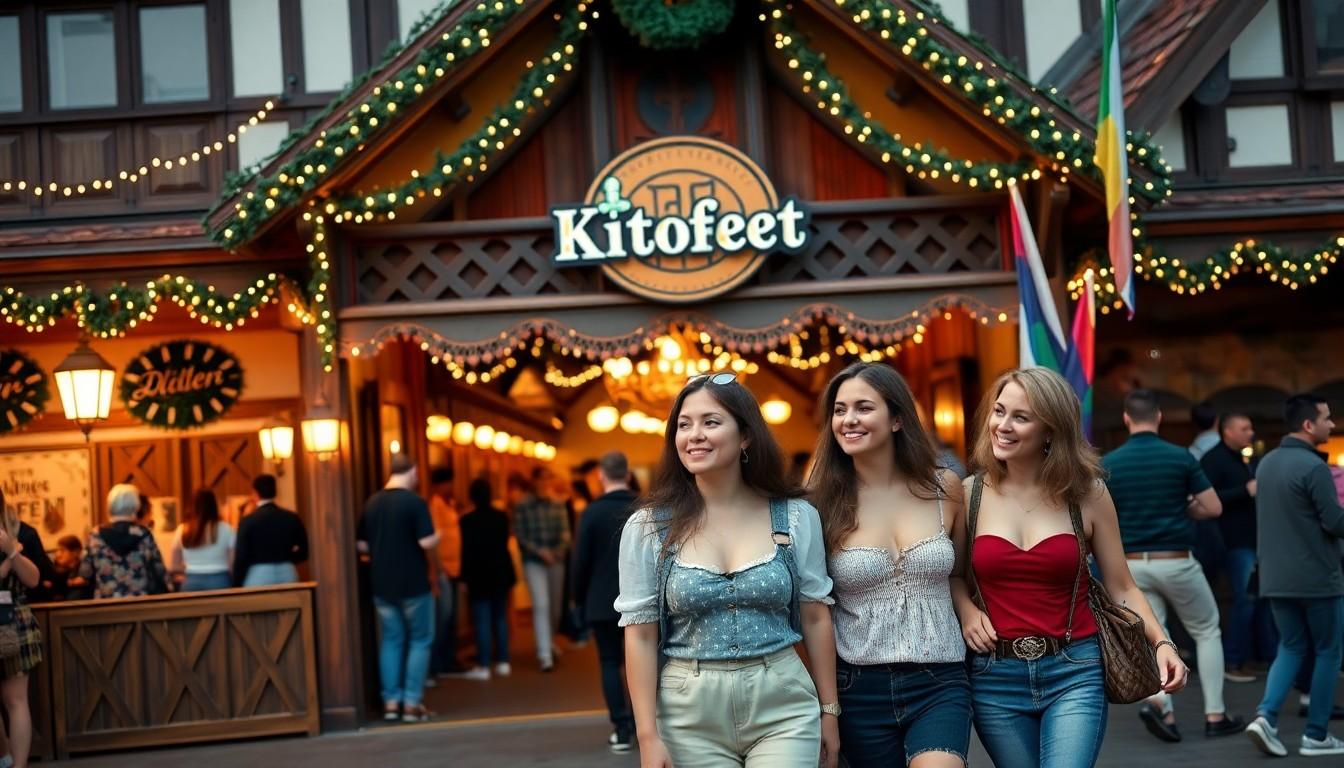
Visitors are raising a glass to Oktoberfest’s first dedicated event for queer women, giving Munich’s famous beer festival a more welcoming and visible LGBTQ+ moment. Held in a traditional beer tent, the gathering matters because it combines the festival’s familiar bustle with a space designed for community, connection and a good dose of fun.
Essential Takeaways
- A first for the festival: Oktoberfest hosted its first explicitly lesbian event.
- A sizeable gathering: Reports put attendance at roughly 700 women.
- Traditional setting: The party took place inside the Bräurosl beer tent.
- More than a night out: Organisers aimed to create visibility and a stronger sense of belonging.
- A changing Wiesn: The event adds to Oktoberfest’s growing programme of queer-focused celebrations.
A new kind of welcome at the Wiesn
The clink of steins and bright tent lights took on a new meaning when Oktoberfest welcomed its first dedicated party for queer women. Rather than creating a separate festival elsewhere in Munich, the organisers brought the celebration into the heart of the Wiesn, where the music is loud, the tables are long and nobody really leaves without a story.
The event was held in the Bräurosl tent, one of the festival’s traditional venues. According to German media reports, about 700 women attended, turning what could have been a symbolic first into a lively, visible gathering with plenty of atmosphere. ([4], [5])
That detail matters. Oktoberfest has long been associated with friendship groups, dating rituals and elaborate traditional dress, but not everyone has felt equally represented in that picture. A queer women’s event makes room for a crowd that has often had to find its own spaces around the festival rather than within it. ([6], [7])
Why this first lesbian Oktoberfest event feels significant
For visitors, the appeal is straightforward: a chance to enjoy the festival with people who share a similar identity and experience. For the wider event, though, it signals a broader shift in how major public celebrations think about inclusion.
Munich’s official event information already highlights queer-friendly activities during Oktoberfest, suggesting that this new party sits within a growing programme rather than appearing in isolation. That makes it feel less like a one-off gesture and more like part of the festival’s evolving social landscape. ([2], [3])
There’s also something quietly powerful about the setting. A dedicated queer event in a beer tent doesn’t ask guests to choose between tradition and visibility. It says both can exist together, Lederhosen and all.
Inside the Bräurosl celebration
The choice of Bräurosl gave the gathering an unmistakably Oktoberfest character. Guests were surrounded by the familiar sights and sounds of the festival, from wooden tables and folk music to the steady movement of servers carrying full steins through the crowd.
Reports described the party as explicitly lesbian, while broader coverage referred to it as an event for queer women. That distinction is useful: the celebration centred lesbian visibility, but its significance reached into the wider queer community too. ([5], [6])
Attendance of around 700 also suggests strong demand for dedicated spaces within mainstream cultural events. It’s one thing to be technically welcome; it’s another to have a room where the event has been planned with you in mind. ([4], [7])
What visitors should know about queer events at Oktoberfest
Anyone hoping to attend similar celebrations should check the official Oktoberfest programme before travelling. Dates, ticket arrangements and entry rules can vary, while popular gatherings may fill quickly, particularly when they’re held inside a major beer tent. Munich’s event listings are the most useful starting point for current information. ([2])
It’s worth planning for the practical realities of the festival, too. Comfortable shoes are a sensible choice, phones can disappear into crowded pockets, and a meeting point is invaluable when the music is booming and the tent is packed. The atmosphere may be joyous, but Oktoberfest remains a huge public event.
For queer visitors, the best approach may be to look beyond a single headline party. Munich’s official listings and local event coverage can help identify other LGBTQ+ gatherings, community meet-ups and festival moments that make the trip feel more connected. ([2], [3])
A small milestone with a bigger message
The first queer women’s Oktoberfest event won’t transform the festival overnight, but it does change the picture. Visibility at a globally recognised celebration can help people feel that they’re not merely tolerated in the crowd, but actively part of it.
Coverage from German broadcasters and newspapers framed the party as a premiere for the Wiesn, reflecting both its novelty and its cultural importance. ([4], [6], [7]) For some guests, it was simply a brilliant night out. For others, seeing hundreds of women celebrate openly in a traditional beer tent may have been the memorable part.
Oktoberfest is built on repetition: the same tents, songs and annual rituals returning every year. This event adds a new tradition to that familiar rhythm, and it’ll be interesting to see whether the first gathering becomes a regular fixture.
It’s a modest but meaningful step towards an Oktoberfest where more visitors can feel completely at home.
Source Reference Map
Story idea inspired by: [1]
Sources by paragraph: