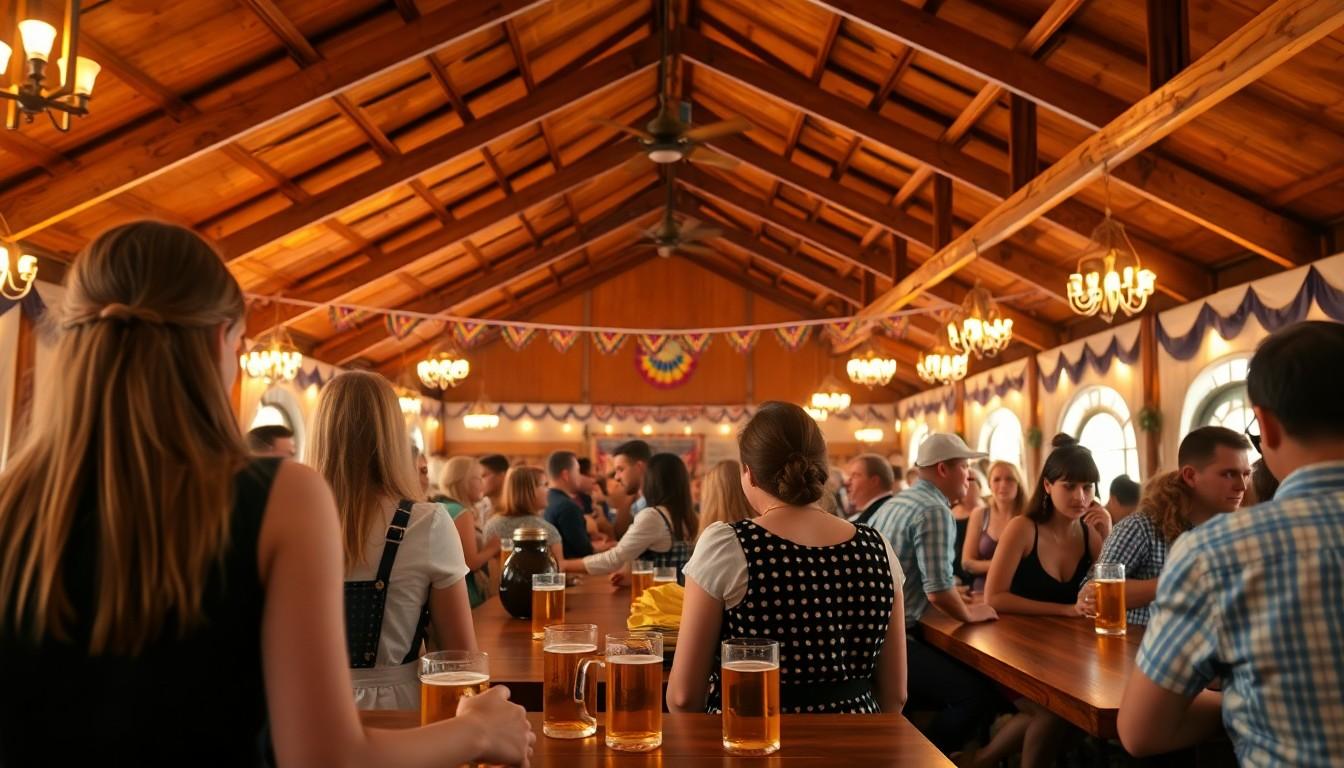
Hundreds of women and FLINTA guests have gathered at Munich’s Oktoberfest for a dedicated lesbian Wiesn event, bringing beer, music and visibility to a community long overlooked in the festival’s queer calendar. The debut party shows why inclusive Oktoberfest events are becoming an important part of the modern festival experience.
Essential Takeaways
- A first for the Wiesn: The event was billed as the first explicitly lesbian party at Oktoberfest.
- Strong demand: Around 700 women and FLINTA people registered, while organisers said interest could have filled more than 1,000 tickets.
- A colourful setting: Rainbow flags, unicorn balloons and the lively Bräurosl tent set the tone.
- A wider gap: The party followed the traditional Gay Sunday, which has historically centred more visibly on gay men.
- A community-led response: Organisers created their own space rather than waiting for an existing one to appear.
A new kind of Oktoberfest crowd arrives
The Bräurosl tent looked familiar enough, with beer, pretzels and the unmistakable buzz of the Oktoberfest. But rainbow flags and unicorn balloons gave the traditional surroundings a distinctly different energy as hundreds of women and FLINTA guests gathered for the “Bier, Boobs, Brezn” party.
According to reports from Nordbayern and Onetz, about 700 people registered for the event. Organisers said demand was even higher, suggesting the first lesbian Oktoberfest party had found an audience well beyond its initial expectations.
That mix of old-school Bavarian celebration and modern queer visibility is what made the occasion stand out. The atmosphere was festive, but the message was serious too: lesbian visitors wanted a place where they didn't have to feel like an afterthought.
Why the lesbian Wiesn event matters
Oktoberfest already has established queer traditions, including Gay Sunday. Munich's official events guidance lists queer celebrations as part of the festival's broader programme, yet the best-known dates have often been associated more strongly with gay men.
The new event arrived immediately after that long-running tradition, creating a useful contrast. As organisers Silke Völlig and Sina Scherer explained to German media, lesbian women have become less visible in parts of Munich's social scene as dedicated venues and meeting places have disappeared.
That isn't simply a question of adding another party to a packed calendar. Spaces shape who feels welcome, who meets one another and who can be visible without explanation. In that sense, a noisy beer tent can become a surprisingly meaningful community room.
From missing spaces to making one
Scherer, who co-organises the party through the Lost Girls events, said the group eventually decided not to wait for someone else to create the right setting. That practical approach gives the event its appeal: it isn't asking permission to exist, it is building the occasion from scratch.
The idea also reflects a broader shift in nightlife. Rather than relying only on permanent bars or clubs, communities are creating temporary gatherings in familiar public venues. A festival tent offers scale, atmosphere and visibility, while a carefully chosen guest list can make the experience feel more focused.
Munich's official Oktoberfest information shows how varied the festival's tent and event landscape already is. The Bräurosl, a large traditional beer tent, provides a striking backdrop for a party that brings a different social story into the same space.
What makes an inclusive Oktoberfest event work?
For visitors considering similar inclusive Oktoberfest events, the basics still matter. Check the organiser's ticket conditions, arrival times and entry rules before travelling, then plan around the tent's busy periods rather than assuming there'll be room at the last minute.
Comfort is another quiet but important detail. Traditional outfits may be part of the fun, but sturdy shoes, a charged phone and a meeting point outside the tent can make a crowded day much easier. The beer may be flowing, yet the best nights are usually the ones where everyone can leave safely and comfortably.
The event's popularity also offers a lesson for organisers. Clear identity, visible representation and a recognisable setting can turn a niche gathering into a major attraction. As the reported ticket demand suggests, people weren't merely looking for another Oktoberfest booking; they were looking for somewhere that felt like theirs.
The Wiesn's queer calendar is evolving
Munich's Oktoberfest is famously traditional, but traditions aren't fixed forever. The arrival of a dedicated lesbian party adds another layer to the festival's queer history and may encourage more events designed around women, FLINTA communities and other groups seeking greater visibility.
It also shows how cultural change often begins with a simple question: who isn't being seen? In this case, the answer prompted organisers to create a new entry in the Wiesn calendar rather than accept the old imbalance.
One successful event won't solve every problem facing lesbian nightlife, but it can make the next event easier to imagine. For many guests, that may be the most lasting part of the celebration.
It's a small but spirited step towards a more visibly inclusive Oktoberfest.
Source Reference Map
Story idea inspired by: [1]
Sources by paragraph:
- Paragraph 1: [2], [6]
- Paragraph 2: [6], [7]
- Paragraph 3: [4], [6]
- Paragraph 4: [2], [3]
- Paragraph 5: [4], [5]
- Paragraph 6: [4], [5]
- Paragraph 7: [6], [7]
- Paragraph 8: [4], [5]
- Paragraph 9: [4], [5]
- Paragraph 10: [6], [7]
- Paragraph 11: [4], [5]
- Paragraph 12: [4], [6]
- Paragraph 13: [2], [3]
- Paragraph 14: [4], [7]
- Paragraph 15: [4], [6]