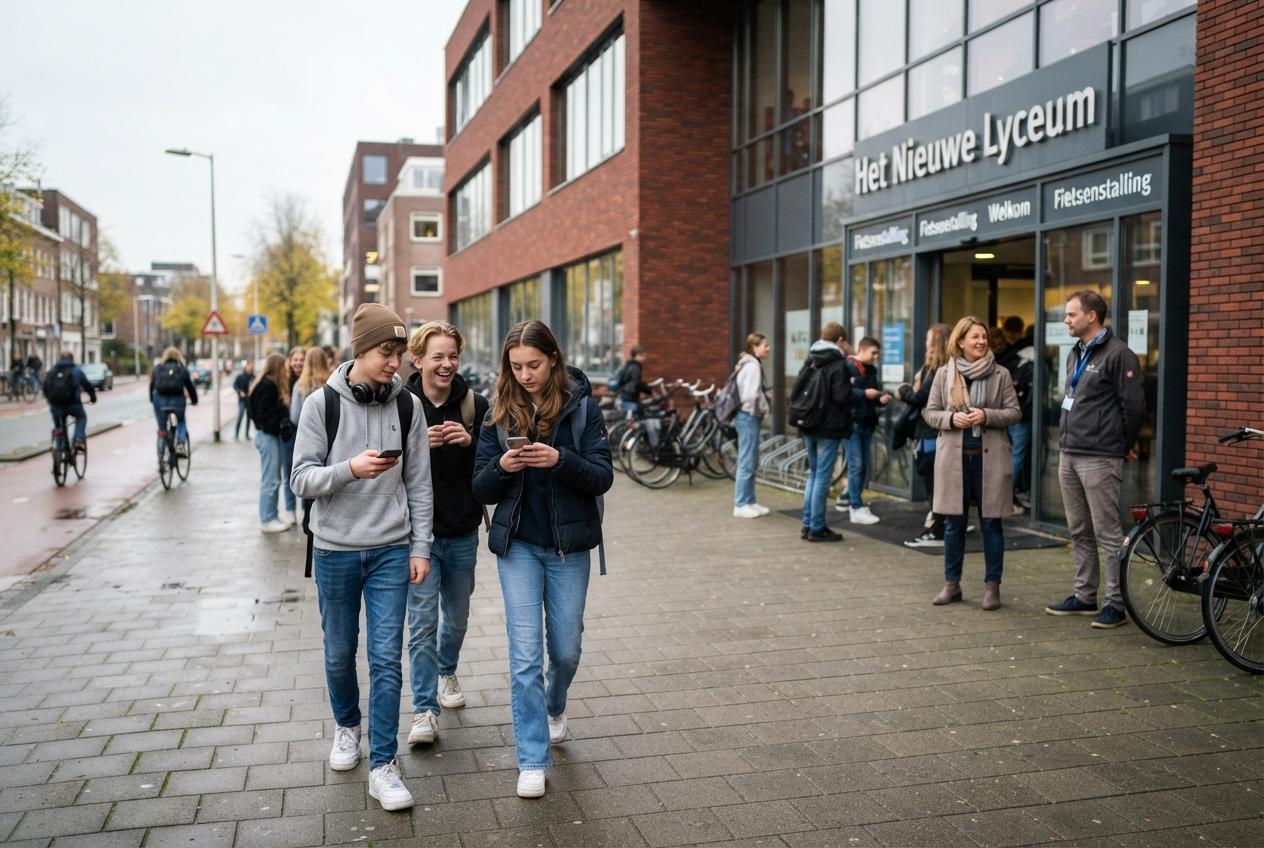
Researchers have recorded a sharp decline in positive attitudes towards homosexuality among Dutch secondary-school pupils, putting parents, schools and social media under scrutiny. The findings have reignited debate about how LGBT acceptance should be taught, protected and supported, especially as online influences become harder for young people to escape.
Essential takeaways
- Acceptance has fallen sharply: Positive attitudes towards homosexuality declined among both boys and girls in the latest Dutch figures.
- Boys show the steepest drop: Support fell from 40 per cent to 22 per cent between 2021 and 2025.
- Girls are affected too: The proportion expressing a positive view fell from 78 per cent to 51 per cent.
- Parents matter: Open, calm conversations at home can help challenge stereotypes before they harden.
- Online spaces complicate the picture: Social media can spread hostility quickly, while also offering community and support.
Dutch teenagers are becoming less accepting
The headline finding is difficult to ignore. Among Dutch secondary-school boys, the share expressing a positive attitude towards homosexuality almost halved over four years, while the decline among girls was also substantial.
The figures, discussed by Dutch media and linked to research from Utrecht University and the Trimbos Institute, suggest that progress on LGBT acceptance can't be taken for granted. A generation raised with more visible LGBT representation is still encountering powerful counter-messages, often delivered through phones and social platforms.
That makes the issue feel less like a distant cultural argument and more like a daily question of what young people see, share and hear before they walk through the school gates.
Why social media is part of the debate
Online platforms don't create every prejudice, but they can amplify it at remarkable speed. Research on adolescent development has repeatedly highlighted the importance of peer influence, social identity and the wider environment in shaping young people's attitudes, according to studies indexed by Wiley Online Library and PubMed.
The online world is also contradictory. A teenager questioning their sexuality may find reassurance, role models and practical support within minutes. But the same feeds can deliver jokes, slurs and coordinated hostility, sometimes disguised as harmless banter.
That tension matters when people call for restrictions. A blanket ban might reduce exposure to some harmful content, but it could also cut off isolated young people from communities they can't find locally. The smarter conversation is about safer design, effective moderation, age-appropriate education and proper enforcement.
Parents can't leave acceptance to schools
Parents are part of the solution, but that doesn't mean every family needs a perfectly polished lesson plan. Small, ordinary moments matter: challenging a homophobic joke, speaking positively about same-sex relationships and making clear that respect isn't conditional.
Research on LGBT acceptance in the Netherlands has explored how attitudes are shaped by family, social surroundings and public visibility. It points to a familiar truth: young people notice what adults tolerate, not just what they claim to believe, as earlier work on Dutch acceptance has shown.
Schools still have a vital role, particularly for pupils whose home environment isn't supportive. Inclusive teaching, clear anti-bullying rules and staff who know how to respond can turn lofty statements into something a student actually feels in the corridor.
What should government and platforms do?
There is a natural temptation to reach for a single fix, whether that's a social-media age limit, tougher rules or more classroom teaching. Yet the evidence suggests the problem is layered. Identity, belonging and discrimination interact in ways that aren't solved by one new policy.
Studies of bicultural gay identities and public agency, including research held by Erasmus University Rotterdam, underline how people navigate visibility and self-expression in different settings. For teenagers, that can mean presenting one version of themselves at home, another at school and a carefully edited version online.
Government therefore has several jobs: enforce existing protections, require platforms to take abuse seriously and give schools the resources to teach relationships and citizenship well. Parents and teachers, meanwhile, need support rather than blame. Few adults feel prepared for a conversation that begins with a viral clip and ends with questions about identity.
A worrying setback, but not a settled future
The decline in acceptance deserves urgency, but it shouldn't be treated as proof that young people are beyond reach. Attitudes can change in both directions, especially when teenagers encounter trusted adults, honest information and peers who make inclusion feel normal rather than performative.
Research has long examined the relationship between prejudice, social contact and adolescent attitudes. The wider lesson is encouraging: respectful contact and visible support can make a difference, even when the surrounding conversation is noisy.
One uncomfortable conclusion is that silence isn't neutral. If families, schools and platforms don't set a clear standard, online personalities and peer groups will help set it instead. For many young people, a simple message of respect may still be more powerful than adults realise.
It's time to make LGBT acceptance part of everyday life, online and off.
Source Reference Map
Story idea inspired by: [1]
Sources by paragraph:
- Paragraph 1: [2], [4]
- Paragraph 2: [2], [6]
- Paragraph 3: [3], [7]
- Paragraph 4: [4], [6]
- Paragraph 5: [5], [7]
- Paragraph 6: [3], [4]
- Paragraph 7: [2], [6]
- Paragraph 8: [5], [7]
- Paragraph 9: [4], [6]
- Paragraph 10: [3], [7]
- Paragraph 11: [5], [6]
- Paragraph 12: [2], [4]
- Paragraph 13: [3], [7]
- Paragraph 14: [5], [6]
- Paragraph 15: [2], [4]