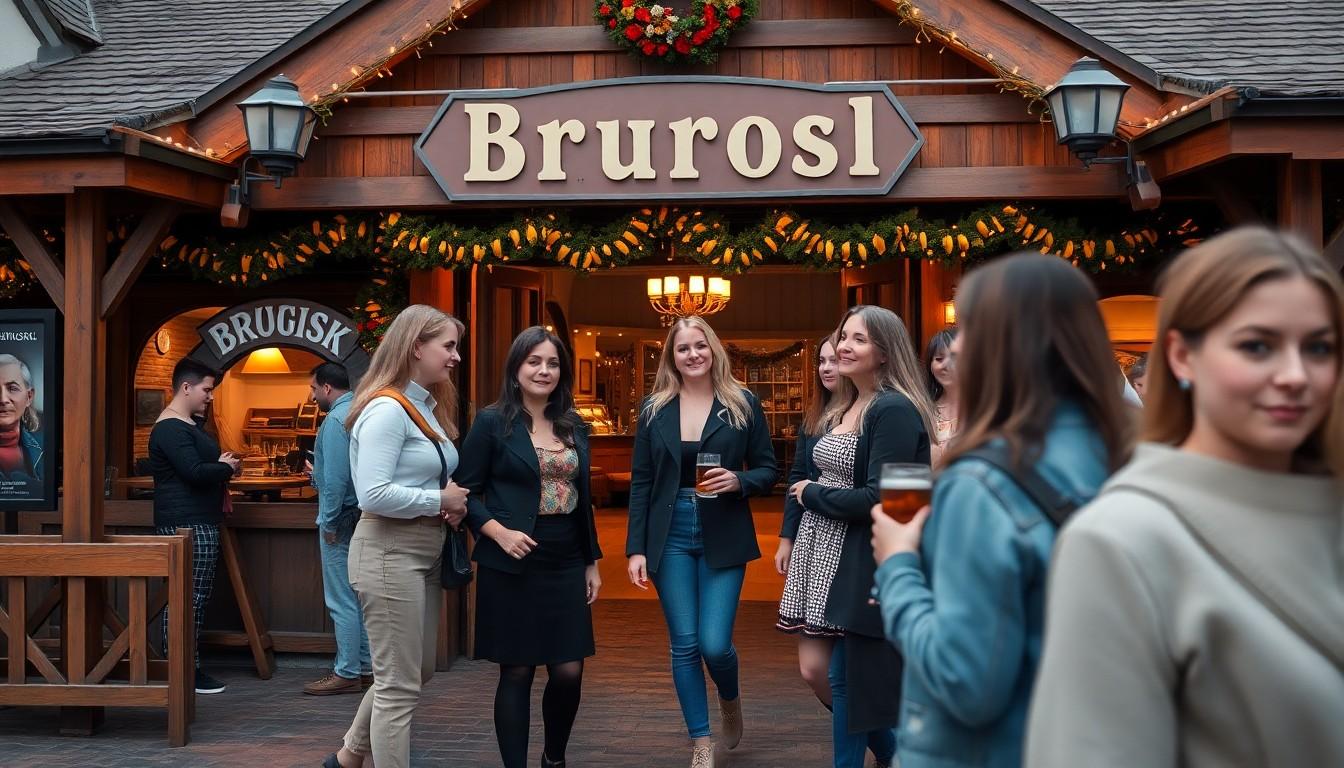
Visitors are celebrating a new lesbian Oktoberfest event in Munich, where hundreds of women and FLINTA people gathered at Bräurosl for beer, pretzels, dancing and a long-overdue sense of belonging. The “Bier, Boobs, Brezn” party matters because it puts queer women visibly at the centre of one of Germany’s biggest public celebrations.
Essential Takeaways
- A first for the Wiesn: Around 700 women and FLINTA people attended the inaugural event.
- A new queer gathering: “Bier, Boobs, Brezn” took place at the Bräurosl tent during an expanded queer Oktoberfest programme.
- A visibility gap: Traditional queer celebrations at the festival have largely been associated with gay men.
- More than a party: Organisers want lesbian and queer women to enjoy an ordinary, confident presence in the heart of Munich’s biggest festival.
- Demand is growing: Established queer Oktoberfest events are attracting strong interest, with tickets and tables under pressure.
A new corner of the Wiesn feels long overdue
The beer was cold, the pretzels were oversized and the mood was unmistakably celebratory. Yet the most important part of Munich’s latest Oktoberfest gathering wasn't the food or the steins. It was the sight of hundreds of women and FLINTA people sharing a tent without having to search the crowd for one another. According to Zeit, roughly 700 guests attended the first explicitly lesbian Oktoberfest event. [2], [7]
Named “Bier, Boobs, Brezn”, the gathering was held at the Bräurosl festival tent, one of the best-known venues in the Oktoberfest circuit. The event followed Rosa Sonntag, the long-running queer Sunday traditionally associated with gay men, giving lesbian visitors their own occasion within the wider festival programme. [3], [4]
For many guests, that distinction was the point. A beer tent can sound like an unlikely place for a visibility milestone, but perhaps that's precisely why it carries weight.
Why lesbian visitors wanted their own Oktoberfest event
Organiser Sina Scherer said the idea grew from a simple question: where are Munich's lesbian women? The city once had more visible meeting places for lesbian communities, but many have disappeared, leaving fewer spaces where people can gather casually and openly. Zeit reported that Scherer and her Lost Girls events were created partly in response to that absence. [6], [7]
The new party isn't intended to replace existing queer events. Instead, it adds a missing strand to a celebration that already brings together generations, nationalities and social groups on the same wooden benches. Munich's official events guide lists several queer Oktoberfest occasions, reflecting a broader programme that now reaches beyond a single traditional date. [3]
That everyday setting matters. A dedicated club night can be welcoming, but taking up space at the Wiesn sends a louder message: queer life belongs in mainstream public celebrations too.
Rosa Wiesn has changed, but the crowd remains uneven
Bräurosl's Rosa Sonntag has been running for decades and remains one of the festival's best-known queer traditions. Guide listings describe it as a major fixture in the Oktoberfest calendar, while coverage of the new event highlights the continuing imbalance between male and female attendance. [2], [4]
The reasons aren't simply about taste or tradition. Munich's queer history also reflects the economics of nightlife. Lesbian bars and women-focused venues have often faced tougher financial conditions, from lower average spending to the cost of keeping a permanent venue open. Add expensive festival tables and travel, and a supposedly casual afternoon at Oktoberfest can become a serious purchase.
That makes the new event feel practical as well as symbolic. It creates a clear occasion around which visitors can plan, book and meet, rather than relying on chance encounters in a busy tent.
What makes Bräurosl a fitting venue?
Bräurosl is a classic Oktoberfest setting, with the communal tables, traditional food and loud, convivial atmosphere visitors expect. The venue's character is part of the appeal: guests aren't being tucked away in a niche room, but welcomed into one of the festival's central social rituals. Local venue guides describe Bräurosl as a notable destination within the Theresienwiese experience. [5]
That also brings a welcome sense of normality. The plan isn't to redesign Oktoberfest or turn it into something unrecognisable. Guests still sit together, eat, raise a glass, dance and chat with strangers. The difference is who's deliberately placed at the centre of the day. [2], [6]
For anyone attending a similar event, the practical lesson is straightforward: book early, check the organiser's entry details and expect demand to rise. Official listings and queer Oktoberfest guides are the safest places to confirm dates, locations and ticket information. [2], [3], [4]
The bigger picture for queer events in Munich
The new lesbian party arrives as queer visibility remains both celebrated and contested. Visitors still want the freedom to gather, flirt and enjoy a noisy afternoon together, but recent attacks on LGBTQ+ events have also made security and public confidence part of the conversation. Coverage of the Bräurosl event noted that guests trusted the festival's safety arrangements while acknowledging those wider concerns. [7]
There is an encouraging shift here. Instead of waiting for a permanent lesbian venue to appear, organisers are using an established public occasion and building community around it. That approach may prove easier to sustain, particularly when demand for queer Oktoberfest events is already reported to exceed supply. [2], [4]
A crowded beer tent won't solve every problem facing queer women in Munich. But seeing them celebrated, loudly and unmistakably, can change who feels invited next time. Sometimes inclusion begins with something as simple as knowing which table is yours.
A bigger, brighter queer Wiesn may only be getting started.
Source Reference Map
Story idea inspired by: [1]
Sources by paragraph: