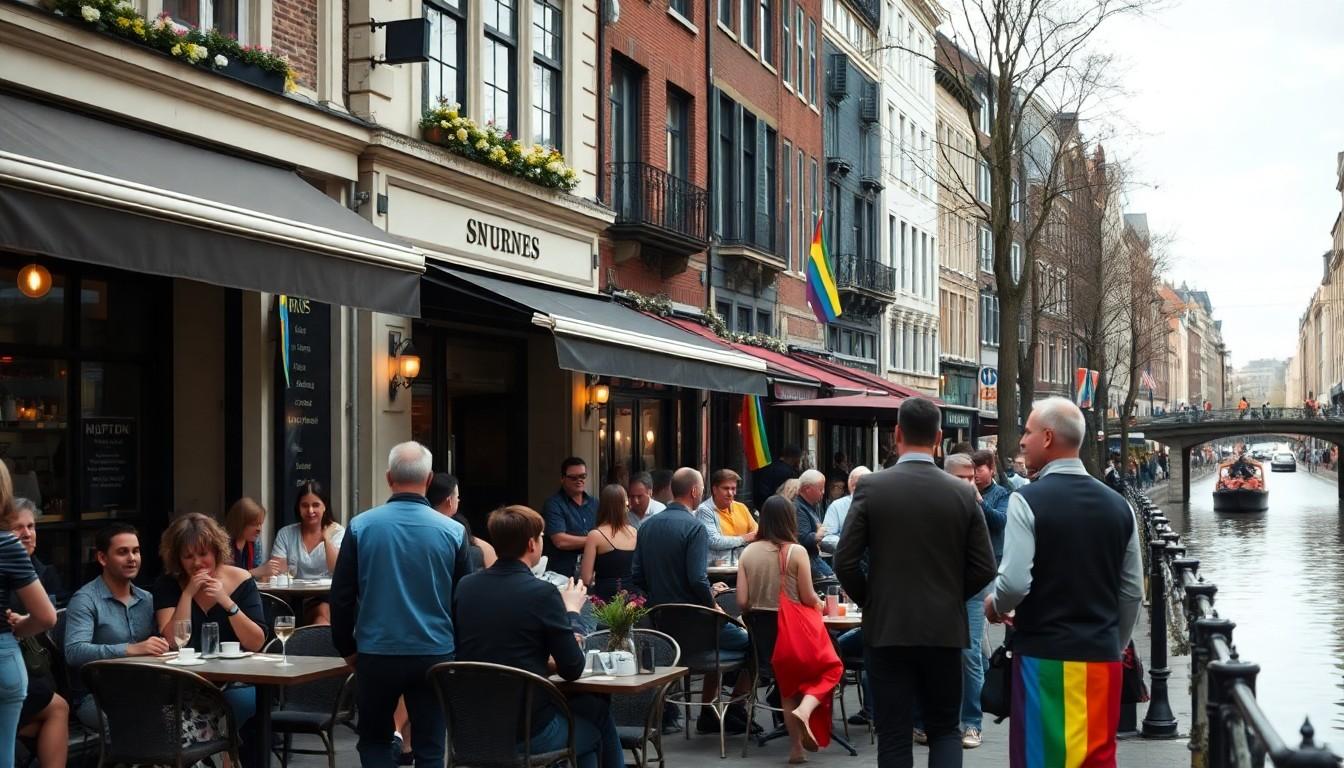
Travellers are increasingly choosing Pride celebrations as a reason to visit Europe, with Amsterdam, Madrid, London and Cologne drawing around six million visitors and generating an estimated €403 million in tourism spending. The figures show why inclusive events matter: they bring lively crowds, longer stays and valuable business to restaurants, hotels, transport providers and local attractions.
Essential Takeaways
- Major economic impact: Pride tourism across four European cities generated an estimated €403 million in additional visitor spending.
- Food leads the way: Restaurants, cafes and catering businesses received nearly six in every ten euros spent.
- Amsterdam stood out: WorldPride produced an estimated €78.5 million in extra tourism expenditure.
- London delivered high-value visits: Pride travellers generated around €86.2 million in additional spending.
- Cologne punched above its weight: The city attracted about 1.2 million visitors and accounted for 14% of the recorded additional spending.
Pride is becoming a powerful reason to travel
Pride is no longer simply a local celebration watched from the sidelines. Across Europe, it has become a major travel draw, with visitors planning holidays around parades, parties, cultural programmes and the chance to feel part of something welcoming and joyful.
Research from The Data Appeal Company, produced with Queer Destinations, found that Amsterdam, Madrid, London and Cologne together attracted roughly six million Pride-related visitors. The combined events generated €403 million in additional tourist expenditure, according to Europa Press and tourism industry coverage.
That money doesn't disappear into one corner of the travel market. It moves through restaurants, hotels, taxis, public transport, museums, bars and independent businesses. In other words, Pride crowds don't just fill the streets; they help animate the wider city.
Amsterdam leads Europe’s Pride tourism surge
Amsterdam recorded one of the strongest results in the analysis, with WorldPride 2026 generating an estimated €78.5 million in additional tourist spending. The Dutch capital's reputation for openness and diversity gave the event a strong foundation, while its international transport links made it easy for visitors to arrive from abroad.
Visitors also had plenty of reasons to stay beyond the official programme. Amsterdam's canals, galleries, nightlife and compact centre make it particularly easy to combine a Pride weekend with a broader city break, which is good news for accommodation providers and local attractions.
The Data Appeal Company reported that spending spread across dining, accommodation, transport and experiences. For travellers, that makes Amsterdam a particularly appealing choice if you're looking for an inclusive European destination with plenty to do before and after the main celebrations.
Madrid turns Pride into a full city break
Madrid's MADO, or Madrid Orgullo, attracted more than two million attendees and has become one of Europe's most recognisable Pride events. The scale is impressive, but the commercial effect is just as striking: many visitors combine the festival with sightseeing, late-night dining and a taste of the city's famously sociable atmosphere.
Restaurants and catering businesses captured 61% of the additional Pride-related spending in Madrid, while accommodation took 20% and transport 19%, according to reporting from Europa Press and Tourism Review. That balance reflects a city where eating, drinking and socialising are central to the visitor experience.
Madrid works well for travellers who want a big, energetic celebration without giving up the pleasures of a classic urban holiday. A good plan is to book accommodation near reliable public transport, then leave time for neighbourhoods and venues away from the busiest parade routes.
London brings international reach and higher spending
London welcomed more than one million Pride visitors, with the event generating an estimated €86.2 million in additional tourist expenditure. The capital's global connections, huge hospitality sector and near-endless list of cultural attractions make it a natural choice for international travellers.
Catering represented 62% of Pride-related spending, followed by transport at 21% and accommodation at 17%. The higher average cost of visiting London also helped push total spending upwards, according to the Data Appeal analysis reported by Mercado and Eventos and TNews.
For visitors, London's size is both its charm and its challenge. The parade and central celebrations can be busy, so booking hotels and restaurants early is sensible. It also pays to use the Underground and buses rather than trying to walk everywhere in a crowded city centre, especially after a long day in the summer heat.
Cologne proves that scale isn't everything
Cologne attracted an estimated 1.2 million visitors and generated 14% of the additional Pride spending recorded across the four destinations, despite accounting for less than 1% of the events in the analysis. It's a useful reminder that a focused programme can be just as effective as a sprawling one.
Food and catering represented 58% of visitor spending, while transport accounted for 28%. The result suggests that Cologne's appeal lies in a strong combination of event identity, easy movement around the city and an atmosphere that encourages visitors to stay, eat and explore.
That makes Cologne worth considering for travellers who want a major Pride experience in a city that can feel more manageable than Europe's biggest capitals. It has plenty of character, but the event remains central rather than being lost in the sheer scale of the destination.
Inclusive events shape how travellers see a city
The financial figures tell only part of the story. Pride celebrations can also change a destination's reputation, signalling that visitors are likely to find a city welcoming, respectful and comfortable. That matters increasingly as travellers look for experiences that align with their values as well as their holiday plans.
The research suggests that inclusive tourism supports more than hotels and restaurants. It can strengthen cultural visibility, encourage repeat visits and create a stronger connection between visitors and residents, according to Queer Destinations and The Data Appeal Company.
For anyone planning a Pride trip, the practical lesson is simple: book early, stay a little longer and spend locally where possible. The best city breaks aren't just about watching the headline event; they're about discovering the restaurants, shops, galleries and neighbourhoods that give each destination its personality.
Pride is proving that celebration and tourism can work hand in hand, and Europe's leading cities are taking note.
For an inclusive European city break, choose the celebration, then stay for the city itself.
Source Reference Map
Story idea inspired by: [1]
Sources by paragraph:
- Paragraph 1: [2], [4]
- Paragraph 2: [5], [6]
- Paragraph 3: [7], [6]
- Paragraph 4: [2], [4]
- Paragraph 5: [6], [5]
- Paragraph 6: [4], [7]
- Paragraph 7: [2], [6]
- Paragraph 8: [4], [5]
- Paragraph 9: [6], [7]
- Paragraph 10: [2], [4]
- Paragraph 11: [5], [6]
- Paragraph 12: [2], [7]
- Paragraph 13: [4], [6]
- Paragraph 14: [5], [7]
- Paragraph 15: [2], [6]
- Paragraph 16: [4], [5]
- Paragraph 17: [6], [7]
- Paragraph 18: [2], [4]
- Paragraph 19: [5], [6]
- Paragraph 20: [2], [7]