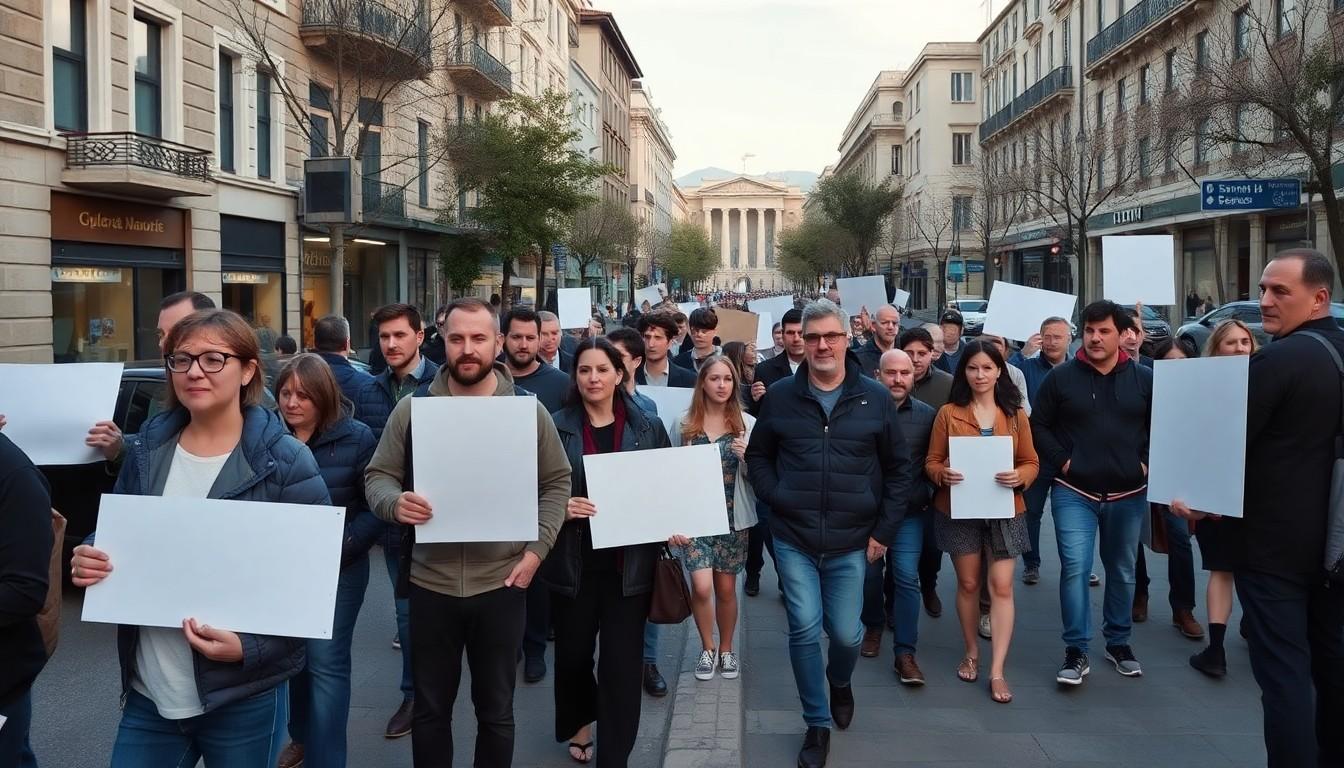
Supporters gathered in central Athens to remember Zak Kostopoulos, also known as Zackie Oh, eight years after his death on Gladstonos Street. The march called for justice, safety and dignity for LGBTQ+ people, while keeping public attention on the violence and prejudice that activists say still shape everyday life.
Essential Takeaways
- A memorial march took place in Athens: Demonstrators assembled on Gladstonos Street before heading towards Syntagma Square.
- The date carried deep significance: The rally marked eight years since Kostopoulos died after a violent incident in central Athens.
- Activists called for lasting change: Organisers linked the case to homophobia, transphobia, racism and gender-based violence.
- Memory remained visible: Marchers again displayed a symbolic street sign reading “Zackie Oh Street”.
- The campaign continues: Supporters say public remembrance is also a demand for accountability and safer communities.
Athens remembers a life that changed the conversation
The strongest image from the gathering was also the simplest: people returning to the place where Zak Kostopoulos lost his life, carrying banners, flowers and anger that hasn't faded. The march began on Gladstonos Street in the early evening before moving through the centre of Athens towards Syntagma Square.
According to Greek reports, the event was organised by Justice for Zak/Zackie alongside other collectives. Participants chanted anti-fascist slogans, while a symbolic “Zackie Oh Street” sign was placed in the area, turning a familiar city corner into a place of public remembrance.
The scene was solemn, but it wasn't quiet. For supporters, remembering Kostopoulos means refusing to let a difficult case disappear into the background noise of the city.
Who was Zak Kostopoulos?
Kostopoulos was known as an LGBTQ+ activist, writer and drag performer, as well as for speaking publicly about HIV stigma, gender identity and social exclusion. He used the name Zackie Oh in performance and activism, becoming a recognisable voice for people who were often pushed out of public view.
Background accounts, including biographical information collated by Wikipedia, describe him as openly HIV-positive and genderqueer. Those parts of his identity became central to the way supporters understood both his life and the hostility directed at marginalised communities after his death.
That matters because the rally wasn't simply an anniversary event. It was also a reminder that visibility can be both empowering and dangerous when prejudice is allowed to pass as normal behaviour.
Why the case still provokes anger
The campaign around Kostopoulos has continued to focus on the violence captured in public footage and the response of those present. Greek media reports have covered the later legal proceedings, including the acquittal of police officers and the convictions of two private individuals for fatal bodily harm rather than homicide.
For activists, those outcomes didn't settle the central question of whether the violence and the responsibilities of those involved had been fully recognised. As Ethnos reported, the case remains a point of contention for supporters who believe the punishment did not reflect the loss of life.
The disagreement is about more than courtroom language. It touches on who is believed, whose vulnerability is taken seriously and how quickly a crowd can become a passive audience. That is why the march remains emotionally charged, year after year.
From remembrance to wider demands
Organisers connected the rally to broader struggles involving LGBTQ+ rights, racism, patriarchy, police violence, poverty and the treatment of people living with HIV. Their message was deliberately wide-ranging: safety, they argued, can't be reserved for people who fit a narrow idea of respectability.
Imerodromos described the anniversary as part of an ongoing fight for justice, while News Minimalist reported that the Athens gathering marked eight years since Kostopoulos' killing. The shared theme was clear: commemoration was being used as a form of civic pressure.
That approach reflects a wider shift in protest culture. Memorials increasingly become spaces where people name the systems behind an individual tragedy, rather than treating the death as an isolated incident.
A march that refuses to become routine
Magda Fyssa, whose son Pavlos was murdered by a far-right supporter, was among those attending, according to Greek coverage. Her presence linked the rally to Greece's broader anti-fascist movement and underscored how different campaigns for justice often overlap.
For anyone following the case, the practical lesson is uncomfortable but important: public safety depends on bystanders, institutions and authorities responding to violence rather than simply watching it unfold. The organisers' message was equally direct, calling on people to challenge hateful language and protect those who may be isolated or vulnerable.
Eight years on, Athens has not forgotten Zak Kostopoulos. The march showed that memory can be tender, furious and politically active all at once. Sometimes the most persistent protest is simply continuing to walk.
It's a small act of remembrance with a very large demand: that every life is treated as valuable.
Source Reference Map
Story idea inspired by: [1]
Sources by paragraph:
- Paragraph 1: [2], [3]
- Paragraph 2: [4], [5]
- Paragraph 3: [6], [7]
- Paragraph 4: [3], [7]
- Paragraph 5: [4], [5]
- Paragraph 6: [2], [5]
- Paragraph 7: [3], [4]
- Paragraph 8: [5], [6]
- Paragraph 9: [4], [7]
- Paragraph 10: [2], [3]
- Paragraph 11: [4], [5]
- Paragraph 12: [3], [6]
- Paragraph 13: [2], [4]
- Paragraph 14: [5], [7]
- Paragraph 15: [2], [3]