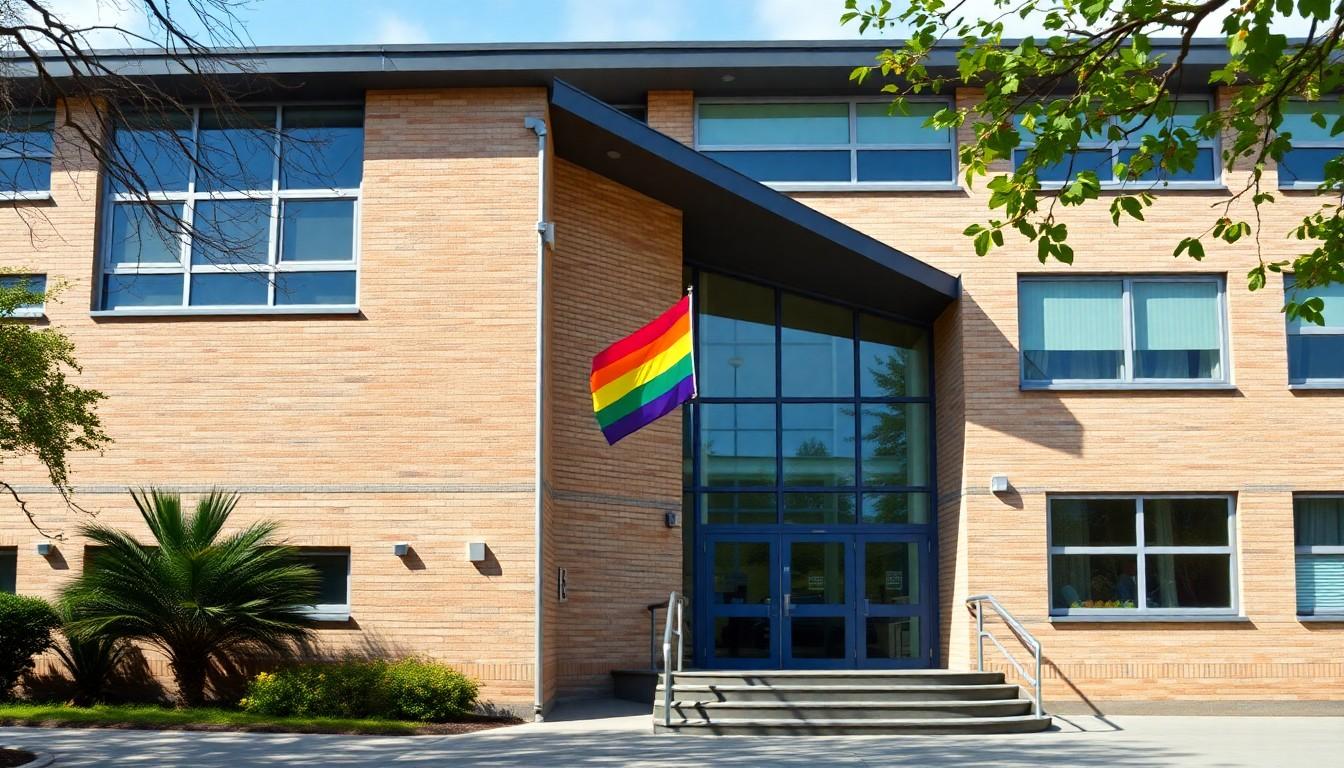
Parents, teachers and pupils are confronting a growing patchwork of restrictions on trans children across the United States. New survey findings suggest that hostile policies can weaken staff support, intensify bullying and make already difficult school days feel even more isolating.
The classroom climate is changing
For many trans pupils, school isn't simply a place to learn. It's where they navigate names, uniforms, toilets, sport, friendships and the risk of being singled out. When those everyday choices become political flashpoints, the pressure follows them through the school gates.
The Human Rights Campaign Foundation's educator research found that anti-LGBTQ+ hostility is a serious concern in schools, while staff in states with restrictive policies reported fewer opportunities for relevant training and less confidence in intervening. The result is a worrying mismatch: pupils may need more help precisely where adults feel least able to provide it. According to the HRC Foundation survey, 40% of educators described anti-LGBTQ+ behaviour as a real problem in their schools. [2]
That figure isn't an abstract statistic. It can mean a corridor joke going unchallenged, a pupil avoiding the toilet all day or a teacher hesitating over how to offer support. Small moments accumulate, and school can start to feel less like a community than a place to get through.
What the educator survey reveals
The National Educator Survey on School Climate and Bullying gathered responses from educators across dozens of US states and Washington, D.C. Its findings point to a broad pattern: restrictive state environments are associated with fewer LGBTQ+ training opportunities, more harassment and weaker perceptions that staff can act effectively. Welcoming Schools, which hosts the survey resources, presents the research as a look at how policy shapes day-to-day school life. [3]
The HRC's summary also reported that schools in restrictive states face steeper barriers to creating inclusive classrooms. Educators there were more likely to encounter harassment directed at LGBTQ+ pupils, or at children perceived to be LGBTQ+, while support for teachers themselves could be harder to access. [4]
That matters because a policy can change the atmosphere even before anyone reads the rulebook. If staff fear complaints, disciplinary action or political backlash, they may choose silence over a supportive conversation. For a young person already wondering whether they belong, that silence can sound remarkably loud.
Sports, toilets and care remain major flashpoints
The debate isn't confined to pronouns or classroom language. State laws and proposed measures have targeted participation in school sport, toilet access and gender-affirming healthcare, creating a confusing and often punitive landscape for families. A legal overview from LegalClarity tracks restrictions on transgender athletes, including rules that can affect eligibility and create penalties for schools or organisations. [5]
Healthcare policy is shifting too. The KFF gender-affirming care tracker records the changing state-by-state picture, including restrictions affecting minors and the legal disputes surrounding them. [7] Meanwhile, the Williams Institute has documented the spread and potential effects of legislation targeting transgender people, helping to show how quickly local protections can be narrowed. [6]
For families, that patchwork is exhausting. A child may be supported at home but face different expectations at school, in sport or across a state border. The practical question is often less about winning an argument online and more about finding one trusted adult who knows the rules, listens properly and won't make the child explain their existence from scratch.
How parents can read the local picture
The most useful starting point is your own district. Check the school board's published policies on bullying, names and pronouns, toilet access, sport participation, confidentiality and complaints. Meetings, agendas and voting records can reveal whether officials are updating protections, quietly removing them or simply leaving staff to improvise.
It also helps to ask direct, calm questions. Who handles reports of anti-LGBTQ+ harassment? What training have staff received? How are families contacted if a pupil asks for support? Is there a clear process for protecting privacy? The answers may be more revealing than a glossy inclusion statement.
State legislation still matters, but school boards often decide how rules are interpreted and implemented locally. Policy trackers from KFF and the Williams Institute can help families understand the wider legal backdrop, while the HRC Foundation's survey offers useful context for judging whether a school's approach is likely to support staff in practice. [6], [7]
There is still room to push back
The picture is bleak, but it isn't fixed. School board elections tend to attract less attention than presidential races, yet those boards can influence training, safeguarding, library access, complaints procedures and responses to state mandates. A well-informed local campaign can therefore have a surprisingly large effect.
Community members can attend meetings, support inclusive candidates, share reliable information and make sure trans pupils are represented in conversations that too often happen without them. Educators also need backing, not just expectations: a teacher cannot create a safe classroom alone if the surrounding system punishes every attempt to do so.
The evidence is becoming harder to ignore. Inclusive practice doesn't remove every difficulty from a young person's life, but it can make school safer, kinder and more manageable. For many pupils, that isn't a luxury. It's the difference between feeling watched and feeling seen.
A safer school starts with informed adults willing to act.
Source Reference Map
Story idea inspired by: [1]
Sources by paragraph: