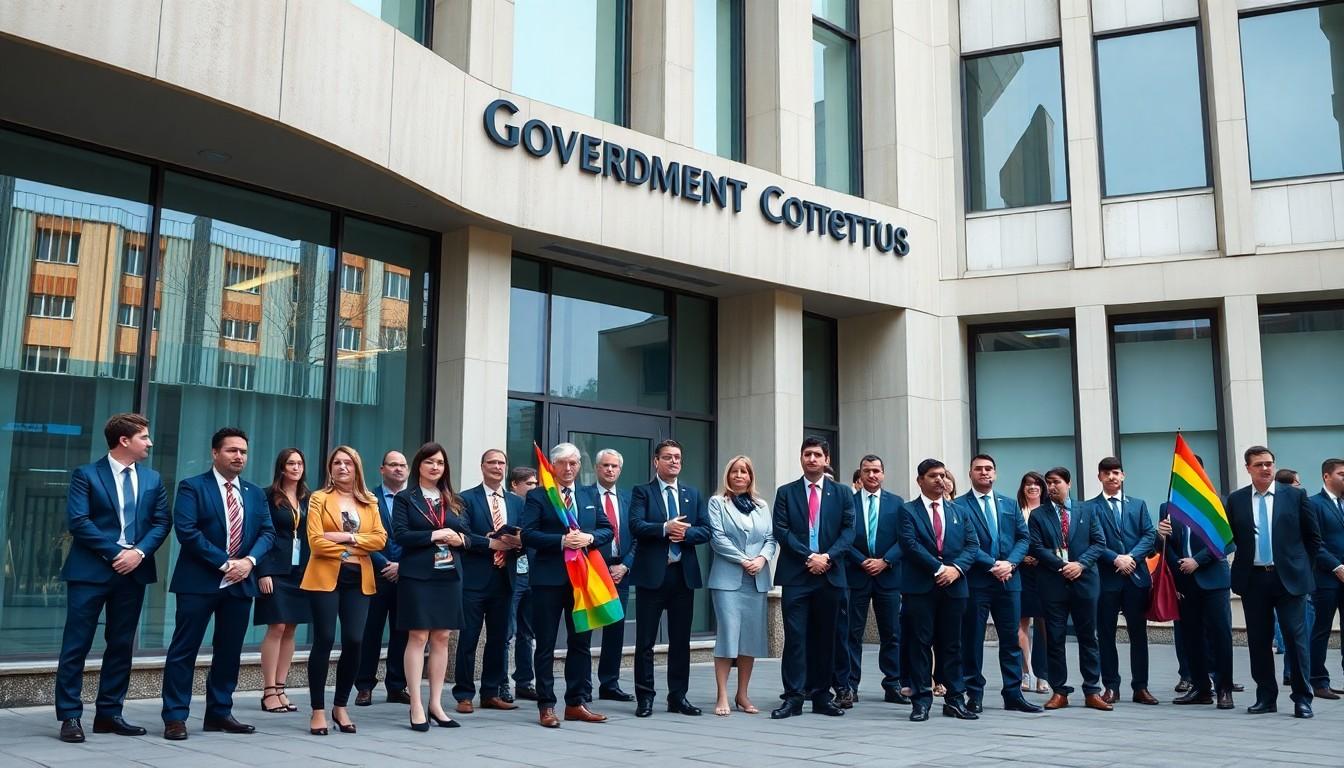
European governments have issued a joint warning over Turkey's reported “Ailem Güvende” operations, raising concerns about LGBT people, activists and civil society groups. The statement highlights freedom of expression and peaceful assembly, while Italy's decision not to sign has added a fresh political twist to an already tense human rights debate.
Essential Takeaways
- Seven countries signed: France, Sweden, Finland, Germany, Iceland, Denmark and the Netherlands backed the statement.
- Rights are central: The governments stressed freedom of expression, peaceful protest and freedom of association.
- Operations reported: Turkish authorities reportedly targeted people, organisations and businesses in 15 provinces.
- Italy stayed out: Giorgia Meloni's government did not join the statement, prompting scrutiny of its position.
- The dispute is widening: The episode links domestic policy, European diplomacy and LGBT rights.
European governments voice concern
The sharpest message from the joint statement is its focus on basic civic freedoms. France, Sweden, Finland, Germany, Iceland, Denmark and the Netherlands said they were concerned about reported actions against LGBT people, human rights defenders and LGBT organisations in Turkey. The issue has moved beyond a domestic political argument and into the language of international law. [2], [4]
According to reporting by the Stockholm Center for Freedom, diplomats from several European countries joined the criticism as pressure grew over the reported crackdown. Their statement called for Turkey to respect obligations under international human rights law and the European Convention on Human Rights. [5]
The wording matters because it frames the dispute around rights that apply broadly, rather than around one group alone. Freedom to speak, gather peacefully and organise is the civic foundation on which other protections depend, and that makes the statement difficult to dismiss as a purely cultural disagreement. [6]
What are the reported “Ailem Güvende” operations?
The operations, described in Turkish media as “Ailem Güvende”, were presented by officials as part of efforts to protect the family institution. Reports said action was taken in 15 provinces, involving 162 suspects, nine associations and 13 businesses. [3]
The reported targets included LGBT organisations, activists and some venues, with arrests and access restrictions also mentioned in coverage. Diken reported that European governments had reacted directly to these developments, turning a series of domestic measures into an international story. [2]
For organisations involved, the practical consequences can be immediate: meetings may be disrupted, online access can be limited and staff or volunteers can face legal uncertainty. That is why rights groups tend to focus not only on the stated purpose of a policy, but also on how it is applied in real life. [5]
Why Italy's absence has become part of the story
Italy did not sign the joint statement, and that omission quickly became a talking point. Coverage linked the decision to Prime Minister Giorgia Meloni's government's more cautious approach to LGBT rights and its opposition to what it calls “gender ideology”. [7]
The episode also fits a wider pattern in Italian politics. Previous disputes have included the recording of LGBT parents, including a case involving Milan's municipal practice and intervention by the Interior Ministry. Those decisions have made Italy's position especially noticeable whenever European governments issue a collective statement on LGBT rights. [1]
Not signing doesn't automatically amount to an endorsement of Turkey's actions. Diplomacy is often shaped by alliances, wording and domestic politics as much as by the headline issue. Still, in a statement signed by seven governments, one conspicuous absence naturally attracts attention. [7]
What the European Convention means here
The European response centres on three familiar protections: freedom of expression, peaceful assembly and freedom of association. These rights allow individuals and organisations to speak publicly, meet safely and campaign without facing arbitrary interference. [4]
T24 reported that the signatories urged Turkey to act in line with the European Convention on Human Rights. That reference gives the statement a legal and institutional frame, rather than leaving it as a general expression of political disappointment. [4]
For readers trying to understand the significance, the key question is how any measures are implemented. A policy described as protecting families can still face scrutiny if it disproportionately restricts particular communities or prevents lawful organisations from operating. That distinction is at the heart of the current dispute. [6]
A diplomatic issue with a longer road ahead
The joint statement is unlikely to end the argument, but it shows that Turkey's LGBT rights debate is being watched well beyond its borders. European governments appear keen to keep attention on the treatment of activists and civil society groups, while Ankara's policies remain tied to its own social and political agenda. [2]
Meanwhile, Italy's refusal to sign offers a reminder that Europe is not speaking with one voice on the issue. Some governments are prioritising a common human rights message, while others are taking a more conservative or nationally focused route. The result is a divided political landscape, even as the underlying rights questions remain clear. [3]
For LGBT people and organisations in Turkey, the most important developments will be practical rather than diplomatic: whether investigations continue, whether restrictions are lifted and whether peaceful civic activity can proceed without intimidation. International statements can create visibility, but the lived test is what happens next on the ground. [5]
The coming weeks may show whether this remains a one-off diplomatic protest or becomes part of a sustained European response. [6]
The debate is now about both Turkey's domestic policy and Europe's willingness to defend civic freedoms.
Source Reference Map
Story idea inspired by: [1]
Sources by paragraph: