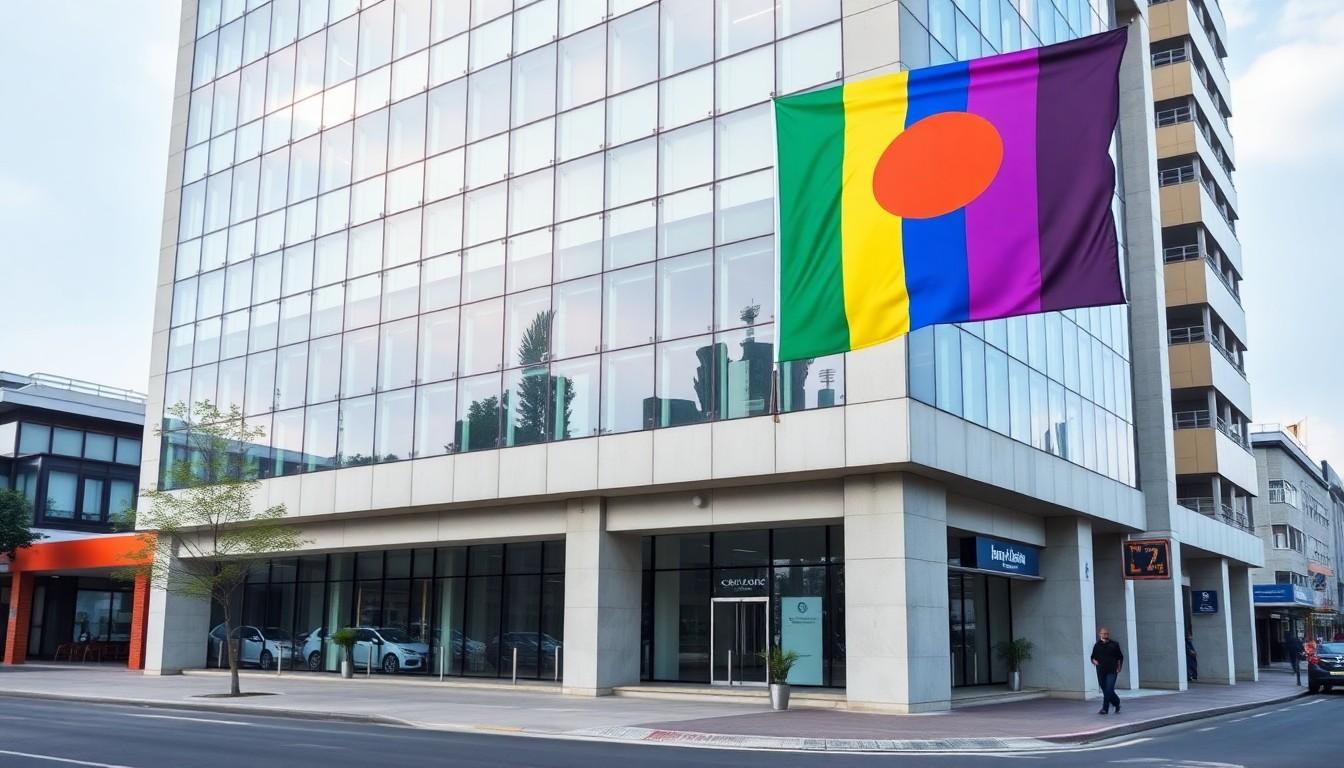
Readers in Cameroon are asking whether displaying a rainbow flag is illegal, amid widespread concern about anti-LGBTQ+ policing and public attitudes. The key point is simple but important: Cameroon’s criminal law targets certain sexual acts, not the flag itself. In practice, however, broad public-order provisions can make carrying or displaying LGBTQ+ symbols risky.
Essential Takeaways
- No express ban: Cameroon’s criminal code doesn’t specifically prohibit the rainbow flag.
- Article 347-1: The law criminalises same-sex sexual relations, with possible prison sentences and fines.
- Practical danger: Police may rely on broad allegations such as public disorder or offences against public morality.
- Rights concerns: Human Rights Watch and Amnesty International have documented discrimination, arbitrary detention and abuse involving LGBT people.
- Legal uncertainty: No clearly reported court ruling has definitively settled the flag’s status.
The rainbow flag isn't named in Cameroon’s criminal law
The strongest legal point is also the easiest to miss. Article 347-1 of Cameroon’s Penal Code addresses sexual relations between people of the same sex. It doesn’t mention rainbow flags, clothing, badges or other symbols.
That distinction matters because criminal law generally needs to identify the prohibited conduct. As 237online’s discussion of Article 347-1 shows, the provision is framed around sexual activity rather than the possession of an object or the display of a political or social message.
The same broad reading applies to Cameroon’s cybercrime provisions. Rules concerning sexual propositions made electronically focus on communications and conduct, not on fabric, colours or visual symbolism. In other words, a flag doesn’t become illegal simply because it carries a message associated with LGBTQ+ rights.
Why the legal answer doesn't always settle the real-world risk
For anyone considering displaying a rainbow flag in Cameroon, the practical question is less tidy. A symbol may not be prohibited in its own right, but authorities can still invoke broader laws or public-order concerns, particularly in a tense environment.
Human Rights Watch has reported that Cameroon’s anti-homosexuality laws have been enforced through arrests, detention and investigations that sometimes extend beyond evidence of sexual conduct. Its reporting also describes the damaging effect of accusations and surveillance on people perceived to be LGBT or supportive of LGBT rights.
That creates a worrying gap between legal wording and lived experience. A person carrying a rainbow flag might not be told they have violated a specific ban on the flag. Instead, they could face questioning or detention under a more general allegation. The uncertainty itself becomes a deterrent.
Article 347-1 is the centre of the controversy
Article 347-1 is the provision most often cited in discussions of LGBT rights in Cameroon. It provides for imprisonment and a fine for same-sex sexual relations, and it applies to both men and women.
Human Rights Watch’s wider documentation has described how the law can encourage police action based on suspicion, denunciation or perceived identity rather than clear proof of a sexual act. That makes the statute significant well beyond the narrow wording on the page.
The result is a climate where ordinary items can attract attention. A brightly coloured shirt, a social-media post or a flag may be interpreted through the lens of the law, even when the item itself isn’t prohibited. For visitors and residents alike, that makes discretion and local advice especially important.
What human-rights groups say about enforcement
The issue isn’t merely theoretical. Human Rights Watch has recorded cases involving arbitrary arrest, ill-treatment and prosecutions linked to accusations of homosexuality. Amnesty International has likewise highlighted the risks faced by LGBT people and activists in Cameroon, including pressure on those who defend their rights.
Travel guidance can be more cautious than a strict legal reading because it reflects what may happen on the ground, not just what a statute says. Scruff’s Cameroon travel information, for example, warns travellers about the hostile environment and the potential consequences of openly identifying as LGBT.
That distinction is useful for anyone searching for practical advice. “Not expressly banned” doesn’t mean “safe in every setting”. In a country where suspicion can lead to questioning, the safest choice may be to avoid public displays and seek current advice from trusted local organisations or diplomatic services.
What could clarify the position?
The cleanest answer would come from a court ruling specifically addressing the display of an LGBTQ+ symbol. Without that kind of decision, the legal status of the rainbow flag remains a matter of interpretation rather than settled case law.
Cameroon’s obligations under international human-rights instruments add another layer to the debate. Human Rights Watch has urged the authorities to protect LGBT people from arbitrary detention, abuse and discrimination, while Amnesty’s campaigning has drawn attention to the need for rights-based reform.
For now, the law’s silence offers limited comfort. The flag itself may not be a listed offence, but the surrounding legal and social climate can still make it a flashpoint. A small piece of cloth can carry a very large risk when fear fills the gaps between legislation and enforcement.
The safest conclusion is straightforward: the rainbow flag isn’t expressly banned, but public display can still expose people to serious practical danger.
Source Reference Map
Story idea inspired by: [1]
Sources by paragraph: