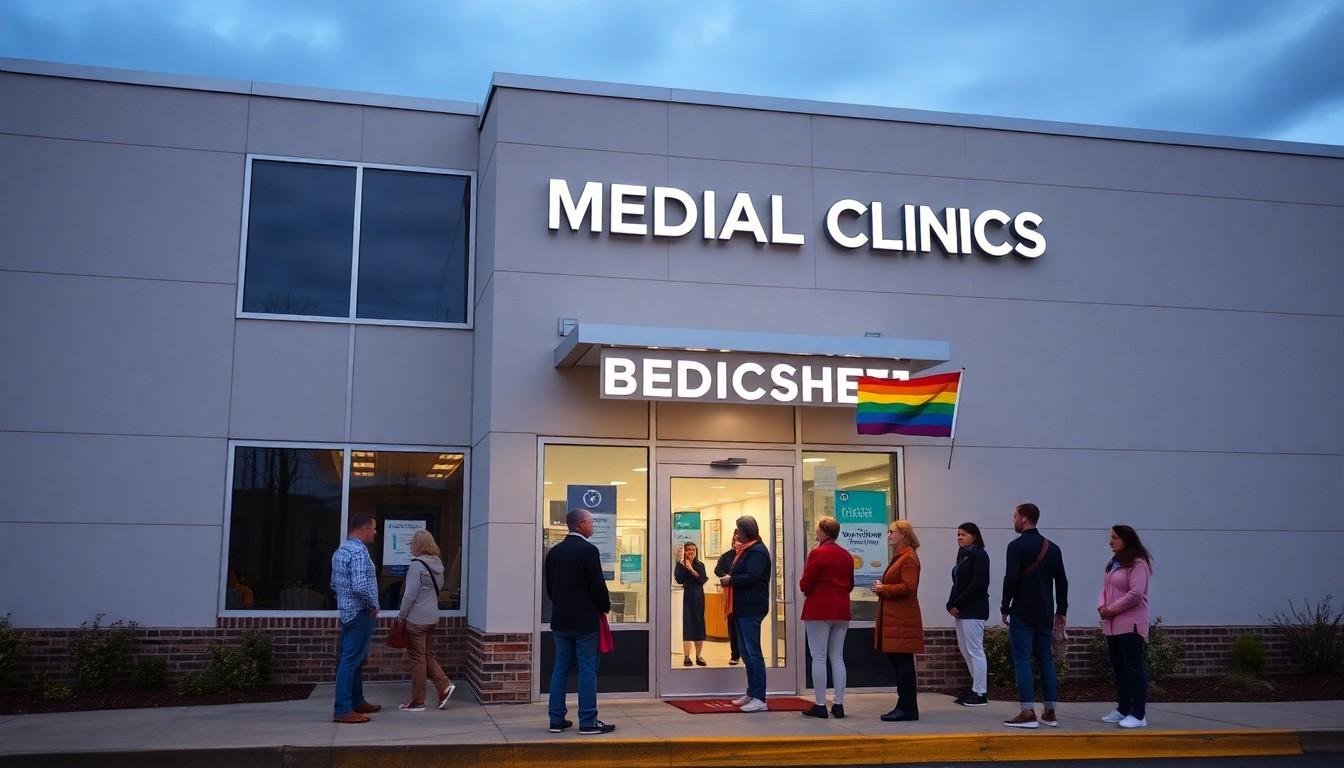
Families and young people in New York’s Hudson Valley are leaning on community centres, clothing exchanges and specialist providers as access to gender-affirming care becomes more uncertain. The practical support matters because appointments can be scarce, travel expensive and political pressure emotionally exhausting, even in a state with legal protections for transgender people.
Essential Takeaways
- Community support remains vital: Local LGBTQ+ organisations offer groups, guidance, practical help and safer spaces.
- Care can involve several steps: Gender-affirming support may include social, psychological and medical care, depending on an individual’s needs.
- Waiting lists are a real barrier: Some providers are harder to reach, making referrals and advance planning increasingly important.
- Travel adds expense: Patients may need to travel beyond the Hudson Valley, creating extra costs for transport, time and accommodation.
- Practical resources help: Clothing swaps, peer networks and specialist information can make everyday life feel less isolating.
Local support is doing more than filling a gap
The most striking feature of the Hudson Valley’s response is how much support happens outside a traditional clinic. Community organisations connect young people and families with peer groups, practical advice and people who understand the experience without requiring a lengthy explanation.
That work includes the Dutchess County Pride Center, the Hudson Valley LGBTQ+ Community Center and The LOFT LGBTQ+ Community Center. Their services vary, but the shared aim is simple: help transgender people find information, companionship and a route through a complicated system.
For a teenager waiting for an appointment, that human contact can be more than comforting. It can make the future feel less abstract and considerably less lonely.
Why access is becoming harder
Gender-affirming care isn't one single treatment. It can include social support, counselling, puberty blockers or hormone therapy, with medical decisions made according to a person's age, health and circumstances. Legal and clinical rules can also differ, so families often need clear guidance before taking the next step.
In the Hudson Valley, providers and advocates report longer waits, changing referral patterns and more caution around services connected with federal funding. Planned Parenthood Upper Hudson continues to publish information about gender-affirming healthcare, including routes for accessing care, but availability can still depend on capacity and demand.
That means a family may need to contact several services, ask about current waiting times and check whether a provider accepts its insurance. It isn't glamorous advice, but a notebook, a list of questions and a little persistence can save considerable stress.
Community centres offer practical help, not just conversation
Some of the most useful services are wonderfully ordinary. Trans Closet Hudson Valley provides a way for people to exchange clothing, helping them find items that better match how they want to present without the expense of rebuilding a wardrobe from scratch.
The LOFT's TransMission programme and wider transgender support work offer another kind of resource: community. Groups and peer-led spaces can help people compare experiences, find trusted referrals and understand which questions to ask healthcare providers.
These details matter because transition doesn't happen only in a consulting room. Clothing, names, paperwork, family conversations and social confidence all shape daily life. A supportive jumper, a useful contact or one reassuring conversation can sometimes carry surprising weight.
A more complicated route for families
Parents and carers often have to balance emotional support with practical research. Before an appointment, it's sensible to check the provider's age requirements, likely waiting time, referral process, insurance position and whether consultations are available locally or remotely.
Legal information can help explain the broader picture, but it shouldn't replace advice from a qualified clinician or solicitor. The legal landscape around gender-affirming care is changing, and rules may depend on location, age, treatment and funding arrangements.
Families should also keep copies of letters, prescriptions and insurance correspondence. If a service changes its process, having a clear record can make the next conversation quicker and less frustrating.
Hope is being built person by person
The political debate can make healthcare feel distant and enormous, but local organisations keep bringing the issue back to everyday support. A welcoming centre, an accurate referral or a peer group can't solve every policy problem, yet each can give someone a steadier foothold.
That resilience is visible across the Hudson Valley's network of LGBTQ+ services. The message isn't that access is effortless. It's that people don't have to navigate uncertainty entirely alone.
For families looking for help, the best starting point is usually a reputable local LGBTQ+ organisation, followed by a direct conversation with an experienced healthcare provider about individual needs and current availability.
It's a small network, but for many people it makes a very large difference.
Source Reference Map
Story idea inspired by: [1]
Sources by paragraph:
- Paragraph 1: [2], [4]
- Paragraph 2: [3], [5]
- Paragraph 3: [6], [7]
- Paragraph 4: [2], [6]
- Paragraph 5: [3], [4]
- Paragraph 6: [5], [7]
- Paragraph 7: [2], [3]
- Paragraph 8: [4], [6]
- Paragraph 9: [6], [7]
- Paragraph 10: [5], [7]
- Paragraph 11: [2], [4]
- Paragraph 12: [3], [5]
- Paragraph 13: [6], [7]
- Paragraph 14: [2], [3]
- Paragraph 15: [4], [5]
- Paragraph 16: [6], [7]
- Paragraph 17: [2], [4]
- Paragraph 18: [3], [5]
- Paragraph 19: [6], [7]
- Paragraph 20: [2], [3]
- Paragraph 21: [4], [5]
- Paragraph 22: [6], [7]
- Paragraph 23: [2], [4]
- Paragraph 24: [3], [5]
- Paragraph 25: [6], [7]