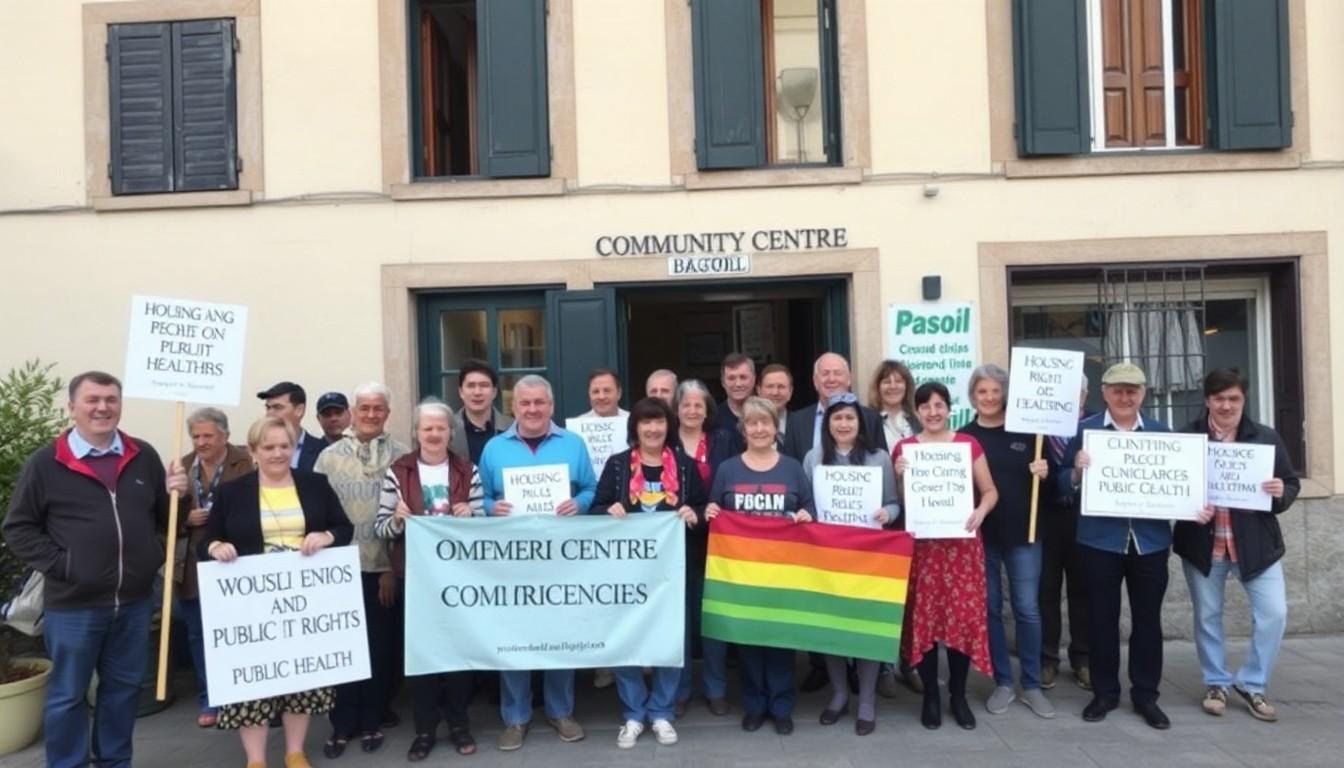
Organisers of the first Campi Flegrei Pride in Bacoli are pushing back after a parade video triggered a wave of hateful social media comments. Their response frames the event as more than a celebration, linking LGBTQ+ rights with earthquake displacement, public services, social justice and international solidarity.
Essential Takeaways
- A first for the area: The Campi Flegrei Pride took place in Bacoli on 19 September 2026.
- Online reaction turned hostile: A widely shared parade video attracted homophobic abuse, fascist references and other personal attacks.
- Local issues were central: Organisers connected the march with bradyseism-related displacement, building speculation and pressure on public healthcare.
- International solidarity featured prominently: Chants supporting a free Palestine were presented as part of the organisers' intersectional politics.
- The response was defiant: The Pride group said hostility towards freedom revealed more about its attackers than the marchers.
Bacoli's first Pride was meant to be a public statement
The first Campi Flegrei Pride arrived with music, colour and the unmistakable pulse of a street demonstration. A murga helped set the rhythm in Bacoli, while participants carried messages centred on freedom, inclusion and social justice, according to Torresette. (Sources [5], [2])
That combination made the event feel rooted in its surroundings rather than imported from elsewhere. The organisers presented the march as a response to everyday pressures in the Phlegraean area, including the aftermath of seismic unrest and the treatment of residents left waiting for practical support. For many participants, the parade was celebratory, but it was also deliberately political.
A parade video became the focus of a bitter online backlash
The flashpoint was a video of the march shared on Facebook. It spread quickly and drew thousands of comments, with reports describing homophobic insults, references to fascism, ableist abuse and calls for devastating natural events to hit the area. Virgilio reported on the organisers' response, while local coverage also highlighted the scale of the online hostility. (Sources [6], [7])
That reaction has an ugly familiarity. A colourful public event is clipped into a short video, stripped of its local context and then turned into a magnet for outrage. In this case, the comments reportedly moved far beyond disagreement with the Pride's message, becoming attacks on people and even fantasies about catastrophe.
Why organisers linked Pride to earthquakes and public services
The Pride group says its event grew from the problems facing the Campi Flegrei, not from a wish to avoid them. Its manifesto reportedly points to around 5,000 people displaced by bradyseism, along with concerns about property speculation, a weakened public health system and austerity-driven cuts. (Sources [1], [5])
That wider framing matters. LGBTQ+ marches increasingly overlap with housing, healthcare, migration and anti-racism campaigns because organisers see these issues as connected rather than separate. The Campi Flegrei statement follows that tradition, arguing that a community's safety includes both freedom from discrimination and meaningful support during a crisis.
"Free Palestine" became part of the argument
Some critics questioned why a queer march included slogans supporting Palestinian freedom. The organisers' answer was that international solidarity fits their intersectional approach, rather than contradicting it. Local reporting also identified the Palestine chants as one of the elements that fuelled the online debate. (Sources [1], [7])
Whether one agrees with every political message on a march or not, the disagreement shows how Pride has evolved. It isn't simply a parade with rainbow branding. For many organisers, it is a platform for connecting identity, power and unequal access to safety. That makes the event more demanding, but also more revealing.
The organisers chose defiance over retreat
The response from the Campi Flegrei Pride organisers was structured around three ideas: why the march exists, why international solidarity belongs in it and what the online abuse says about the current cultural climate. They also rejected calls for a return to psychiatric institutions and condemned attacks directed at individuals. (Sources [1], [3])
A local political counterpoint had already emerged before the parade, with councillor Schiano publicly opposing the event and saying the municipality should not celebrate it, according to Pozzuoli Magazine. That tension helps explain why the organisers' final message was so forceful: the march was not only about visibility, but about who gets to claim public space and define the area's future. (Sources [4], [5])
For residents, the lasting image may be less about the comment storm than the crowd itself: music in the street, slogans carried through Bacoli and a community refusing to be reduced to someone else's insult. Their closing sentiment was simple and striking: the ground may shake, but fear of freedom exposes an emptiness of its own.
The first Campi Flegrei Pride has shown that visibility can be joyful, political and fiercely local at the same time.
Source Reference Map
Story idea inspired by: [1]
Sources by paragraph: