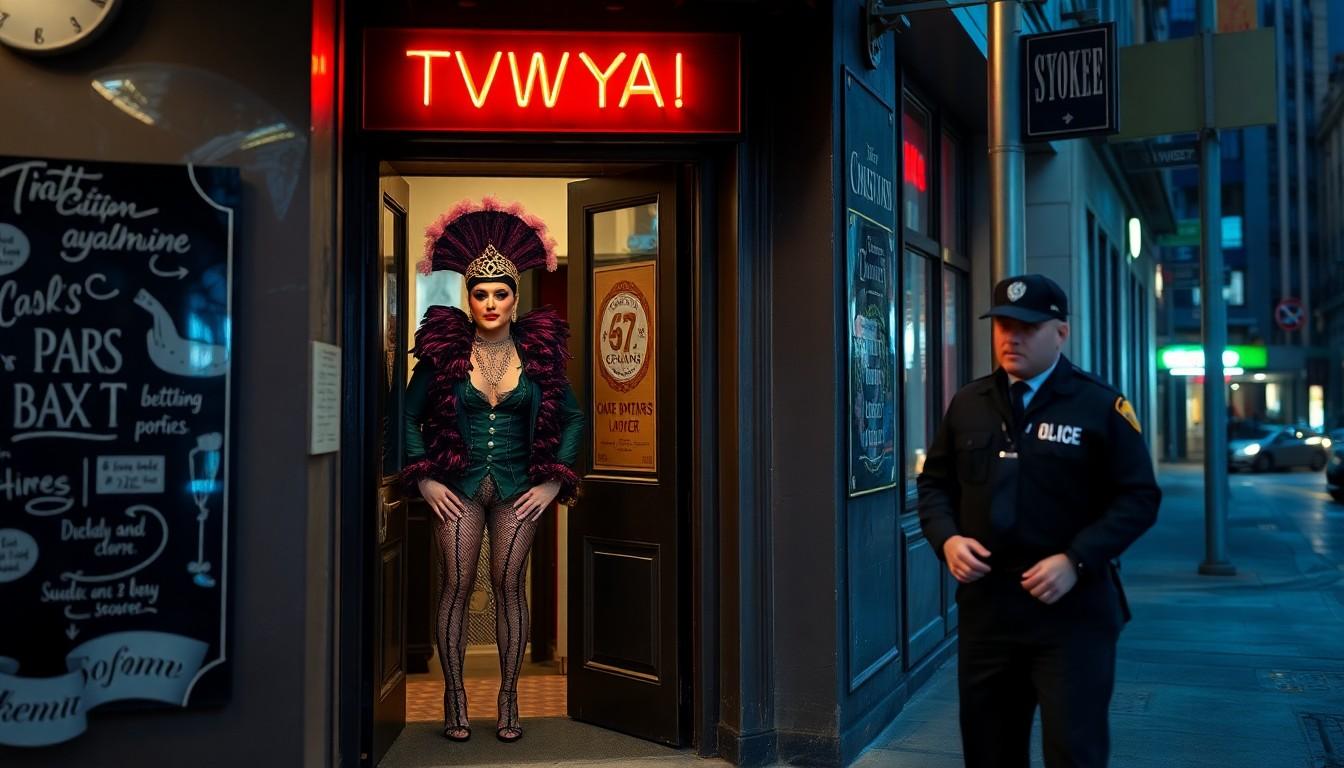
Festival audiences are meeting Body Blow, an Australian LGBTQ+ crime thriller set in Sydney’s shadowy gay-bar underworld. Its undercover-cop story promises danger, romance and self-discovery, but the film’s crowded plotting and underdeveloped characters make it a frustrating watch rather than the sharp, emotionally charged thriller it might have been.
Essential Takeaways
- The premise: A closeted police officer goes undercover inside a Sydney gay bar linked to drugs and police corruption.
- The romance: His investigation is complicated when he falls for a bartender caught between competing loyalties.
- The mood: The film aims for a sleek, dangerous blend of noir, romance and queer drama.
- The weakness: Too many subplots and familiar clichés blur the central story.
- The verdict: Ambitious in scope, but uneven execution leaves the film difficult to remember.
A bold premise meets a muddled script
Body Blow opens with the ingredients of a gripping Australian crime thriller: a police operation, a compromised nightclub, secret recordings and a criminal network protected from within the force. The setting has texture, too. Sydney’s gay-bar scene becomes a place of glamour, danger and concealment, where a quiet drink can sit just a few steps away from blackmail and betrayal.
According to the available festival coverage and review listings, the film was positioned as a striking new work from writer-director Dean Francis, with global sales and theatrical interest building around its release. That ambition is easy to see, but the finished film struggles to give every dramatic thread enough room to breathe.
At the centre is Aiden Hardwick, played by Tim Pocock, a police officer whose private life is tightly locked away. His assignment forces him into an environment that challenges both his professional identity and his understanding of himself. It sounds like fertile material, but the screenplay rarely settles on which of those conflicts matters most.
The undercover mission has plenty of danger
Aiden is sent into a Sydney gay bar run by Fat Frankie, a drag performer and alleged drug kingpin played by Paul Capsis. Frankie’s influence reaches far beyond the club, particularly through compromising footage that allegedly implicates dirty officers and exposes abuse behind closed doors.
That setup gives Body Blow a grimy, conspiratorial energy. There are moments when the film seems ready to become a tense police thriller, with every character potentially hiding something. The trouble is that the story keeps adding new complications before earlier ones have fully landed.
The result feels less like a tightening web and more like a drawer full of tangled cables. There’s a kingpin, corrupt police, exploited workers, blackmail, an undercover operation and a romance, but the connections between these elements aren’t always cleanly explained. FilmInk’s Australian coverage and the Sydney Film Festival review from The AU Review both reflect the wider interest in the film’s crime-focused premise, although the story’s crowded design remains a significant hurdle.
Romance should be the emotional anchor
The most promising relationship is the one between Aiden and Cody, a bartender played by Tom Rodgers. Cody is positioned as unpredictable and emotionally risky, moving between different loyalties while also becoming the person who exposes Aiden’s carefully guarded feelings.
That relationship could have supplied the film with its pulse. A closeted officer falling for someone connected to the investigation naturally creates pressure, especially when desire and duty begin pulling in opposite directions. Instead, the romance is often asked to compete with the crime plot rather than deepen it.
Aiden’s celibacy and secrecy are also left frustratingly vague. The film gestures towards a history of shame and repression, but doesn't always explain how he reached this point or why he would choose such a dangerous assignment. For an LGBTQ+ crime thriller built around self-acceptance, that missing emotional detail matters.
The film reaches for noir, camp and queer drama
Body Blow clearly wants to occupy several cinematic worlds at once. It borrows the hard-edged atmosphere of a crime saga, the heightened style of queer nightlife and the emotional vocabulary of a romantic drama. That mixture can work beautifully when the tone is controlled, as films such as The Crying Game demonstrated decades ago.
Here, the balance is less secure. Frankie’s flamboyant presence adds camp and theatricality, while the police storyline pushes towards darker, more conventional thriller territory. Neither side fully wins, leaving the film with an unsettled identity.
The references and genre echoes aren't necessarily a problem. In fact, a familiar framework can make a film more accessible. But the script needed stronger character work and a clearer sense of escalation to turn those influences into something distinctive, rather than a collection of recognisable parts.
Who might enjoy Body Blow?
Viewers drawn to Australian independent cinema, queer noir and stories about hidden police corruption may still find reasons to give Body Blow a look. The film’s Sydney setting, nightclub backdrop and collision of professional duty with personal desire offer a more unusual proposition than a standard procedural.
It may also appeal to audiences who enjoy messy, heightened melodrama. The film is not short on ideas, and its willingness to tackle repression, exploitation and institutional wrongdoing deserves some credit. The issue is that those ideas aren't always shaped into a confident whole.
For casual viewers seeking a tightly plotted undercover-cop thriller, however, the film could prove demanding. The central mystery becomes harder to follow as more subplots arrive, while the characters’ motivations sometimes remain less vivid than the situations surrounding them. As Brent Marchant’s review argues, a leaner script and more fully developed character journeys could have made the material considerably stronger.
Body Blow has the bones of a provocative queer crime story, but it never quite finds the focus to make those bones move convincingly.
Explore it for the ambition, but temper expectations about the execution.
Source Reference Map
Story idea inspired by: [1]
Sources by paragraph:
- Paragraph 1: [2], [4]
- Paragraph 2: [6], [7]
- Paragraph 3: [3], [4]
- Paragraph 4: [5], [6]
- Paragraph 5: [2], [3]
- Paragraph 6: [4], [7]
- Paragraph 7: [3], [5]
- Paragraph 8: [2], [4]
- Paragraph 9: [6], [7]
- Paragraph 10: [3], [5]
- Paragraph 11: [2], [4]
- Paragraph 12: [3], [6]
- Paragraph 13: [5], [7]
- Paragraph 14: [2], [3]
- Paragraph 15: [4], [5]
- Paragraph 16: [6], [7]
- Paragraph 17: [2], [3]
- Paragraph 18: [4], [5]
- Paragraph 19: [6], [7]
- Paragraph 20: [2], [3]