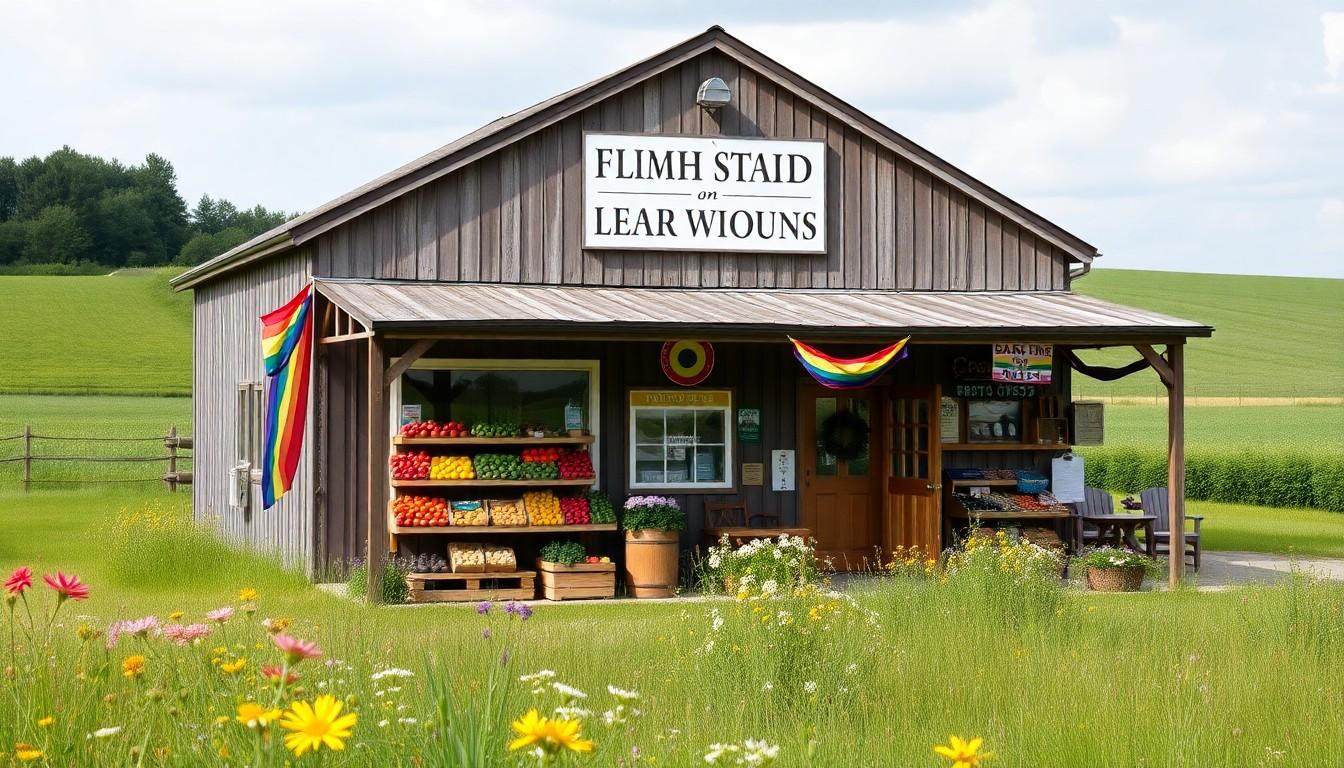
Visitors are turning a roadside bakery in Charlotte, Michigan, into an unexpected gathering place, where Pride flags, farm animals and small-batch treats are helping LGBTQ+ people and allies feel welcome. Wildflower Wives Farm Stand & Bakery matters because it shows how rural belonging can grow in an ordinary, wonderfully homespun setting.
Essential Takeaways
- A rural celebration drew hundreds: Pride on the Farm brought roughly 500 visitors to the Charlotte farm stand.
- The welcome is intentional: Owners Sarah and Kim Padilla created a space where LGBTQ+ visitors can feel safe, visible and included.
- The setting feels refreshingly low-key: Guests browsed baked goods, crafts and seasonal produce, then lingered with animals and neighbours.
- The stand runs simply: Self-serve shopping, rotating small-batch treats and online updates make visits easy to plan.
- The wider need is real: LGBTQ+ people live across rural America, often with fewer nearby support networks and protections.
A Pride flag changes the atmosphere
The striking thing about Wildflower Wives isn't just the rainbow flag above a farm stand. It's the contrast: bright colours, open fields and the gentle bustle of people buying treats in a community not always associated with LGBTQ+ visibility.
According to Pride Source, the Padillas weren't sure how locals would respond when they put the flag up. That uncertainty makes the turnout feel especially meaningful. Families, couples and children arrived, wandered among the stalls and farm animals, and found a celebration that felt more like a welcoming village gathering than a formal parade.
The event's relaxed atmosphere was part of its charm. There was no crowded march route to navigate, just baked goods, handmade items, swinging chairs and plenty of time to talk.
From farm stand to safe space
Wildflower Wives opened in spring and quickly became more than a place to pick up seasonal food. The Padillas' approach is straightforward but powerful: make the welcome visible, then give people reasons to come back.
The farm stand uses an honour-system setup, with a camera monitoring the space when the owners aren't there. Pride Source reported that a video of visitors discovering the stand spread widely online, helping word travel beyond Charlotte.
That kind of accidental publicity can be more persuasive than a polished campaign. People saw a warm, personal place rather than a corporate slogan, and the response suggested that many were looking for exactly that.
Why rural LGBTQ+ visibility matters
Popular culture often treats queer life as an urban story, but that picture leaves out millions of people. Research cited by Pride Source estimates that between 3 and 5 per cent of rural adults identify as LGBTQ+, while a significant share of queer Americans live outside major cities.
For someone in a small town, the nearest explicitly welcoming venue may be a long drive away. That makes an inclusive cafe, farm shop or community event unusually valuable. It can offer something practical, such as connection and information, as well as something harder to measure: the relief of not having to explain yourself.
Other Michigan communities are developing similar spaces. Pride Source has reported on rural youth events that bring together children and families from across the state, reinforcing the idea that visibility doesn't need to copy a city festival to matter.
What visitors can expect at Wildflower Wives
The farm stand's appeal is partly about food. Its rotating menu has included playful cookie flavours such as Fruity Pebbles, red velvet and mint chocolate, alongside baked goods and crafts. Menus change, so checking the farm's website or social channels before travelling is sensible.
Shopping is designed to be uncomplicated. According to the Wildflower Wives website, self-serve pickup is available from Friday to Sunday, between 9am and 6pm, and customers can place orders ahead of time.
Still, the bigger draw may be the pace. Visitors aren't being hurried through a checkout queue. They can browse, pause, meet the goats and let a quick farm-shop visit turn into a surprisingly restorative afternoon.
A small-town model with wider ambitions
Sarah and Kim Padilla hope the idea inspires other rural businesses to create their own welcoming events. Their message is broader than Pride alone: communities become stronger when people have regular, low-pressure opportunities to meet.
That feels like the lasting lesson here. A farm stand can't solve every challenge facing rural LGBTQ+ residents, but it can make one corner of daily life kinder and less isolating. Sometimes belonging starts with a flag, a tray of cookies and a place to sit.
Wildflower Wives shows how a modest rural business can become a meaningful home for community.
Source Reference Map
Story idea inspired by: [1]
Sources by paragraph: