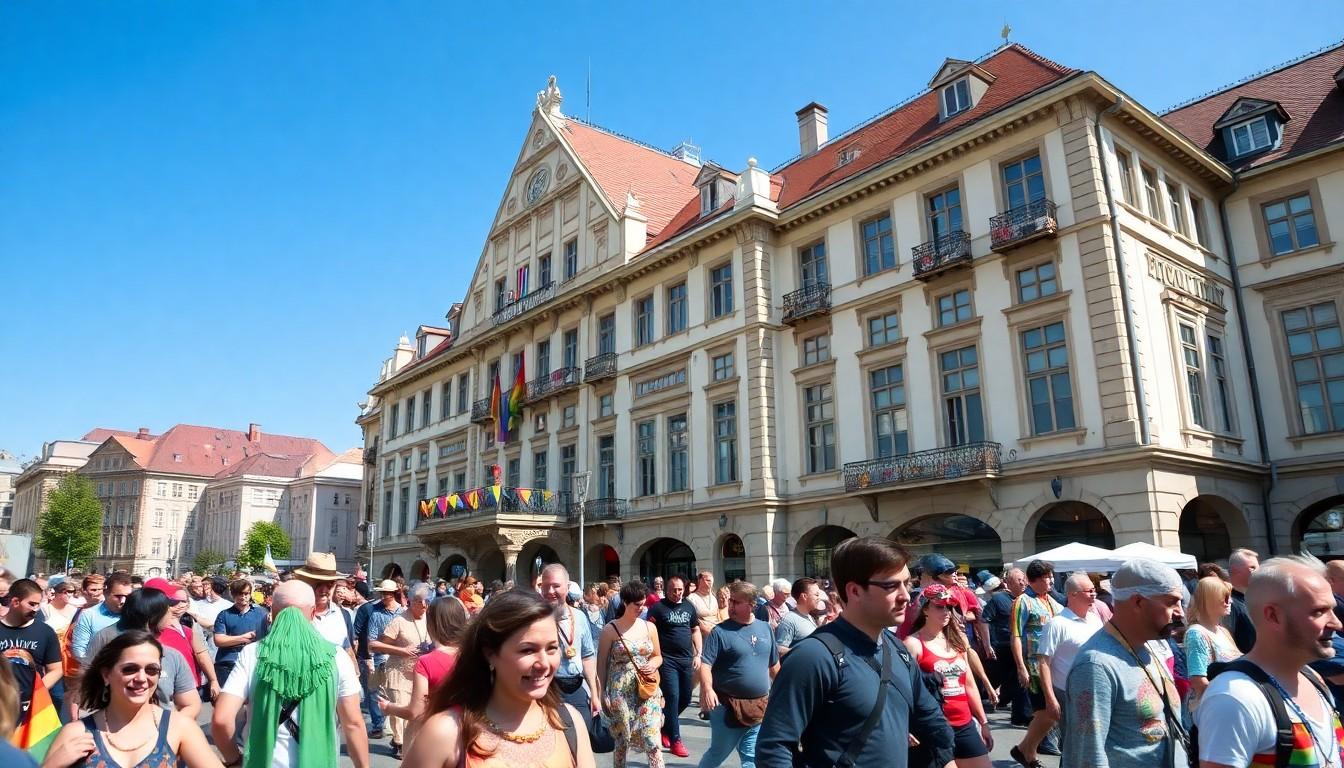
Visitors are heading to Munich’s Oktoberfest for a lively second day filled with Gay Sunday, one of the world’s biggest traditional costume parades and an evening of celebrity sparkle. With sunshine forecast and extra crowd controls in place, it’s shaping up to be a colourful, busy and carefully managed day on the Wiesn.
Essential Takeaways
- Gay Sunday returns: The long-running gathering at Bräurosl remains a major fixture for gay men visiting Oktoberfest.
- A huge parade follows: More than 9,000 participants are expected in a seven-kilometre procession through Munich.
- Sunny conditions help: Mostly bright weather should keep the festival atmosphere buoyant before evening cloud arrives.
- Safety is tighter: AI-supported cameras, crowd monitoring and hundreds of police officers and stewards are being deployed.
- Bräurosl is central to the day: The tent is closely linked with Munich’s queer Oktoberfest celebrations and attracts strong demand.
Gay Sunday sets the tone early
Oktoberfest’s second day begins with a distinctly queer welcome at Bräurosl, where Gay Sunday has been part of the festival calendar since the 1970s. The tent fills with music, conversation and traditional Bavarian dress, creating an atmosphere that feels both exuberant and warmly familiar.
Munich’s official events information lists queer gatherings as an established part of the wider Oktoberfest programme, while specialist event guides continue to promote Gay Sunday and related Rosa Wiesn celebrations. For visitors hoping to attend, arriving early is sensible: Bräurosl is popular, and the liveliest tables can disappear quickly. ([3], [5], [6])
The tent itself remains one of the better-known places to experience this side of the festival. Booking guidance and venue information highlight its popularity, so spontaneous visitors should be prepared for queues and a crowded interior, particularly around the main Sunday gathering. ([4], [7])
Munich’s traditional costume parade takes over the streets
At 10am, attention shifts from the beer tents to the Trachten- und Schützenzug, a spectacular procession running from Maximilianstrasse towards the Theresienwiese. The route stretches for around seven kilometres, with costume groups, brass bands, shooting clubs, horse-drawn carriages and decorated floats creating an unusually grand introduction to the day.
The parade’s appeal lies in its sheer scale, but also in its detail. Feathers, embroidered waistcoats, polished harnesses and colourful regional costumes turn the city centre into a moving display of Bavarian and European traditions. The Munich Kindl, Sina Hochreiter, is due to lead the procession on horseback. ([2], [3])
If you’re watching from the street, choose a position early and keep an eye on side roads, as large crowds can gather quickly. Comfortable shoes are a small but important detail, especially if you’re planning to continue on to the festival grounds afterwards. ([2], [3])
Sunshine brings another busy Wiesn day
Forecasts call for mostly sunny conditions, with clouds arriving later in the evening. That kind of weather is almost tailor-made for Oktoberfest: bright enough for the parade, mild enough for wandering and atmospheric enough for the lights and music to take over after dark.
The previous day had already drawn tens of thousands of visitors in pleasant conditions, yet police reported no major incidents. That promising start matters because the second weekend can become particularly intense, with locals, tourists and traditional groups all converging on the same compact site. ([2], [3])
For visitors, the practical lesson is simple. Drink water between beers, agree a meeting point before entering a tent and keep your phone and wallet somewhere secure. The festival feels carefree, but busy crowds can turn a relaxed afternoon into a frustrating search for friends surprisingly fast. ([2], [3])
New crowd controls aim to prevent dangerous crushes
After difficult crowding incidents during the previous year, organisers have strengthened their approach to visitor management. A dedicated coordination centre is monitoring movement across the site, with the ability to assess pressure points and steer crowds when necessary.
More than 50 AI-assisted cameras are expected to help identify unusually dense gatherings, while a designated crowdspotter will watch visitor flows on the busiest days and make announcements if routes need to change. It’s a more visible sign of how major festivals are using technology to manage the realities of mass attendance. ([2])
Around 600 police officers and hundreds of stewards are also working around the grounds. Police have additional surveillance cameras in operation, trained pickpocket investigators are patrolling, and specialist drone-response support is available following recent drone-related incidents. ([2])
An evening of celebrity glamour awaits
Once the parade and daytime crowds have given way to the evening rush, the Käfer tent becomes the focus of attention. Its Almauftrieb gathering is known as one of Oktoberfest’s more exclusive celebrity meetings, bringing a polished, high-profile finish to a day that began with community celebrations and public tradition.
That contrast is part of the Wiesn’s enduring charm. Within a few hours, visitors can move from brass bands and historic costumes to queer festival culture, packed beer halls and a glossy celebrity event. It’s a reminder that Oktoberfest isn’t one experience, but several layered together across a single day. ([2], [3], [6])
For most guests, the best approach is to choose one or two priorities rather than attempt everything. See the parade, enjoy Bräurosl if you can, and leave enough time to navigate the grounds without turning the day into a race.
A little planning goes a long way when Munich’s biggest party is at full volume.
Source Reference Map
Story idea inspired by: [1]
Sources by paragraph: