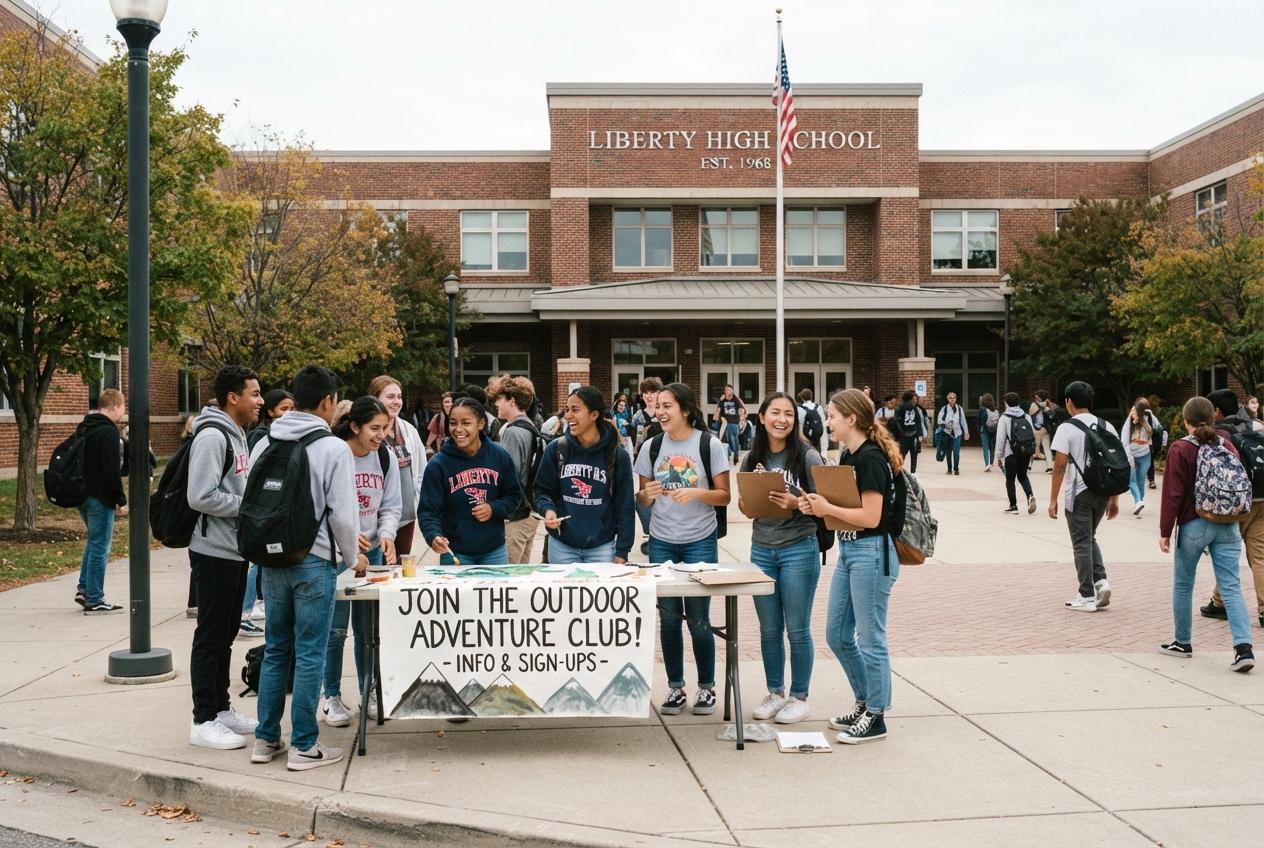
Students have scored a major victory after a Virginia school district settled a legal fight over an LGBTQ+ school club, spotlighting why Gay-Straight Alliances still matter. The agreement follows a wider run of court challenges across the US, where pupils and civil-rights groups have pushed back against attempts to shut queer-inclusive clubs out of school life.
Essential Takeaways
- A legal win: King George County Public Schools settled a lawsuit brought by students seeking recognition for a Gay-Straight Alliance.
- A familiar tactic: The district reportedly tried to avoid recognising the club by barring all student organisations.
- A wider pattern: Similar disputes have reached courts in Kentucky and Florida.
- Why clubs matter: GSAs can offer connection, peer support and a safer route to discuss LGBTQ+ issues.
- The bigger lesson: Equal access rules can protect student groups even when schools change their policies.
Students challenged a school club ban
The dispute centred on students who wanted to create a Gay-Straight Alliance, commonly known as a GSA, at King George High School in Virginia. Rather than recognise the club, the school district moved to stop all student clubs, a blunt solution that critics said appeared designed to target one group without naming it directly.
According to WHRO, the students' lawsuit ended in a settlement requiring the district to address the club's recognition. The result is more than a paperwork victory. For pupils hoping to find a room where they can talk openly, being allowed to meet can make school feel noticeably less lonely. (WHRO)
The American Civil Liberties Union has argued in similar cases that schools can't deny one student organisation access while allowing comparable groups to operate. That principle is rooted in federal protections around equal access, rather than a special exemption created solely for LGBTQ+ pupils. (ACLU)
Why Gay-Straight Alliances remain important
A GSA can be a practical support network as much as a discussion group. Meetings might involve conversations about identity, bullying and school policy, but they can also be wonderfully ordinary: shared snacks, homework help and the relief of finding people who understand.
That quiet sense of belonging matters, particularly for students who may not have supportive communities at home. The ACLU's Florida case involving Yulee High School similarly focused on a district's refusal to recognise a GSA, with advocates seeking access on the same terms as other clubs. (ACLU of Florida)
Schools don't have to turn every club into a political battleground. In fact, treating a GSA like any other student organisation is often the least dramatic and fairest option. Students aren't asking for special treatment; they're asking not to be singled out.
The all-clubs approach is facing scrutiny
The Kentucky dispute shows how quickly the same legal question can take a different shape. There, the state board of education chose to prohibit every school club rather than allow a Gay-Straight Alliance, a decision the ACLU criticised as an attempt to avoid equal-access obligations. (ACLU)
On paper, a universal ban can sound even-handed. In practice, though, shutting every door because one group wants to enter can look less like neutrality and more like a workaround. It also removes activities that support school spirit, creativity and social connection for everyone else.
A federal court previously blocked another effort to exclude LGBTQ+ student clubs, according to LGBTQ Nation. Taken together, these cases suggest that schools may struggle to defend policies that appear neutral in wording but have a clear, targeted effect. (LGBTQ Nation)
What students and families should watch for
If a school refuses to recognise a GSA, families should first ask for the decision in writing and request the district's policy on student clubs. Compare how the school treats other non-curricular organisations, including where they meet, how they advertise and whether staff sponsors are permitted.
It can also help to contact a civil-rights organisation with experience in education law. The ACLU's Yulee litigation illustrates why records matter, from meeting requests and emails to club handbooks and board minutes. A tidy paper trail can turn a confusing dispute into a much clearer legal question. (ACLU of Florida)
Most importantly, students shouldn't have to face the process alone. A trusted teacher, parent, counsellor or local advocacy group can provide practical support while pupils decide what they want to do next.
A settlement can still set a powerful precedent
Settlements don't always deliver the courtroom drama of a final ruling, but they can produce meaningful change on the ground. In King George County, the agreement gives students a route towards the club they were trying to form, while reminding other districts that a sudden ban on all clubs may not solve an equal-access problem. (WHRO)
The wider message is encouraging: students are organising, asking direct questions and using the law when school policies leave them out. That takes persistence, especially when the issue has been dressed up as administrative housekeeping.
For queer pupils and their allies, a club room may look modest from the outside. Inside, it can be the place where someone finds a friend, a little courage and the feeling that school has space for them too.
A fair school policy shouldn't need a loophole to be fair.
Source Reference Map
Story idea inspired by: [1]
Sources by paragraph: