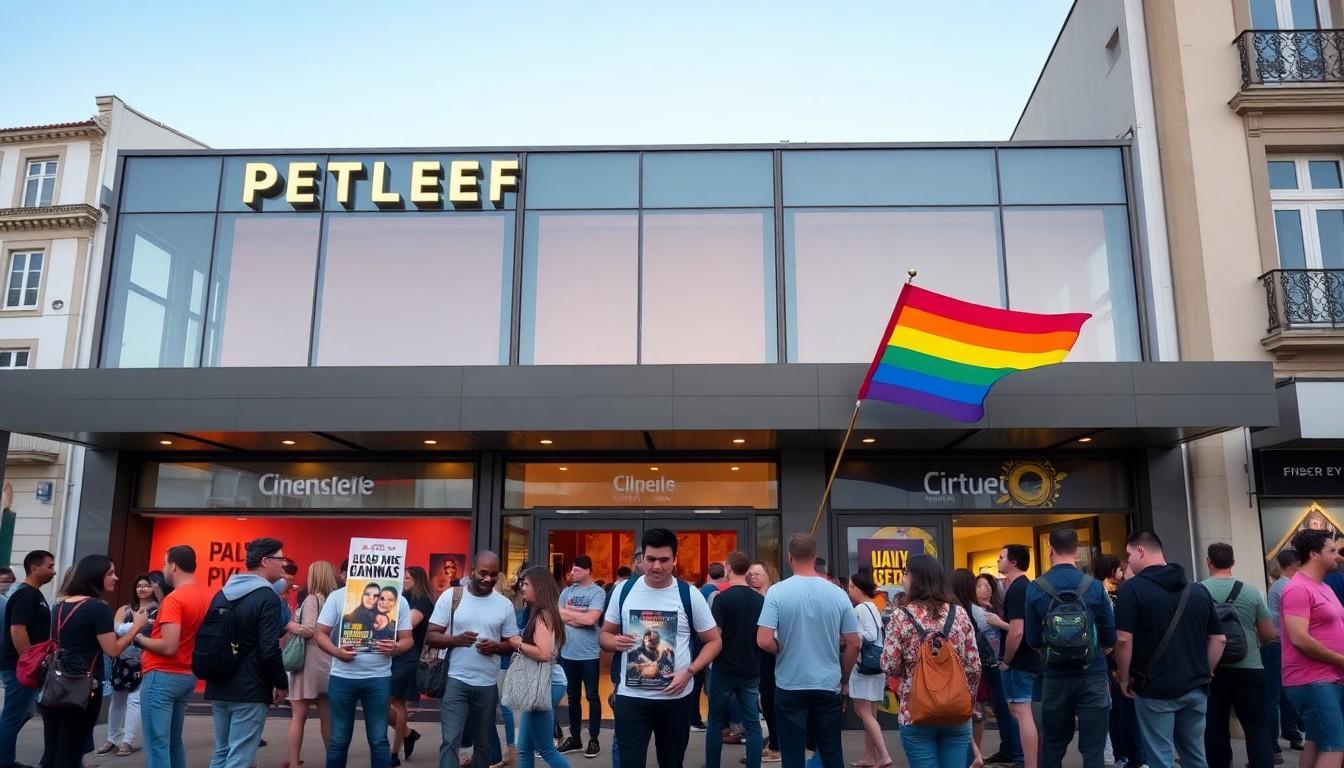
Film fans are heading to Lisbon for Queer Lisboa’s 30th anniversary, where 94 films bring together bold new LGBTQ cinema, restored classics and family-friendly discoveries. Across the Cinemateca Portuguesa and Cinema São Jorge, the festival offers a thoughtful, lively look at queer storytelling, from underground experiments to films made for younger audiences.
Essential Takeaways
- A landmark anniversary: Queer Lisboa marks 30 years with 94 features, documentaries and shorts.
- Classic and contemporary: The programme pairs new international films with restored queer cinema landmarks.
- A family-friendly first: The new Queer Family strand introduces children and parents to inclusive independent cinema.
- Portuguese history matters: Restored local works revisit the country’s post-revolution queer filmmaking scene.
- A broad cinematic mix: Mainstream releases, DIY experiments, documentaries and genre films all share the bill.
Lisbon’s Queer Film Festival Has Reached a Major Milestone
There’s something wonderfully fitting about a film festival devoted to queer perspectives celebrating three decades with such a wide-ranging programme. Queer Lisboa’s 30th edition runs from 18 to 26 September across Lisbon, filling two of the city’s best-known cinema venues with stories that are tender, confrontational, funny and occasionally gloriously strange. According to Escribiendo Cine, the anniversary edition brings together 94 films and a substantial retrospective. [4]
The festival began in 1997 at the Portuguese Cinematheque, initially under the name Lisbon Gay and Lesbian Film Festival. Its institutional home helped give it an unusually broad identity from the outset, attracting dedicated LGBTQ audiences as well as cinephiles curious about adventurous cinema. That balance still shapes the festival today, according to the Queer Lisboa programme announcement. [2]
Rather than treating queer cinema as a narrow category, the festival has long embraced a wider way of seeing. Camp, experimentation, political filmmaking and films with a distinctly queer gaze all have room here, which makes the event feel less like a single-issue showcase and more like a lively map of cinema itself. [7]
New Releases Meet Films That Changed Queer Cinema
The strongest part of the anniversary programme may be its conversation between the new and the familiar. The festival opens with Ira Sachs’ The Man I Love, starring Rami Malek, while Leah Nelson’s animated drama Tangles closes the event. In between, audiences can explore features, documentaries and shorts from filmmakers at very different stages of their careers. [7]
The competition strands also underline the festival’s international reach, with films from countries including South Africa, Mexico, Spain, Germany, France, Belgium, Brazil and the Philippines. French cinema has a particularly visible presence, with the Institut français du Portugal highlighting several French connections within this year’s programme. [3]
That range matters because queer cinema can easily be flattened into a handful of familiar themes. Queer Lisboa instead makes space for intimate dramas, hybrid documentaries, experimental films and work that tests the edges of genre. For viewers, it means a better chance of finding something unexpected rather than simply working through a predictable checklist. [2]
The Retrospective Looks Back to Move Forward
The expanded retrospective is one of the festival’s most appealing anniversary features, with 19 titles spanning several decades. The selection includes The Wounded Man, Taxi to the Toilet, Orlando, High Art and Bound, films that have helped shape how queer audiences and filmmakers understand the possibilities of the medium. [5]
There’s a tactile pleasure in seeing these works properly presented, particularly when restorations, digitised prints or rare screenings are involved. Orlando, for instance, is set to screen from a 35mm print at the Cinemateca Portuguesa, giving audiences a chance to experience Sally Potter’s adaptation with the kind of texture streaming can’t quite reproduce. [5]
The retrospective also looks beyond international canon. João Paulo Ferreira’s restored 1976 film Fatucha Superstar revisits Portugal’s rebellious post-dictatorship filmmaking culture, combining queer provocation, musical comedy and religious satire. It’s a reminder that local film histories can be every bit as daring as the better-known stories from London, New York or Berlin. [5]
A New Queer Family Strand Welcomes Younger Viewers
This year’s Queer Family section brings a welcome change of pace, with films selected for children and families while still engaging with inclusion and identity. The strand includes Brazilian titles such as Gugu’s World and the animated Papaya, offering younger viewers a chance to see independent cinema that reflects a wider range of lives. [6]
It’s also a smart long-term move. Festivals depend on audiences who are willing to return, explore and talk about what they’ve seen, and family screenings can make that habit feel natural from an early age. The programme details suggest strong interest from parents, which is encouraging for an initiative designed to build intergenerational conversations rather than isolate young viewers. [6]
For families considering a visit, it’s worth checking age guidance and running times before booking. A shorter animated film may be the easiest introduction for younger children, while older children might enjoy a more discussion-led drama. Either way, the best family festival experience is one that leaves room for questions afterwards, preferably over a snack.
Why Queer Lisboa Still Feels Important
Queer Lisboa arrives at a moment when LGBTQ cinema is more visible than ever, yet visibility doesn’t automatically guarantee variety. The festival’s curatorial challenge is to balance recognisable names and popular titles with smaller, riskier films that might otherwise struggle to find an audience. Its complete line-up shows just how deliberately it is pursuing that mix. [2]
The anniversary also places Queer Lisboa within a wider network of long-running queer festivals, including BFI Flare in London and Frameline in San Francisco. Together, these events have preserved film histories, supported emerging filmmakers and helped audiences discover work that commercial distribution might overlook. [4]
Thirty years on, the festival’s appeal is not simply that it has survived. It’s that it continues to change shape, from its early community roots to a programme that welcomes families, restores neglected films and champions cinematic experiments. That makes a visit feel less like a ceremonial anniversary and more like a glimpse of where queer cinema could go next. [5]
It's a small wonder of Lisbon's film calendar, and a rich place to discover what queer cinema is becoming.
Source Reference Map
Story idea inspired by: [1]
Sources by paragraph: