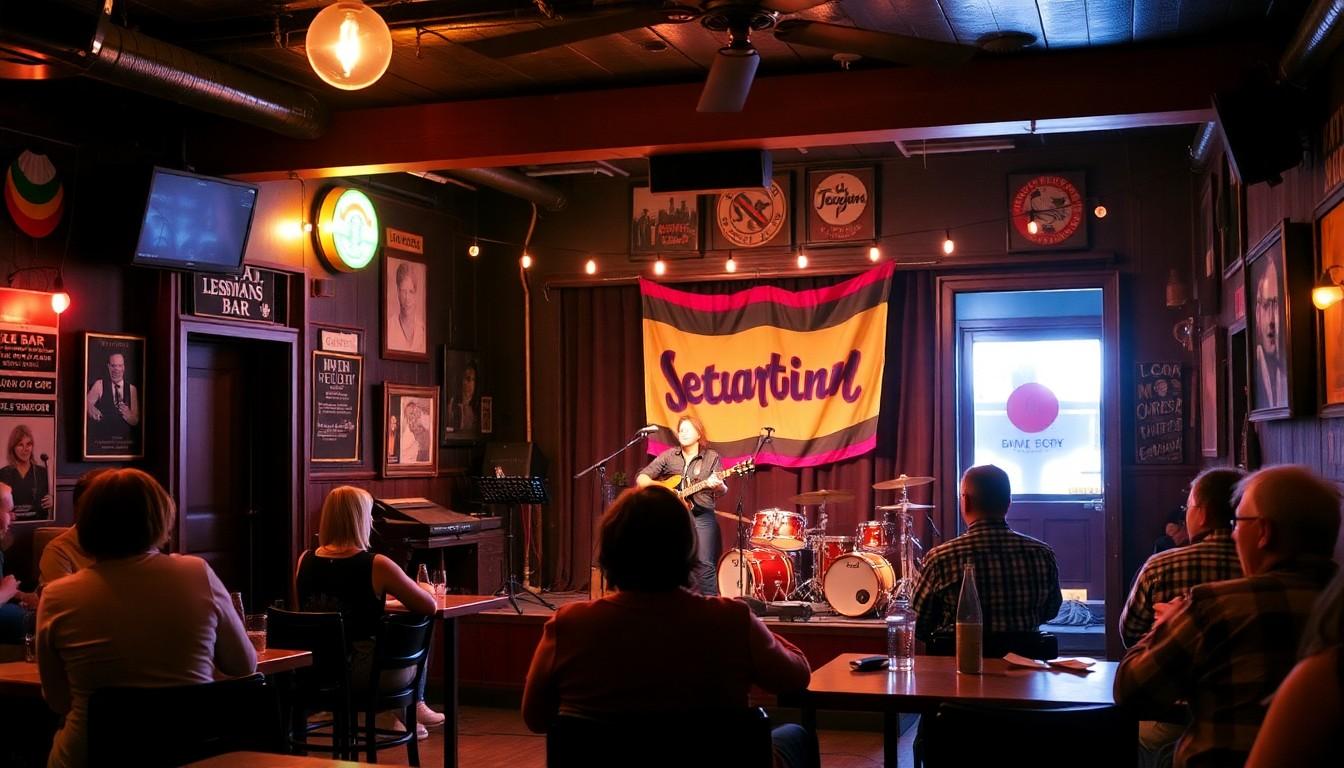
Music fans gathered at Nashville's Lipstick Lounge for Queer Roots, a lively AmericanaFest event celebrating LGBTQ voices, storytelling and roots music. With performances stretching from lunchtime into the evening, the East Nashville bar offered something rarer than a good gig: a warm, historic setting where identity and songwriting could share the same stage.
Essential Takeaways
- A community landmark: The Lipstick Lounge remains an important LGBTQ gathering place in East Nashville.
- Powerful opening set: Jaimee Harris brought emotional weight to songs including "Tattoo Zoo" and "Orange Avenue".
- A memorable collaboration: Mary Gauthier joined Harris for a moving acoustic performance.
- A full afternoon of music: The programme also featured Jared Tyler, Reilly Downes and the Acid Cowboys, Denitia and others.
- More than a venue: The bar's colourful, intimate atmosphere helped turn the event into a genuine community celebration.
A small Nashville venue with a big role
The Lipstick Lounge was already buzzing by midday, its gold-and-pink interior giving the Queer Roots party an unmistakably celebratory backdrop. According to venue guides including Travel Gay and Inclusivity.org, the East Nashville bar has long been recognised as an LGBTQ-friendly space, and its intimate layout makes it especially suited to live music.
That setting matters. In a city packed with famous stages, the Lipstick Lounge feels less like a stop on a festival circuit and more like someone's favourite local room. The result is softer, closer and noticeably more personal, with performers able to read the audience from just a few feet away.
For visitors planning an LGBTQ-friendly Nashville itinerary, the venue is also a useful reminder that nightlife isn't only about the biggest names or the loudest rooms. Sometimes the most meaningful cultural experience arrives with a small stage, a packed bar and a song that makes conversation stop.
Jaimee Harris starts the day with emotional force
Jaimee Harris opened with the kind of performance that quickly changed the room's mood. Her bright red corduroys and heart-shaped sunglasses brought visual energy, but the songs carried the real weight, particularly "Tattoo Zoo", which traces the stories of strangers gathered around a tattoo parlour.
"Orange Avenue" was even more affecting. The song approaches the 2016 Pulse nightclub shooting through the perspective of a victim whose family hadn't known he was gay, turning a national tragedy into something intimate and painfully human. It was the sort of performance that left the audience quiet before the applause arrived.
Harris' songwriting also showed why queer roots music continues to connect beyond a single scene. The stories are specific, but the emotions are widely recognisable: grief, secrecy, love and the need to be seen.
Mary Gauthier brings wisdom and wit
Harris was joined by her partner, singer-songwriter Mary Gauthier, for a short but spellbinding duet set. Gauthier's dry humour and relaxed stage presence balanced the emotional intensity, while her songs explored difficult subjects without sanding down their edges.
"Alcohol and Adderall" focused on the complicated experience of loving someone prone to self-destruction. She also shared the story behind "Some Times", written with Vince Gill, adding the kind of context that makes a familiar song feel newly alive.
Gauthier's forthcoming album, Reckoning, was due on 25 September, while her conversation about becoming the first openly gay performer to play the Grand Ole Opry gave the afternoon an important historical dimension. Her message was direct: authenticity needn't be a provocation, even when other people treat it that way.
Why queer roots music feels so vital now
Queer Roots worked because it resisted the idea that Americana has a single voice. The genre is often marketed through images of tradition, rural memory and family history, but those themes become richer when more artists are able to define whose traditions and memories count.
The wider line-up reflected that breadth. Tulsa's Jared Tyler, Chicago's Reilly Downes and the Acid Cowboys, Nashville's Denitia and other performers kept the event moving across styles and perspectives. The programme felt less like a token showcase and more like a proper festival bill with a clear point of view.
That distinction is important. Audiences aren't simply looking for representation as a label; they want great songs, distinctive performers and rooms where they can relax. The Lipstick Lounge offered all three, with a friendly atmosphere that made the afternoon feel both purposeful and easygoing.
Planning a visit to the Lipstick Lounge
The venue's close quarters are part of the charm, but they also mean popular events can fill quickly. Visitors should check opening times and event details before setting out, particularly during AmericanaFest, when Nashville's bars and music rooms become exceptionally busy.
Expect a casual, social environment rather than a formal concert hall. Listings from The Infatuation and other Nashville nightlife guides describe the Lipstick Lounge as a welcoming bar with a strong sense of personality, so it's best approached as a place to spend time, meet people and discover music rather than simply tick off a performance.
The most important tip is to arrive with an open mind. You may come for one artist and leave remembering the room, the conversations and a song you hadn't expected to hear.
Queer Roots showed how powerful a small stage can be when the welcome is as strong as the music.
Source Reference Map
Story idea inspired by: [1]
Sources by paragraph:
- Paragraph 1: [3], [4]
- Paragraph 2: [5], [6]
- Paragraph 3: [7], [3]
- Paragraph 4: [2], [6]
- Paragraph 5: [2], [5]
- Paragraph 6: [2], [4]
- Paragraph 7: [2], [5]
- Paragraph 8: [2], [3]
- Paragraph 9: [2], [4]
- Paragraph 10: [2], [5]
- Paragraph 11: [3], [6]
- Paragraph 12: [4], [7]
- Paragraph 13: [6], [7]
- Paragraph 14: [3], [4]