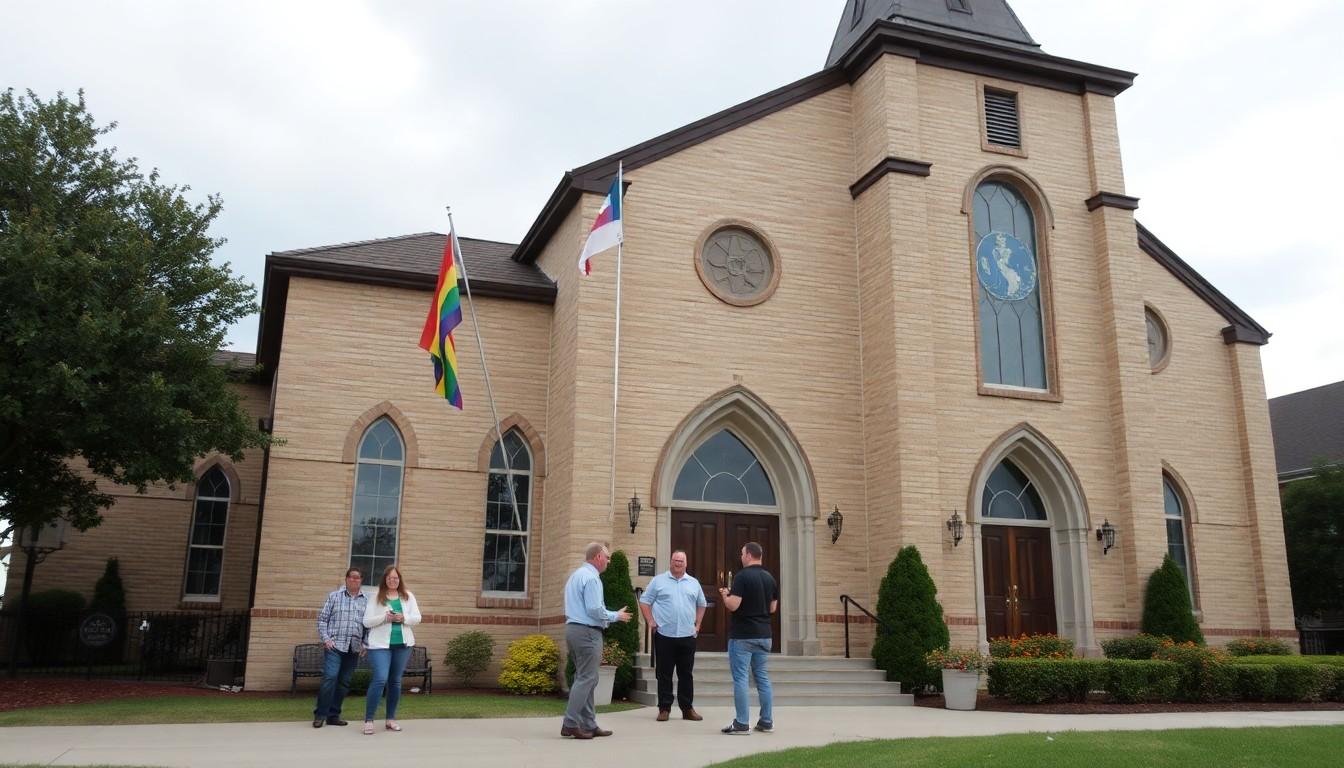
Organisers of Pride Kel-So say Southlake, Texas, has rejected a permit for this October’s LGBTQ+ festival, despite approving the same church-hosted event in 2025. The unexplained decision has left volunteers shocked, supporters concerned and a family-friendly community celebration facing an uncertain future just weeks before it was due to take place.
Essential Takeaways
- Permit rejected: Southlake City Council voted unanimously against the festival application on 15 September.
- No reason given: Organisers say officials offered no explanation, questions or debate before the vote.
- Popular event: Last year’s festival attracted roughly 1,600 to 2,500 people, according to different organiser estimates.
- Community support: St Martin-in-the-Fields Episcopal Church backed the event and described it as a way to bring people together.
- Organisers are resisting: Pride Kel-So says it won’t be pressured into quietly disappearing.
A popular Pride festival has suddenly hit a wall
The strongest detail in this Southlake Pride permit dispute is also the simplest: the festival was approved last year, held at the same church and welcomed a sizeable crowd. Now, with the event planned for 3 October, the city has rejected the new application without publicly explaining why.
That silence has made the decision feel especially stark. April Dreyson, a co-founder of Pride Kel-So, told CBS News Texas that the lack of comment appeared to send a message that queer residents and supporters “don’t belong here”. It’s a painful interpretation, but one that’s difficult to separate from the abruptness of the vote. [2], [4]
Pride Kel-So was designed as a warm, family-friendly gathering rather than a niche meet-up. Plans included food trucks, inclusive vendors, live entertainment and activities for children, with the wider aim of supporting LGBTQ+ and ally-owned businesses around Keller and Southlake. [3], [5]
What happened at the Southlake council meeting?
The city council voted unanimously on 15 September to refuse the special use permit for the mass gathering at St Martin-in-the-Fields Episcopal Church on South Pearson Lane. According to reporting from KERA and local television outlets, the council did not question Dreyson or discuss specific concerns before reaching its decision. [3], [4]
That process is what has left organisers struggling for answers. They say they followed the recommendations given during the application process and expected the request to be considered on its merits, particularly after last year’s event had already taken place at the venue.
The official meeting paperwork reportedly showed that Southlake’s Planning and Zoning Commission had recommended approval by five votes to one. For organisers, the contrast between that recommendation and the council’s final decision has only deepened the confusion. [5], [7]
Last year’s event drew a sizeable crowd
Pride Kel-So’s first festival appears to have made a noticeable local impact. Organisers have cited attendance figures ranging from nearly 1,600 to around 2,500 people, with visitors gathering for music, stalls and community activities at the Episcopal church. Either way, it was hardly a tiny neighbourhood event. [2], [5]
The size of that crowd also explains why a special permit was required this year. Larger public gatherings often bring additional requirements around parking, safety and crowd management, so a fresh application was expected. What wasn’t expected, according to the organisers, was a rejection without an identified problem to address. [3], [6]
Rev. Ellen Singer, an associate pastor at the church, spoke in favour of hosting the festival again. She acknowledged tensions around the event but said Pride could help bring people together, rather than allowing disagreement to harden into division. [4], [7]
The debate reflects a wider US culture clash
Opposition at the council meeting centred on whether the festival represented Southlake’s values. Resident Paul Segal criticised the presence of drag performers at last year’s event, describing it as unacceptable and saying the festival did not reflect the community. [2], [4]
Those remarks place the permit decision within a broader American fight over Pride events, drag performances and LGBTQ+ visibility in public spaces. Similar disputes have appeared in other cities, where festivals or family activities have faced political pressure despite having previously gone ahead.
For residents, that can make an ordinary local gathering feel like something much bigger. A food stall, a rainbow flag or a drag performance becomes a proxy for arguments about belonging, public identity and whose version of community life gets official support. [5], [6]
What happens next for Pride Kel-So?
Pride Kel-So has said it won’t simply disappear. In a statement shared after the vote, the organisers wrote that they would not be silenced or made to “go away”, signalling that further planning, campaigning or legal options could follow. [6], [7]
The immediate challenge is practical as well as political. With the proposed October date approaching, organisers would need either a new venue and permission structure or a successful challenge to the decision. That leaves supporters waiting for clarity while volunteers try to keep the spirit of the event alive.
For now, Southlake’s queer community is facing an uncomfortable question: if an event can be welcomed one year and rejected the next without an explanation, what does that say about the security of public LGBTQ+ celebrations? It’s a small-town permit decision with consequences that feel anything but small. [2], [3]
It's a reminder that community celebrations need both local support and clear, accountable decision-making.
Source Reference Map
Story idea inspired by: [1]
Sources by paragraph: