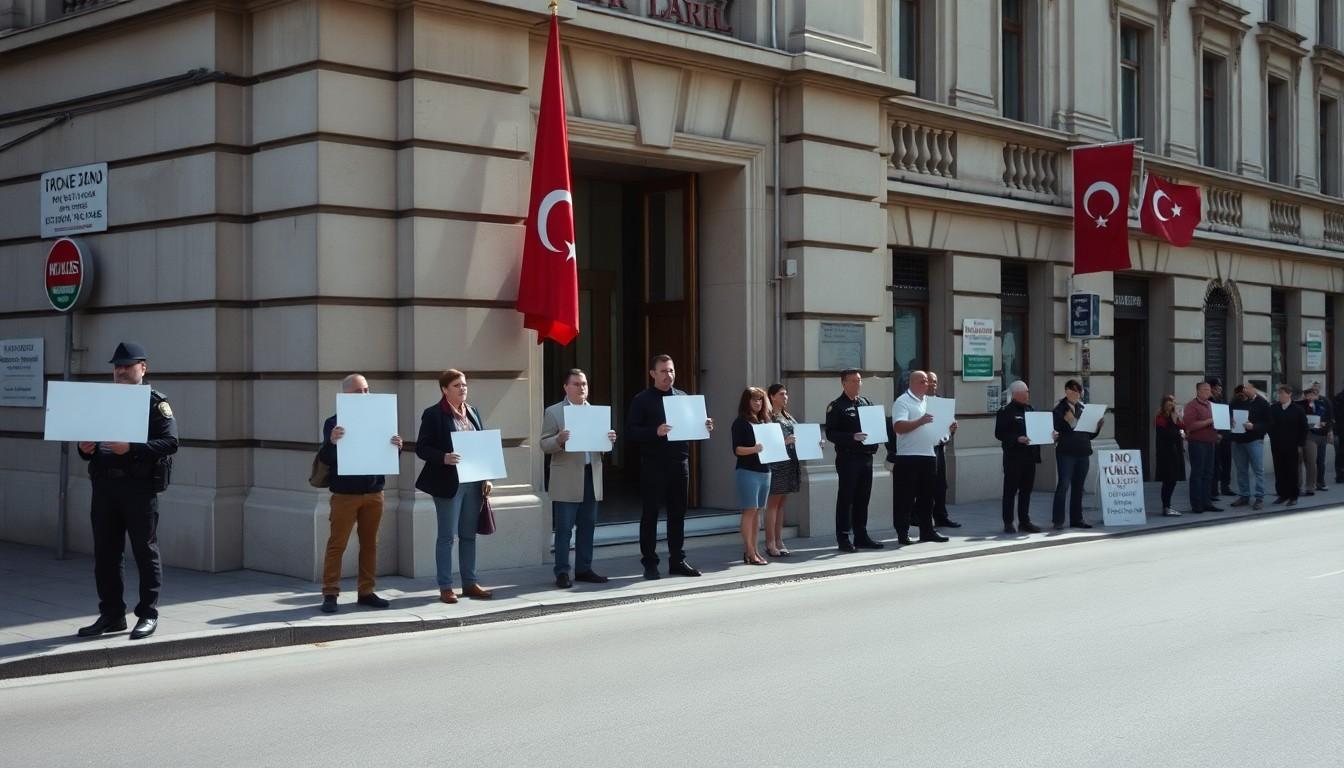
European officials are voicing fresh concern over arrests, legal action and online restrictions affecting LGBTIQ+ people and civil society groups in Turkey. The scrutiny matters because Ankara remains an EU candidate country, while activists say pressure on peaceful assembly, expression and association is making an already tense climate feel even more restrictive.
Essential Takeaways
- EU concern: Brussels is monitoring arrests, prosecutions and reported digital restrictions involving LGBTIQ+ people and rights groups.
- Due process demanded: Officials are calling for fair legal safeguards, the release of anyone held arbitrarily and the withdrawal of unfounded charges.
- Civil society under pressure: Activists, organisations, businesses and peaceful demonstrators have reportedly faced intimidation.
- Rights at the centre: Freedom of assembly, association, expression and the media are central to the EU's message.
- Enlargement implications: The issue is expected to inform the EU's assessment of Turkey's progress towards membership.
Brussels puts rights back in the spotlight
The European Union has expressed concern over reported arrests and legal proceedings involving LGBTIQ+ people, activists, human rights defenders and peaceful protesters in Turkey. The concerns also extend to organisations, businesses and online accounts that have reportedly faced restrictions.
The European Commission's message is more than a routine diplomatic warning. It links the situation to the basic standards expected of a country seeking closer ties with the EU, where discrimination and intimidation sit uneasily beside the bloc's stated values. AP reported that the broader dispute has fuelled international attention around Turkey's treatment of LGBT people and civil society.
Why Turkey's EU ambitions matter here
Turkey has held EU candidate status for years, and its relationship with the bloc is assessed through regular reports covering democracy, justice and fundamental rights. That gives the Commission a formal route to record concerns, even when immediate enforcement options are limited.
A Brussels-based analysis said the reported measures targeting Turkey's LGBTIQ+ community are likely to be considered in the EU's 2026 enlargement report. In other words, the issue won't simply disappear into the diplomatic inbox. It could become part of the written record used to judge whether Turkey is meeting the political expectations attached to membership.
The freedoms at stake go beyond one community
The EU's statement highlights several rights at once: peaceful assembly, freedom of association, freedom of expression and media freedom. Those protections are particularly important for LGBTIQ+ organisations, which often rely on public events, legal advocacy, fundraising and social-media communication to operate.
The European Commission's LGBTIQ+ equality strategy for 2026 to 2030 frames these freedoms as part of a wider European approach to tackling discrimination. That makes the Turkish case feel connected to a broader policy question: whether minority rights can be protected when public institutions and online spaces become increasingly hostile.
What officials are asking Turkish authorities to do
European officials have called on the Turkish authorities to uphold due-process guarantees and release anyone being held arbitrarily. They have also urged an end to what they describe as intimidating actions against civil society, LGBTIQ+ individuals, organisations and human rights defenders.
That wording is significant because it focuses not only on the initial arrests, but also on what follows: access to a fair process, the strength of the allegations and the ability of groups to continue their work without fear. Informat reported that the Commission criticised raids and pressure directed at LGBT-related activity in Turkey.
A warning with wider consequences
The EU's statement also points to Turkey's membership of the Council of Europe, whose framework is built around human rights and democratic standards. That gives the criticism a wider European context, rather than making it solely a dispute between Ankara and Brussels.
For activists, the immediate concern is practical and personal: whether they can meet, organise, speak publicly or report abuses without facing punishment. For the EU, the challenge is how to turn serious language into sustained scrutiny. The European External Action Service has repeatedly presented human rights and fundamental freedoms as core elements of the Union's external policy, and Turkey's case will test how firmly that principle is applied.
The message from Brussels is clear, even if the next steps are less certain. Rights protections are not an optional extra for a country seeking a place in the European family.
It's a diplomatic warning, but for those affected, it's also a question of everyday safety.
Source Reference Map
Story idea inspired by: [1]
Sources by paragraph: