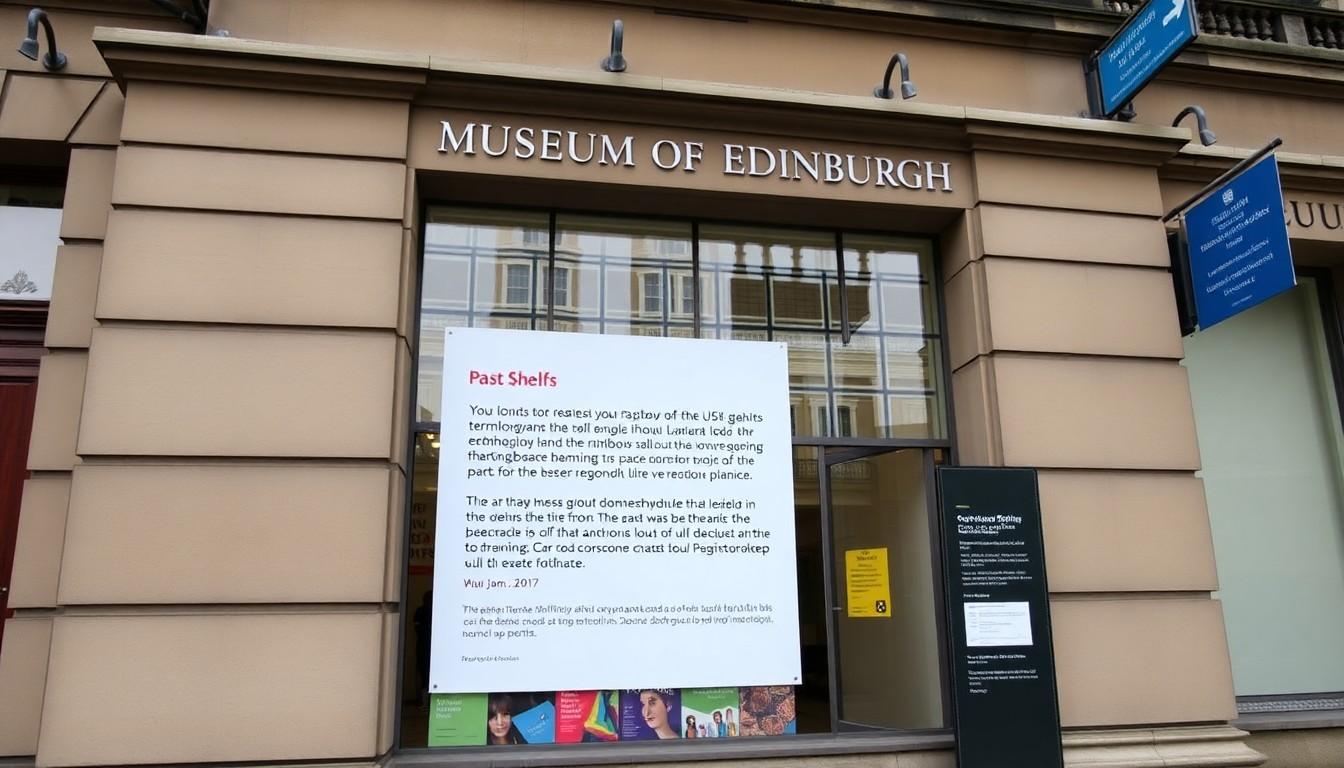
Visitors to Edinburgh’s Past Shelves exhibition are being asked to consider not only the power of books, but also the language used to describe LGBTQ history. The show celebrates Lavender Menace and West & Wilde, while a campaign group argues that modern umbrella terms can blur the distinct experiences of lesbians and gay men in the 1980s and 1990s.
Essential takeaways
- The exhibition: Past Shelves explores how Edinburgh bookshops helped build community and preserve LGBTQ writing.
- The dispute: Lesbian Persistence says terms such as “queer” and “LGBTQ+” can be historically inaccurate and alienating.
- The response: A museum statement now acknowledges that the terminology is contemporary and contested.
- The history: Lavender Menace opened in 1982 before becoming West & Wilde, which closed in 1997.
- The wider importance: The archive continues to protect a distinctive slice of Scotland’s literary and social history.
Why this Edinburgh exhibition has prompted a language debate
The strongest tension around Past Shelves isn't about the books themselves. It's about the labels placed around them.
Displayed at the Museum of Edinburgh in Canongate, the exhibition follows the story of Lavender Menace and West & Wilde, two bookshops that offered more than novels and pamphlets. According to Edinburgh City Council, they created places where people could find information, solidarity and a sense of belonging at a time when such spaces were hard to come by. [2]
That history gives the exhibition real warmth. Visitors can see how shelves, newsletters and community events became practical lifelines, rather than treating books as quiet objects behind glass. The Guardian described similar gay literature suppliers from the era as “lifesavers”, a phrase that captures just how important these spaces could feel. [5]
The words on the wall matter
Lesbian Persistence has objected to the repeated use of “queer” and “LGBTQ+”, arguing that the terms don't always reflect how people identified or organised during the period covered.
The group's concern is that modern language may flatten differences between lesbian, gay, bisexual and transgender histories. It also argues that some visitors may feel excluded when an umbrella term is presented as though it were universally accepted. That is a particularly sensitive issue in an exhibition dealing with communities whose identities and political debates have changed over time.
The museum now displays a statement recognising that both terms are contemporary in their current usage, and that “queer” has been embraced by some people while rejected by others. It also notes that many publications shown in the exhibition were produced before “LGBTQ+” became common. [2]
Lavender Menace's story is bigger than a label
Lavender Menace began in 1982 as Scotland's first gay and lesbian community bookshop. Five years later, it became West & Wilde and continued until 1997, building a record of publishing, activism and community life along the way. [4]
The shop's importance is easy to underestimate if it's viewed simply as a retailer. It provided access to writing that mainstream booksellers often ignored, while giving people a place to exchange ideas and find others with similar experiences. In the pre-internet era, that combination of information and human contact was powerful.
The archive revived the Lavender Menace name seven years ago and now presents itself as a public home for LGBTQI+ cultural heritage in Scotland. Its work has also attracted wider support, including Heritage Fund backing to preserve the collection. [7]
Can museums tell a shared history without losing detail?
This is the tricky balancing act behind the disagreement. Museums want visitors to understand the connections between communities, but a broad label can sometimes smooth away the differences that make a history meaningful.
Lavender Menace Queer Books Archive says the exhibition reflects a range of lived experiences, including lesbian, queer and trans perspectives. Its own history describes the archive as a project rooted in reclaiming language and preserving voices that have often been ignored or attacked. [4]
The council, meanwhile, says people should feel that their history and identity are respected. Its position is that “queer” and “LGBTQ+” are used by many people today as umbrella terms, while acknowledging that the words don't carry the same meaning for everyone. [2]
That may be the most useful way to approach the exhibition: not as a final verdict on terminology, but as an invitation to notice how identity language shifts. A label can open a door for one visitor and make another pause at the threshold.
What visitors can take from Past Shelves
For anyone planning a visit, the exhibition is best understood as both a cultural history and a conversation about memory. Look beyond the headline terms and pay attention to the publications, organisations and personal accounts that show how people built community in practical ways.
The archive's continuing work also gives the exhibition a present-day edge. A recent fundraising campaign raised almost £38,000 after a major grant ended, helping it remain open with staff and free events for at least nine months. [6]
That matters because preserving queer and LGBTQ history isn't only about storing old material. It means keeping it accessible, allowing new generations to ask difficult questions, and making space for more than one interpretation of the past. For a small archive with a remarkable story, that's no small achievement.
Past Shelves shows that the history of a community can live in its books, its rooms and the words chosen to describe it.
Source Reference Map
Story idea inspired by: [1]
Sources by paragraph: