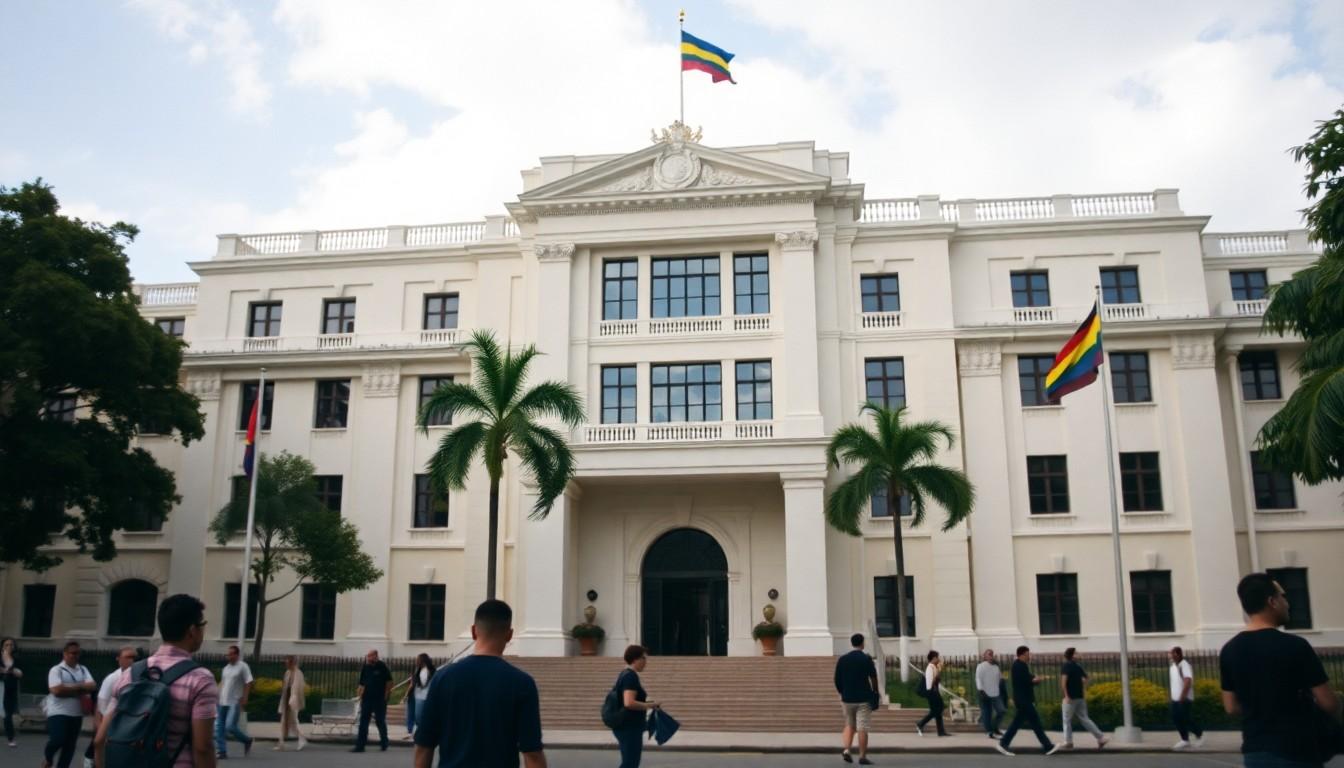
Colombia’s government has withdrawn from the Equal Rights Coalition, an international alliance supporting LGBT rights, prompting concern among activists and signalling a sharp change in the country’s diplomatic priorities. The move comes as President Abelardo de la Espriella’s administration embraces a more conservative cultural agenda.
Essential Takeaways
- Colombia has exited the coalition: The Foreign Ministry confirmed its departure in a letter to the international organisation.
- Activists call it a setback: Caribe Afirmativa said the decision weakens Colombia’s international commitments to LGBTIQ+ rights.
- The timing is striking: Colombia had been serving as a co-president of the coalition until February next year.
- The government is shifting right: President Abelardo de la Espriella has promoted a “Culture War” against what his administration calls gender ideology.
- Domestic policy is under scrutiny: The president and several ministers oppose adoption by same-sex couples, according to reporting from Colombian media.
Colombia’s withdrawal sends a clear diplomatic signal
The decision may look administrative on paper, but its political meaning is much louder. Colombia was not simply a member of the Equal Rights Coalition. It had taken on a leadership role within the alliance, making its departure feel less like a quiet change of affiliation and more like a deliberate repositioning.
The Foreign Ministry announced the withdrawal in a letter addressed to the coalition, according to reports from Infobae and Agencia Pi. That timing has fuelled questions about why the government chose to step away while Colombia still held a prominent position in the group.
For international observers, the message is difficult to miss. El Pais described the move as evidence that LGBT rights are no longer a priority for the administration, while Colombia One reported the country’s exit as part of a broader political shift.
Activists warn of a serious setback
Caribe Afirmativa, a Colombian LGBT rights organisation that participated in the initiative, condemned the withdrawal. The group said it represented a break with Colombia’s recent international leadership and a snub to partners working to protect sexual and gender minorities.
That criticism matters because international coalitions do more than issue statements. They create diplomatic networks, share policy expertise and give smaller or more vulnerable communities a platform when domestic politics become hostile. Leaving such a forum can therefore affect both Colombia’s reputation and its ability to influence global discussions.
Vanguardia and Rio Times Online also highlighted the concern surrounding the decision, particularly because it comes from a country that had previously presented itself as an active supporter of LGBTIQ+ rights. The reversal is likely to be watched closely across Latin America, where battles over equality and cultural policy remain intensely political.
A new front in the government’s culture war
President Abelardo de la Espriella has appointed several prominent figures associated with the far right and has promised to fight what his administration describes as “gender ideology”. That language places the coalition withdrawal within a much wider ideological project rather than treating it as an isolated foreign policy decision.
The administration’s approach echoes a familiar pattern in conservative politics worldwide. International rights commitments are recast as symbols of an unwanted progressive agenda, while domestic issues such as education, family policy and adoption become cultural battlegrounds.
Infobae and El Pais reported that de la Espriella and several members of his cabinet oppose adoption by same-sex couples. In that context, the government’s decision to leave a rights-focused international alliance appears consistent with its domestic messaging.
Why the adoption dispute has added weight
The controversy has also been linked to the reported removal of a newly appointed planning chief after it emerged that he and his male partner had adopted a child. The allegation has intensified concerns among equality campaigners, although the political consequences will depend on how fully the episode is documented and addressed.
For LGBT Colombians, these developments are not abstract diplomatic signals. They touch everyday questions about family recognition, workplace security and whether public institutions will treat same-sex couples equally. A change in tone at the top can quickly make people feel less visible, even before laws are formally changed.
Agencia Pi and Vanguardia placed the coalition withdrawal alongside these domestic disputes, suggesting that the government’s international stance cannot be separated from its position on family and gender issues at home.
What Colombia’s exit could mean next
The immediate impact will be diplomatic, but the longer-term question is whether this marks the start of further policy changes. Colombia’s departure could weaken its influence within international LGBT rights discussions and leave activists wondering whether other commitments will also be reconsidered.
It may also sharpen the divide between the government and civil society groups. Caribe Afirmativa’s response shows that campaigners are already interpreting the decision as an unmistakable political signal, rather than a technical adjustment to foreign policy.
For now, the withdrawal has made one thing clear: under de la Espriella, Colombia’s approach to LGBT rights is moving in a markedly different direction. The coming months will show whether that shift remains largely symbolic or becomes a blueprint for domestic action.
A diplomatic exit can change the tone quickly, but its real consequences will be measured in people’s rights.
Source Reference Map
Story idea inspired by: [1]
Sources by paragraph:
- Paragraph 1: [2], [3]
- Paragraph 2: [4], [5]
- Paragraph 3: [6], [7]
- Paragraph 4: [3], [5]
- Paragraph 5: [2], [6]
- Paragraph 6: [4], [7]
- Paragraph 7: [3], [5]
- Paragraph 8: [2], [4]
- Paragraph 9: [5], [6]
- Paragraph 10: [3], [7]
- Paragraph 11: [2], [5]
- Paragraph 12: [4], [6]
- Paragraph 13: [3], [7]
- Paragraph 14: [2], [4]
- Paragraph 15: [5], [6]
- Paragraph 16: [3], [7]
- Paragraph 17: [2], [5]
- Paragraph 18: [4], [6]
- Paragraph 19: [3], [7]
- Paragraph 20: [2], [4]