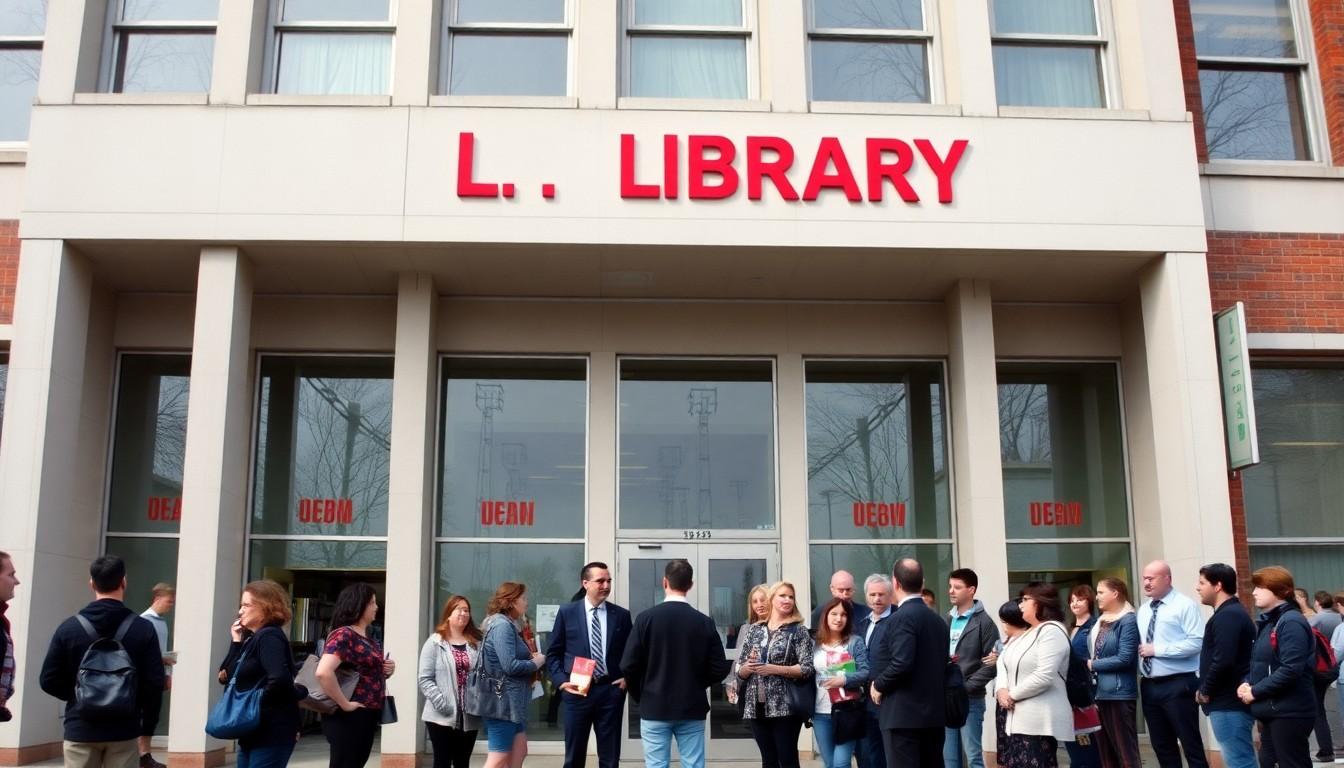
Readers, librarians and parents across America are entering a sixth year of intense book censorship battles, with inclusive stories still under pressure in schools and libraries. A new five-year review traces how challenges grew from local disputes into organised political campaigns, while highlighting the grassroots groups fighting to keep diverse books available.
Essential Takeaways
- Censorship has reached new highs: Thousands of books were banned or restricted in 2025, according to national tracking.
- Marginalised voices remain the main target: Books featuring LGBTQ+ people and people of colour are disproportionately challenged.
- The pressure is increasingly organised: Advocacy groups, politicians and institutions now drive many challenges, rather than individual parents alone.
- Quiet censorship is spreading: Some books are removed, relocated or never purchased without a formal public challenge.
- Local action can work: Community campaigns have helped restore books, defeat proposed laws and force greater transparency.
Five years on, book bans are no longer isolated disputes
The modern wave of book censorship began gathering pace in 2021, when school board meetings became flashpoints for arguments about parental authority, education and public identity. What might once have been a single complaint about one title soon became a repeatable political tactic, complete with social-media clips, campaign networks and familiar accusations about content being unsuitable for children.
According to Book Riot's five-year review, the debate quickly widened beyond individual books. Battles over school libraries became entangled with disputes about masks, gender identity, public education and the use of taxpayer money. Books were often the visible object of conflict, but the deeper argument was about who gets to shape public institutions.
That shift matters because it changed the scale of the fight. A parent raising a concern at a school meeting is one thing. Coordinated campaigns involving pressure groups, legislation and funding threats are another entirely.
The books being challenged tell their own story
The most frequently targeted books tend to feature people whose lives have historically been ignored or marginalised. Research from PEN America found that a substantial share of challenged titles in 2025 involved characters or people of colour, while many others represented LGBTQ+ experiences.
The focus has also moved beyond novels. History books, biographies, science titles and reference works are increasingly caught up in the dispute, limiting access to factual information as well as fiction. That makes the consequences harder to dismiss as a quarrel over a handful of graphic novels.
National figures underline the scale. The American Library Association's Office for Intellectual Freedom recorded 5,668 books banned from libraries in 2025, alongside 920 titles restricted through relocation or permission requirements. The figures represent recorded incidents only, and campaigners warn that many removals never enter the public record.
From local complaints to legislation
The review describes a clear evolution from individual objections to pressure from organised groups, elected officials, administrators and governing boards. The American Library Association found that these decision-makers accounted for the overwhelming majority of recorded challenges in 2025, while fewer than 3% came directly from parents.
State laws have helped turn local disagreements into standardised restrictions. Measures across states including Arkansas, Florida, Iowa and Texas have introduced rating systems, review requirements, removal rules and potential criminal penalties for library workers. Even when a law is blocked or softened, its existence can encourage schools and libraries to play safe.
That is where quiet censorship enters the picture. A librarian may decide not to buy a book likely to attract complaints, or a school may move a title out of sight before a review takes place. Nothing dramatic happens at a public meeting, but readers still lose access. It's censorship by nervousness, paperwork and self-protection.
Courts are shaping what schools and libraries can offer
Legal challenges have become a central part of the freedom-to-read campaign. Lawsuits brought by authors, parents, librarians, publishers and civil-rights organisations have tested whether officials can remove books because they dislike their themes or because a vocal group objects.
Recent court decisions have also created uncertainty. Reporting on Mahmoud v. Taylor shows how religious-liberty arguments can affect LGBTQ+ materials used in classrooms, particularly where parents say they should be able to opt their children out. Meanwhile, the unresolved consequences of Little v. Llano County have encouraged some officials to argue for wider powers to remove contested books from public libraries.
For library workers, that uncertainty can feel personal. Several librarians have faced dismissal, public attacks or threats after resisting removals, while others have won settlements or court victories after challenging wrongful treatment. Their experiences show why professional ethics matter, but also why asking one worker to stand alone against a political campaign is an unfair burden.
Grassroots organisers are finding ways to push back
The most encouraging thread in the report is the growth of local resistance. In Iowa, Annie's Foundation helped restore more than 200 titles after a district prepared to remove hundreds of books. In Louisiana, a coordinated campaign generated tens of thousands of messages to legislators and helped defeat or amend most of the anti-library bills it opposed.
Elsewhere, groups are using public-records requests, school-board campaigns, legal action, book giveaways and digital library access. Brooklyn Public Library's Books Unbanned programme, for example, gives teenagers and young adults across the United States access to its digital collection, while state-level coalitions are helping communities track challenges that might otherwise remain hidden.
The practical lesson is simple: showing up works. Check your school or library's challenge policy, attend board meetings, ask how removals are recorded and support groups working locally. You don't need to become a full-time campaigner. One email, public comment or donated book can help keep the issue visible.
What readers can do next
The report's message for the coming years is cautiously determined rather than cheerful. Censorship efforts remain well funded and politically connected, but opponents are now more organised, better informed and linked across state lines.
Start by finding a freedom-to-read organisation in your area. The Freedom to Read Project, the National Coalition Against Censorship, the American Library Association and EveryLibrary offer practical resources for parents, readers, booksellers and library workers. Authors and illustrators can also connect with Authors Against Book Bans.
Most importantly, pay attention before a crisis reaches your own shelves. Book censorship doesn't only happen somewhere else or in places with unfamiliar politics. It can appear in any community, sometimes loudly and sometimes through a quiet decision not to buy the book in the first place.
It's a long fight, but every informed reader helps keep the shelves open.
Source Reference Map
Story idea inspired by: [1]
Sources by paragraph:
- Paragraph 1: ,
- Paragraph 2: ,
- Paragraph 3: ,
- Paragraph 4: ,
- Paragraph 5: ,
- Paragraph 6: ,
- Paragraph 7: ,
- Paragraph 8: ,
- Paragraph 9: ,
- Paragraph 10: ,
- Paragraph 11: ,
- Paragraph 12: ,
- Paragraph 13: ,
- Paragraph 14: ,
- Paragraph 15: ,
- Paragraph 16: ,
- Paragraph 17: ,
- Paragraph 18: ,