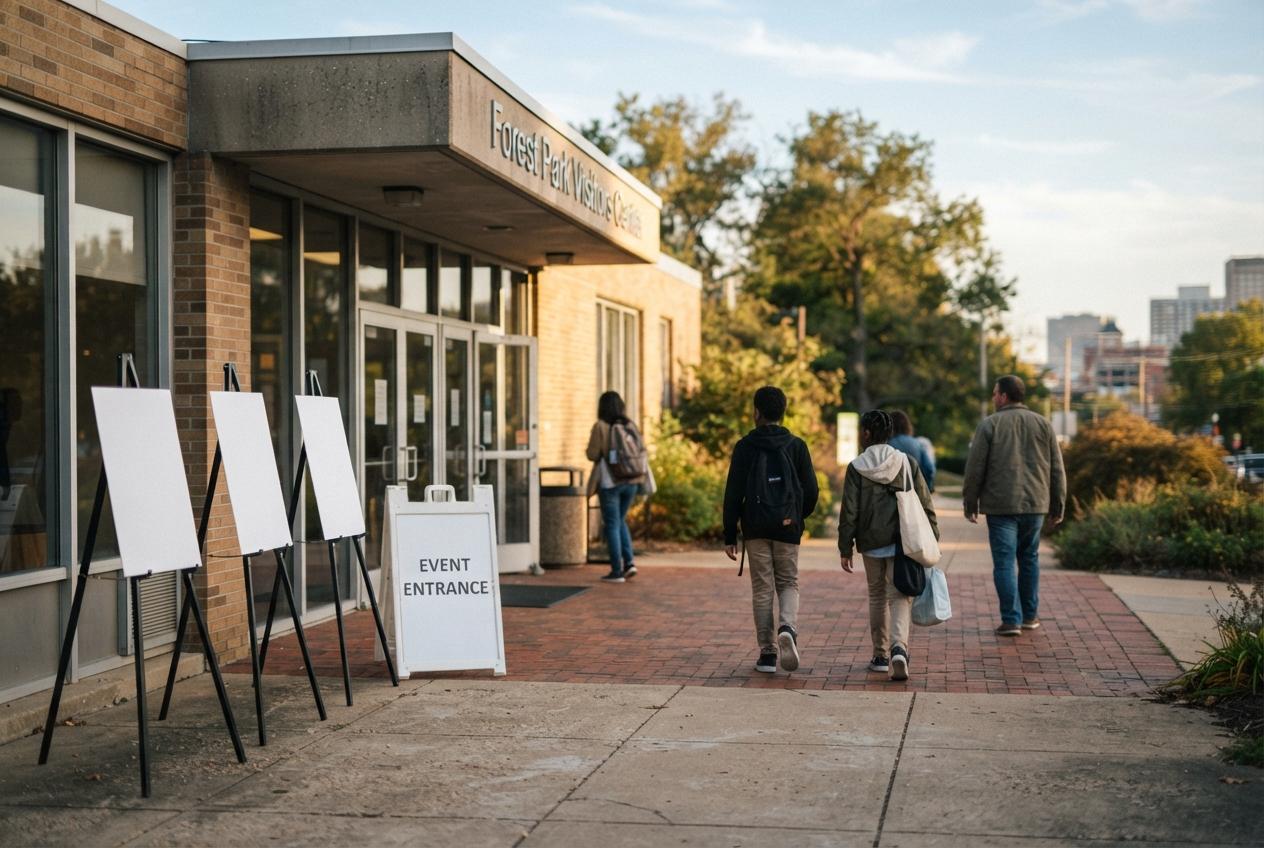
Young LGBTQ+ people and allies in St Louis are preparing for the return of Amplify the Arch, a youth-led conference built around community, creativity and practical support. After drawing more than 300 attendees in its first year, the event will return on 7 March 2027, offering workshops, performances and connections for ages 13 to 26.
Essential Takeaways
- A growing gathering: The first conference welcomed more than 300 people and nearly 40 community organisations.
- Youth-led from the start: The idea came from 18-year-old Phi Chanda, who worked with Fourth City Sisters to develop the event.
- Practical support matters: Sessions covered LGBTQ+ rights, family support, safety planning, arts and civic participation.
- A welcoming setting: The programme combined serious conversation with drag, ballroom, exhibitions and hands-on activities.
- The next date: Amplify the Arch returns to St Louis on 7 March 2027.
A conference born from a clear need
The first Amplify the Arch was created for a simple reason: queer young people in the Midwest needed somewhere that felt safe, useful and joyful. According to St Louis Magazine, the event brought together youth, families, advocates and local organisations in a setting designed around connection rather than isolation.
Its roots were distinctly grassroots. Phi Chanda, then an 18-year-old Washington University student, approached Fourth City Sisters after being inspired by Models of Pride, the long-running LGBTQ+ youth conference in California. The idea quickly grew into a St Louis event with a broader age range, welcoming participants from 13 to 26.
That mix is important. Teenagers may need guidance around school, family and identity, while older young adults might be looking for housing advice, healthcare information or ways to become more involved locally. A good youth conference should meet people where they are, not assume everyone is arriving with the same questions.
From venue setback to community show of strength
The road to the inaugural event wasn't entirely smooth. Organisers had originally planned to hold it at the University of Missouri-St Louis, but the university withdrew its support while arrangements were being made. The change forced the organisers to find a new venue, rethink logistics and keep faith with a project that had yet to prove itself.
The Renaissance Hotel eventually stepped in with discounted rates, while Metro Transit St Louis supplied more than 100 free day passes. That practical help made a difference, especially for young people and families who might otherwise have found travel or admission costs difficult. Community backing can sound abstract, but sometimes it looks like a free ticket, a bus pass or a room that feels calm and welcoming.
The wider St Louis setting adds another layer of significance. The city has a long history of neighbourhood organising and civic activism, as local community resources and city-focused publications regularly reflect. Amplify the Arch taps into that tradition while putting queer youth at the centre.
Workshops that turn confidence into action
The programme wasn't just about being seen. It was also about learning what to do next. Workshops explored LGBTQ+ rights, parenting, personal safety, art, Pride organising and community participation, giving attendees tools they could take home.
The inclusion of parents and caregivers was particularly valuable. Families might arrive worried about using the wrong language or supporting a child through school and healthcare challenges. A practical session can turn that uncertainty into a better conversation at the kitchen table, which is often where support becomes real.
Young people also got a closer look at how Pride organisations operate. That matters because festivals and advocacy groups don't appear by magic; they're built by volunteers, organisers and residents willing to show up. For a teenager wondering how to make a difference, seeing that process demystified is a powerful first step.
Drag, art and ballroom bring the joy
The serious subjects were balanced by plenty of colour and noise. Attendees could take part in art activities, watch young drag performers, meet professional mentors and learn ballroom before joining a mock ball. The result sounds less like a formal seminar and more like a lively community day, which is precisely the point.
There was also an exhibition featuring work by local artists, alongside performances and a keynote from Jack Lope, a British lesbian cowboy mechanic and drag king. That combination of humour, history and spectacle gave the event a distinctive personality. It also offered young attendees something every good gathering should provide: the chance to imagine a bigger version of themselves.
A community installation called Safety Net made the message visible. Participants wrote the names of people and organisations who supported them on ribbons, then wove those ribbons together. It's a small, tactile idea, but the image lands: support becomes stronger when it's shared.
What comes next for Amplify the Arch?
Organisers are now working towards a more formal structure, including a board and nonprofit status. The longer-term ambition is to keep the St Louis conference going, expand to Kansas City and eventually develop a wider regional or statewide gathering.
That growth will depend on funding, volunteers and reliable venues, but the first event offered a convincing foundation. Support from local businesses, charities and community groups can help the conference remain affordable, while partnerships may broaden the range of advice available to young people.
Amplify the Arch returns on 7 March 2027. For anyone looking for a supportive LGBTQ+ youth conference in St Louis, it's one to mark in the diary early. Sometimes the most important thing a community can build is a room where young people can breathe, laugh and feel entirely at home.
It's a bright, practical reminder that safer spaces are built together.
Source Reference Map
Story idea inspired by: [1]
Sources by paragraph:
- Paragraph 1: [2], [5]
- Paragraph 2: [2], [3]
- Paragraph 3: [4], [6]
- Paragraph 4: [3], [5]
- Paragraph 5: [2], [7]
- Paragraph 6: [4], [6]
- Paragraph 7: [2], [5]
- Paragraph 8: [3], [5]
- Paragraph 9: [2], [4]
- Paragraph 10: [3], [7]
- Paragraph 11: [2], [5]
- Paragraph 12: [4], [6]
- Paragraph 13: [2], [3]
- Paragraph 14: [5], [7]