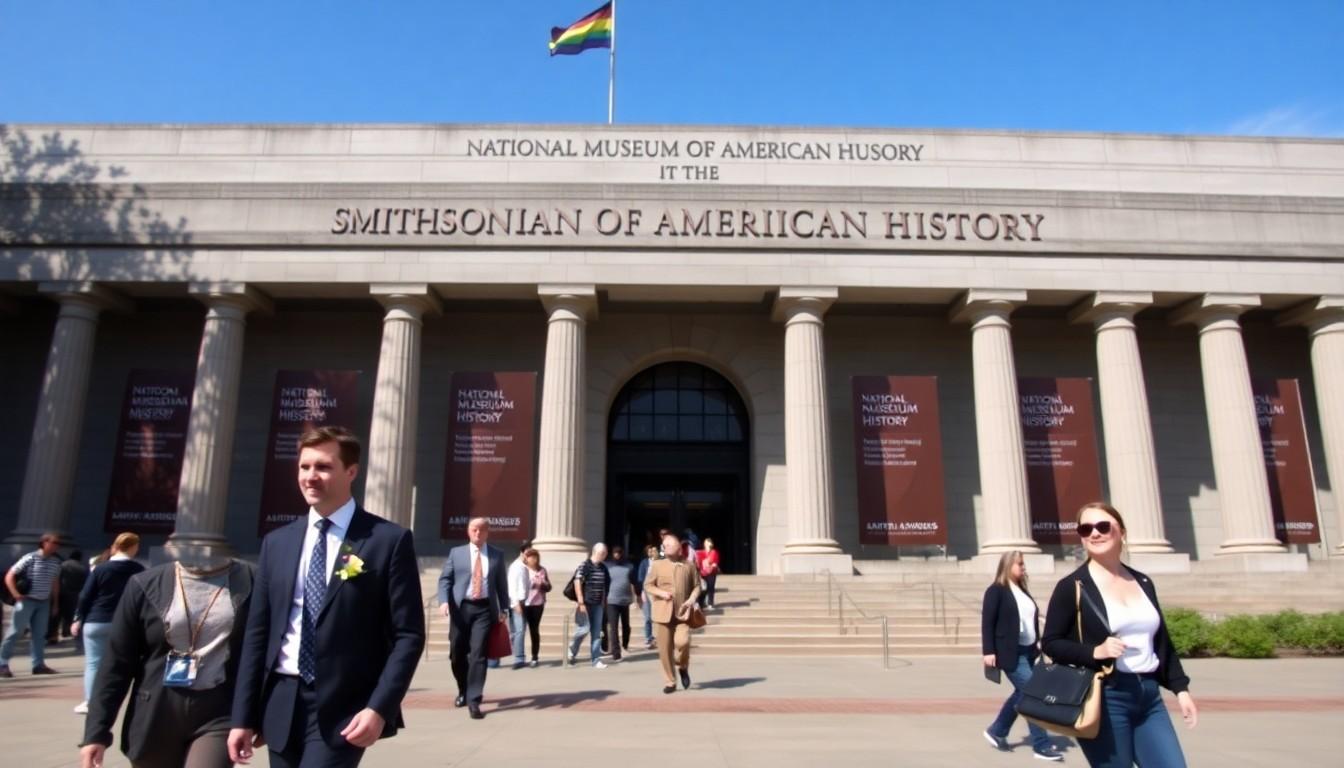
LGBTQ+ history is facing a fresh battle over who gets remembered and how. From Pride march donation cans to protest buttons and hate mail, one Smithsonian collection shows why preserving difficult evidence matters, especially when political pressure threatens to make America’s story feel cleaner than it really was.
Essential Takeaways
- The collection is personal and political: Mark Segal donated papers and objects documenting LGBTQ+ activism and resistance.
- The objects tell a fuller story: Pride memorabilia sits alongside threats and anti-gay propaganda, showing both celebration and danger.
- Museums shape public memory: Removing difficult material can leave future generations with a distorted picture of how rights were won.
- The Smithsonian is under scrutiny: Curators and exhibitions connected to race and LGBTQ+ history have become targets in a wider cultural fight.
- The lesson is enduring: Equal rights weren't simply handed down. People organised, marched, protested and paid a price.
A donation can, a few buttons and a warning
The most powerful historical objects aren't always grand or expensive. Sometimes they're small enough to fit in a drawer: a donation can from an early Pride march, a handful of demonstration badges, or a sticker supporting Anita Bryant's anti-gay campaign.
Together, these items create a striking emotional contrast. One speaks to solidarity and hope. Another carries the chill of a death threat apparently linked to the Ku Klux Klan. History rarely arrives neatly labelled as good or bad, and that's precisely why these objects matter.
The collection was donated to the Smithsonian National Museum of American History by Mark Segal, a journalist and Stonewall-era activist. His contribution reflects a wider effort to preserve the everyday evidence of LGBTQ+ organising, rather than relying only on famous speeches and official milestones.
Why uncomfortable history belongs in museums
Museums aren't meant to make the past look polished. They're meant to help visitors understand how people lived, what they endured and how societies changed.
That means showing pride beside prejudice, progress beside backlash. A celebratory button tells us that people gathered together, but a threatening letter explains why gathering could be courageous. Remove either one and the meaning of the other becomes thinner.
The Smithsonian exhibition "Illegal to Be You: Gay History Beyond Stonewall" placed personal belongings within that larger national story. The approach matters because rights can appear inevitable when we see only the final result. The messy middle, including arrests, job losses, family rejection and public hostility, is where the real history sits.
The political fight over America's story
The dispute isn't limited to one exhibition or one museum. Across the United States, debates over slavery, Indigenous history, Japanese American internment, military symbols and LGBTQ+ recognition have raised a basic question: who decides which parts of the past are acceptable?
Critics of inclusive history often describe it as divisive. But avoiding division in the historical record doesn't make the division disappear. It simply hides who experienced it and who benefited from silence.
For LGBTQ+ visitors, seeing their community represented in a national museum can offer something quietly profound. It says that their lives aren't a footnote, a trend or a recent political invention. They're part of the country's story.
What disappears when protest is removed?
Take away the first Pride marches, and later generations may struggle to understand why they happened. Remove evidence of organised hostility, and the fight for equality can look unnecessary or exaggerated.
This is why original artefacts have such force. They don't merely describe events. They connect visitors to the people who stood in the crowd, carried the signs, collected the donations and kept going after the headlines faded.
For anyone researching LGBTQ+ history, primary sources are especially valuable. Look for archived newspapers, oral histories, protest leaflets, photographs, personal letters and museum collections. A single object can open the door to a much richer account than a simplified timeline ever could.
The evidence is still speaking
Segal's collection carries a direct message: LGBTQ+ people were present, organised and politically active long before the rights now being debated became familiar to the wider public.
That doesn't mean every object offers comfort. Some are painful reminders of hatred and danger. Yet removing them would offer false comfort, replacing a complicated truth with a story that asks too little of its audience.
The past can't be rewritten simply because it makes powerful people uneasy. Those who lived it left evidence behind, and museums have a responsibility to protect that evidence. As Segal's story shows, refusing to disappear can itself become a form of historical preservation.
History is strongest when it includes the pride, the pain and the people who fought through both.
Source Reference Map
Story idea inspired by: [1]
Sources by paragraph:
- Paragraph 1: ,
- Paragraph 2: ,
- Paragraph 3: ,
- Paragraph 4: ,
- Paragraph 5: ,
- Paragraph 6: ,
- Paragraph 7: ,
- Paragraph 8: ,
- Paragraph 9: ,
- Paragraph 10: ,
- Paragraph 11: ,
- Paragraph 12: ,
- Paragraph 13: ,
- Paragraph 14: ,
- Paragraph 15: ,
- Paragraph 16: ,
- Paragraph 17: ,
- Paragraph 18: ,