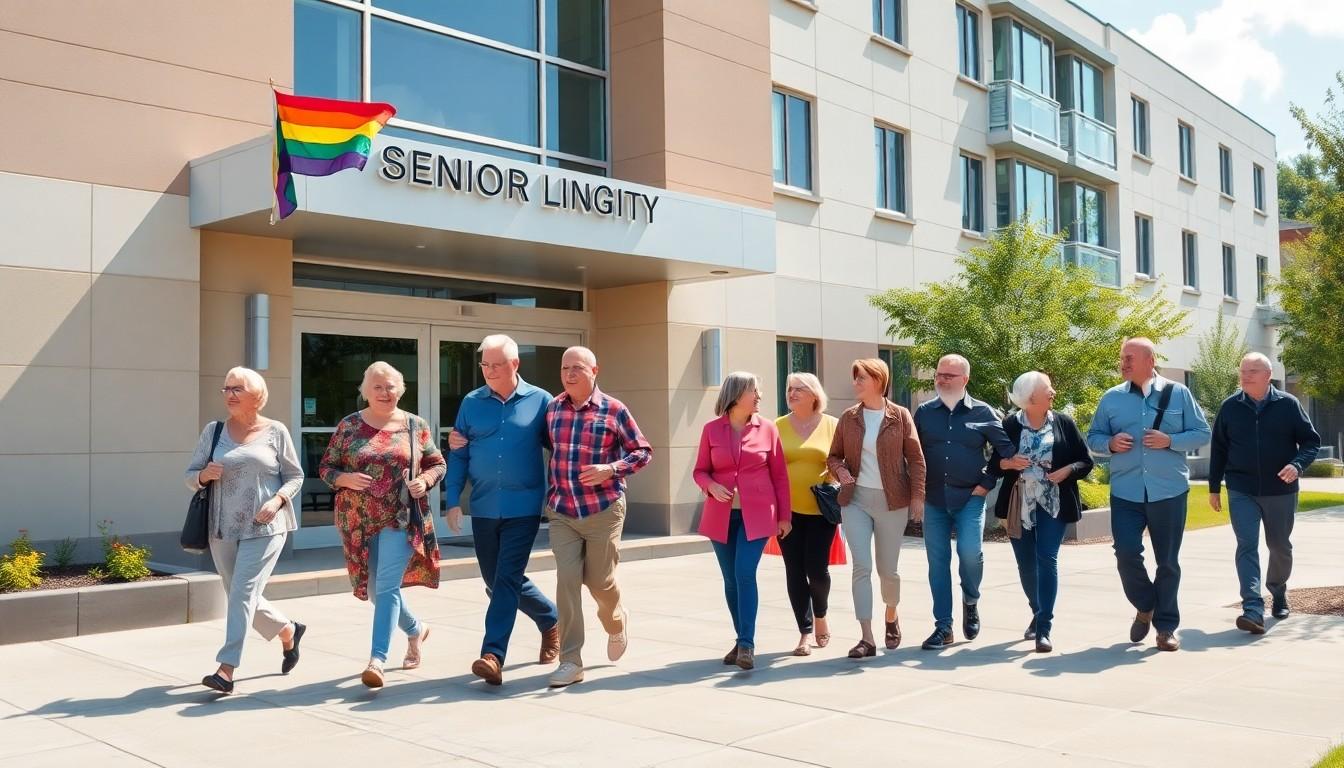
Senior living operators are facing surging demand, but a growing population of LGBTQ+ older adults still worries about finding safe, affordable and affirming care. As occupancy tightens across the US, creating welcoming communities isn't only an equality issue. It's also central to trust, resident wellbeing and the kind of connected culture operators say they want to build.
Essential Takeaways
- Demand is rising: More older adults are entering the senior living market as the baby boomer generation ages.
- Access remains difficult: LGBTQ+ older adults face higher risks of poverty, homelessness, isolation and poor health.
- Many live alone: They are less likely to have children or spouses who can provide support later in life.
- Inclusive policies help: Clear protections for sexual orientation and gender identity are a useful starting point.
- Belonging improves communities: LGBTQ+ focused housing shows how trust can encourage friendship, practical help and stronger social ties.
A growing senior living market can't afford to overlook LGBTQ+ people
The senior living sector is entering a squeeze: demand is climbing while relatively few new communities are opening. That makes every available apartment, care placement and support service more valuable, especially for people who already expect to be treated differently.
For LGBTQ+ older adults, the worry isn't simply whether a room is available. It's whether they can live openly, keep their chosen family close and receive respectful care without having to explain their identity repeatedly. Senior Housing News reports that around seven million gay and trans people in the US will be over 50 by 2030, creating a sizeable and often overlooked group of future residents and carers.
That matters because previous experiences can shape today's housing decisions. An older person who has spent decades navigating discrimination may quietly decide that a mainstream community isn't for them, even when they need its services. The result is a hidden access problem: people may not apply because they don't believe they'll feel safe once they arrive. SAGE data cited by Senior Housing News indicates that many LGBTQ+ older adults already fear they won't find affirming long-term care.
The risks go beyond loneliness
LGBTQ+ older adults are more likely to live alone and less likely to have children or be married, according to figures discussed by SAGE. That can leave fewer relatives available to help with moving, healthcare decisions, finances or the everyday emergencies that become harder to manage with age.
Yet these older adults aren't necessarily without support. Many care for partners or friends, often creating family networks that don't fit traditional forms or paperwork. Those relationships can be overlooked by systems that still assume a spouse, adult child or close blood relative will take the lead. The gap can feel especially stark when someone needs help quickly.
Health access is another concern. SAGE data cited in the report suggests LGBTQ+ older adults are more likely to avoid medical care, while some trans people feel obliged to educate providers about their own needs. That's a wearying burden at any age, and it can become particularly serious when care is coordinated across housing, nursing, therapy and hospital services.
What inclusive senior living looks like in practice
A welcoming community begins with the basics: employment and resident policies should clearly protect sexual orientation and gender identity, while staff training should turn those words into everyday behaviour. Pronouns, partners, chosen family, privacy and respectful language aren't decorative details. They're signals that tell people whether they can relax or need to stay guarded.
Operators should also avoid waiting for residents to disclose their identity or request support. A community can make its position visible through inclusive forms, staff education, family policies, social programming and partnerships with local LGBTQ+ organisations. Small changes, such as recognising a partner as a legitimate decision-maker, can carry enormous weight.
The Long-Term Care Equality Index found that nearly all participating communities had discrimination policies covering sexual orientation and gender identity. That's encouraging, but a policy alone doesn't prove that residents feel secure. The real test is whether a resident can raise a concern, bring a partner to an event or ask for care without anticipating awkwardness or hostility.
Dedicated communities offer a useful lesson
The Pryde, an LGBTQ+ senior housing community near Boston, has a long waiting list for its 74 independent living homes. In Florida, The Connie House, a small gay-owned assisted living community, also reports steady demand. Their appeal points to something broader than specialist branding: residents want familiarity, dignity and the comfort of being understood.
At The Pryde, residents have created informal networks around meals, pet care, technology help, hospital visits and practical errands. Those relationships show how inclusion can become social infrastructure. A community feels stronger when people trust one another enough to ask for help, and when assistance travels in both directions.
There’s also an important wider lesson. The Pryde's residents include people from different racial, cultural and disability backgrounds, not only LGBTQ+ residents. Its leadership says the welcoming atmosphere benefits everyone, suggesting that inclusive design doesn't narrow a community. Done properly, it expands who feels at home there.
How operators can build trust before demand peaks
The first step is to assume LGBTQ+ residents and workers are already present. They may not be visible, and they may not feel comfortable speaking up, but silence shouldn't be mistaken for absence. Leaders can listen through anonymous staff surveys, resident feedback and conversations with local advocacy groups.
Affordability deserves equal attention. Specialist housing remains scarce, and many LGBTQ+ older adults face poverty or housing insecurity. Operators that want to serve this population will need more than premium options. Middle-market and affordable models, transport support, emergency assistance and flexible family policies could make a meaningful difference.
This isn't just about avoiding reputational risk. Communities with stronger belonging can support better relationships between residents, relatives and staff, while operators gain access to an increasingly important customer and employee group. As demand rises, the most successful providers may be those that understand inclusion as part of good care rather than a separate initiative.
A senior living home should feel like a place where people can exhale. For many LGBTQ+ older adults, that simple feeling still isn't guaranteed.
It's a small shift in practice, but it can make senior living safer and more human for everyone.
Source Reference Map
Story idea inspired by: [1]
Sources by paragraph:
- Paragraph 1: ,
- Paragraph 2: ,
- Paragraph 3: ,
- Paragraph 4: ,
- Paragraph 5: ,