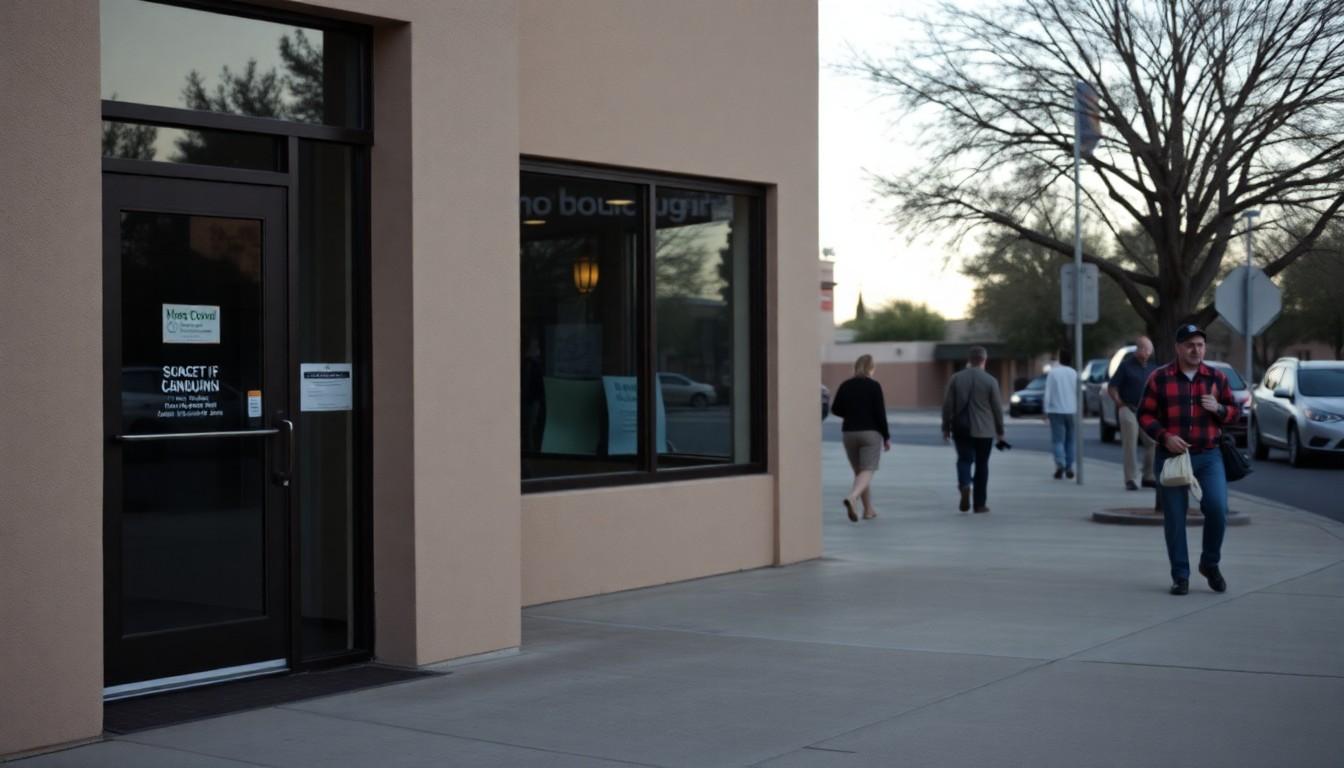
The deadly shooting outside Venture-N in Tucson has renewed urgent debate about gun reform, LGBTQ safety and the protection of queer spaces. As investigators examine a possible hate crime, the attack is prompting hard questions about firearms, rising anti-LGBTQ rhetoric and how communities can respond without making already-vulnerable people feel less welcome.
Essential Takeaways
- Two people died: Vincent Anthony Siquerioes and Cameron Davis Capara were killed outside Tucson’s Venture-N bar.
- Possible hate crime: Police reportedly found a list of LGBTQ businesses and are investigating the motive.
- Higher exposure to violence: LGBTQ people face elevated risks of violent crime, hate crime and intimate partner violence.
- Firearms raise the stakes: Easy access to guns can make attacks and suicide attempts far more likely to be fatal.
- Safety is complicated: More police presence may reassure some people, while making others, especially queer people of colour, feel less safe.
A shooting outside a queer safe space
The Tucson attack has landed with particular force because Venture-N was more than a bar. For many LGBTQ people, venues like it offer a rare place to relax, meet friends and move through the world without constantly checking who might be watching.
According to AZPM and the Washington Post, two people were killed in the car park and police began examining whether the attack was motivated by anti-LGBTQ hatred. Reports also said investigators found a list of LGBTQ businesses on the suspect, a detail that has intensified fears about possible targeting.
The tragedy echoes earlier attacks on queer nightlife, including the 2016 Pulse nightclub massacre in Orlando and the 2022 shooting at Club Q in Colorado Springs. Each time, the question returns: how can LGBTQ people protect their community when the places designed to offer refuge become targets? [2], [3]
Why gun access is an LGBTQ rights issue
Gun violence doesn't affect every community in the same way. LGBTQ people experience higher levels of violent victimisation, while transgender people, queer people of colour and young people often face additional exposure to harassment, discrimination and attacks.
The risks also extend beyond public shootings. Firearms can turn domestic abuse into a fatal incident, and LGBTQ people report high rates of intimate partner violence. For someone already facing threats at home, at school or in public, the presence of a gun can make an unsafe situation escalate in seconds.
Suicide prevention is another crucial part of the discussion. LGBTQ young people are not at greater risk because of their identities; stigma, rejection and hostility are major drivers of distress. But when a firearm is readily available, a moment of crisis is much more likely to end in death. That makes secure storage, waiting periods and crisis intervention practical safety measures, not abstract political talking points. [1], [5]
The danger of rhetoric meeting firearms
Words don't pull a trigger, but political language can help create an atmosphere in which violence feels permissible. Advocacy groups have warned that efforts to erase transgender people from public life, alongside repeated attacks on LGBTQ inclusion, can signal that queer communities are acceptable targets.
That concern has become especially sharp amid legal and political campaigns aimed at transgender people, non-binary identities and diversity programmes. Rodrigo Heng-Lehtinen of the National Center for Transgender Equality previously argued that hostile rhetoric and attempts to erase trans people can suggest that violence against them will be tolerated.
The Tucson shooting has therefore arrived in a climate where many LGBTQ people already feel watched, threatened or pushed out of public spaces. As the Los Angeles Times and Washington Post reported, the suspected hate-crime angle has made that broader context impossible to ignore. [6], [7]
More police presence isn't a simple answer
After the shooting, Tucson police increased patrols around LGBTQ businesses. On the surface, that may seem like an obvious response, especially for owners and staff worried about copycat attacks.
But safety doesn't look identical for everyone. Some queer and trans patrons, particularly people of colour, have experienced profiling, harassment or violence at the hands of law enforcement. A larger police presence may comfort one visitor while making another think twice before entering the venue.
That tension explains why police at Pride events and LGBTQ gatherings remain controversial. The modern LGBTQ rights movement grew out of resistance to police harassment, including the events at Stonewall and Compton's Cafeteria. Any effective safety plan will need to involve venue workers, local organisers and the communities most affected, rather than treating police visibility as the only answer. [4], [5]
What meaningful gun reform could include
For LGBTQ advocates, gun reform doesn't necessarily mean opposing responsible gun ownership. Many people in marginalised communities are exploring firearms training because they don't trust institutions to protect them, particularly when official rhetoric feels openly hostile.
The policy conversation can still include measures such as universal background checks, safe-storage requirements, extreme-risk protection orders, stronger domestic-abuse restrictions and funding for community-based violence prevention. None is a magic solution, but each addresses a different point at which harm can be prevented or reduced.
There is also a human scale to this debate. A secure firearm, a trained bystander, a supported crisis line or a venue with a clear emergency plan may sound like small interventions, but small interventions matter when the alternative is another memorial outside a place that was meant to feel joyful.
For anyone affected by thoughts of suicide or immediate emotional crisis in the United States, call or text 988 for the Suicide and Crisis Lifeline. Support is available, and asking for help is not a weakness.
Gun reform won't solve every threat facing LGBTQ communities, but it can help make the next crisis less deadly.
Source Reference Map
Story idea inspired by: [1]
Sources by paragraph:
- Paragraph 1: [2], [3]
- Paragraph 2: [4], [5]
- Paragraph 3: [1], [5]
- Paragraph 4: [6], [7]
- Paragraph 5: [4], [5]
- Paragraph 6: [2], [6]
- Paragraph 7: [1], [3]
- Paragraph 8: [1], [5]
- Paragraph 9: [4], [7]
- Paragraph 10: [2], [3]
- Paragraph 11: [1], [5]
- Paragraph 12: [1], [6]
- Paragraph 13: [1], [7]
- Paragraph 14: [1], [5]
- Paragraph 15: [1], [4]