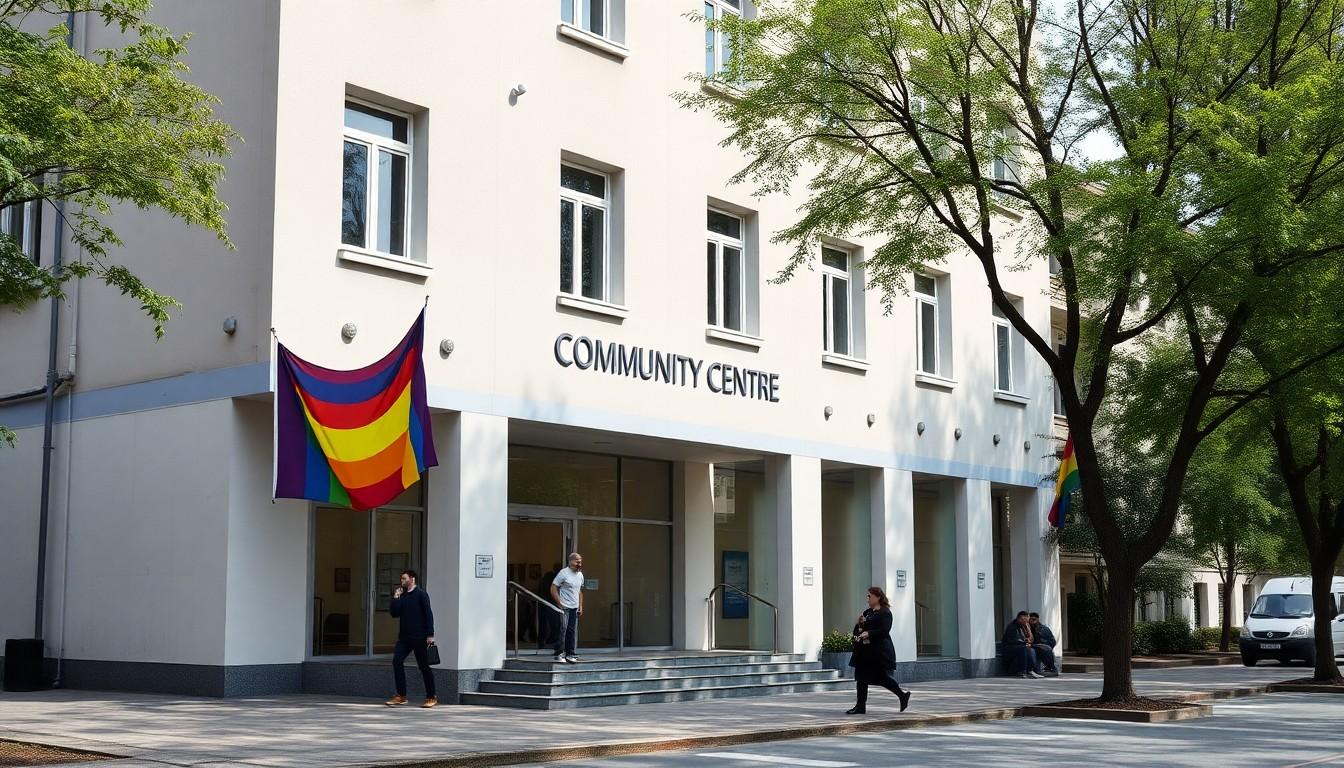
Protesters, artists and rights groups are facing a sharper legal squeeze in Turkey, where officials are increasingly using broad obscenity and morality rules to target LGBTI+ visibility. The latest raids and arrests matter beyond the community itself, raising fresh concerns about free expression, civil society and how quickly a vague law can reshape public life.
Essential Takeaways
- More than 100 detained: Police raids and a courthouse protest led to mass detentions of activists and supporters.
- A vague legal tool: Turkey’s obscenity rules don’t explicitly mention LGBTI+ people, but critics say they’re being applied unevenly.
- Visibility is being scrutinised: Social media posts, art, music, websites and private communications have reportedly entered investigations.
- Civil society is under pressure: LGBTI+ organisations and their officeholders have faced raids, website blocks and arrests.
- The wider issue: Human rights advocates warn that uncertain morality laws can encourage self-censorship far beyond queer communities.
A law about obscenity, used to police visibility
The most unsettling detail is how ordinary forms of visibility can become legal risks. A photograph, a kiss on screen or a social media post may look harmless to one viewer, yet be reinterpreted as “obscene” when it involves an LGBTI+ relationship.
According to the Associated Press, Turkey’s latest crackdown has involved raids and arrests affecting activists, venues and organisations. The concern isn’t simply whether cases end in convictions. As rights lawyers have argued, an investigation, website block or police raid can be intimidating enough to silence people long before a court delivers a verdict.
That uncertainty is the point of concern. When nobody can confidently tell where lawful expression ends and criminal conduct begins, people start editing themselves. Quietly, cautiously and often alone.
Turkey’s old rules have taken on a new role
Being LGBTI+ is not itself illegal in Turkey, but the enforcement climate has changed dramatically since the large Pride marches of the late 2000s and early 2010s. Long-standing obscenity provisions are now being applied to a broader range of expression, including journalism, performance and online content.
Egerin reported that online censorship and coordinated police action have become part of the latest pressure campaign. Meanwhile, Israel Hayom described a nationwide operation involving raids and arrests, adding to fears that the crackdown is becoming more organised rather than remaining a series of isolated cases.
The distinction matters. A law originally associated with pornographic material or safeguarding children can acquire a much wider reach when its terms are elastic. Suddenly, the question is no longer only whether content is sexual, harmful or exploitative, but whether it fits an officially approved idea of family and morality.
Why artists, websites and venues are being pulled in
The pressure has spread well beyond activist meetings. Musicians, actors, online creators and publications have all found themselves exposed to investigations or restrictions, according to reporting cited by LGBTQ Nation and the Associated Press.
That creates a chilling effect across culture. A television image showing two women kissing, a song with queer themes or a venue serving an LGBTI+ audience can be treated as evidence in a case built around public morality. For artists and editors, the calculation becomes painfully practical: is this work worth the risk of a raid, a travel restriction or a blocked website?
The result is a narrower public sphere. Even people who aren’t directly targeted may decide not to publish, perform or attend. It’s hard to call that a healthy cultural debate when one side is speaking under the shadow of criminal investigation.
The “family values” campaign adds political weight
The latest operations have been linked by Turkish officials to a broader programme promoting family values and population growth. Activists say that framing makes LGBTI+ people into a convenient political target during a period of economic and social strain.
Israel Hayom reported on the expanding crackdown, while LGBTQ Nation highlighted the shock felt by observers at the scale of the raids. Together, the coverage points to a campaign that is both legal and symbolic: the state isn’t only pursuing individual suspects, but signalling which identities and relationships it wants pushed out of public view.
That’s why the response has extended from police stations to streets and court buildings. Supporters see the raids as an attack on organised civil society, not merely a dispute over particular images or posts. For many, the purple and rainbow banners are less a provocation than a basic demand to exist without being treated as evidence.
What this means for free expression
The strongest argument against vague obscenity rules is not that every piece of sexual content should be freely available. Children should be protected from genuinely harmful material, and non-consensual or violent content deserves clear legal safeguards.
The problem is the lack of a reliable boundary. Egerin’s reporting on censorship and the Associated Press coverage of the arrests underline concerns that broad morality language can be used to blur the line between safeguarding and suppression.
That threat reaches further than Turkey’s LGBTI+ community. If lawful associations can be raided, journalism restricted and solidarity treated as suspicious, other campaigners, artists and minority groups may face the same method next. As one activist’s warning makes clear, defending freedom of expression cannot be left to the people currently being targeted.
It’s a small word with a very large shadow: when “obscenity” has no firm definition, almost anyone can end up living inside its uncertainty.
Source Reference Map
Story idea inspired by: [1]
Sources by paragraph:
- Paragraph 1: [2], [4]
- Paragraph 2: [5], [6]
- Paragraph 3: [3], [4]
- Paragraph 4: [2], [5]
- Paragraph 5: [4], [6]
- Paragraph 6: [2], [3]
- Paragraph 7: [4], [5]
- Paragraph 8: [2], [6]
- Paragraph 9: [3], [5]
- Paragraph 10: [4], [6]
- Paragraph 11: [2], [5]
- Paragraph 12: [3], [4]
- Paragraph 13: [2], [6]
- Paragraph 14: [3], [5]
- Paragraph 15: [2], [4]
- Paragraph 16: [3], [6]