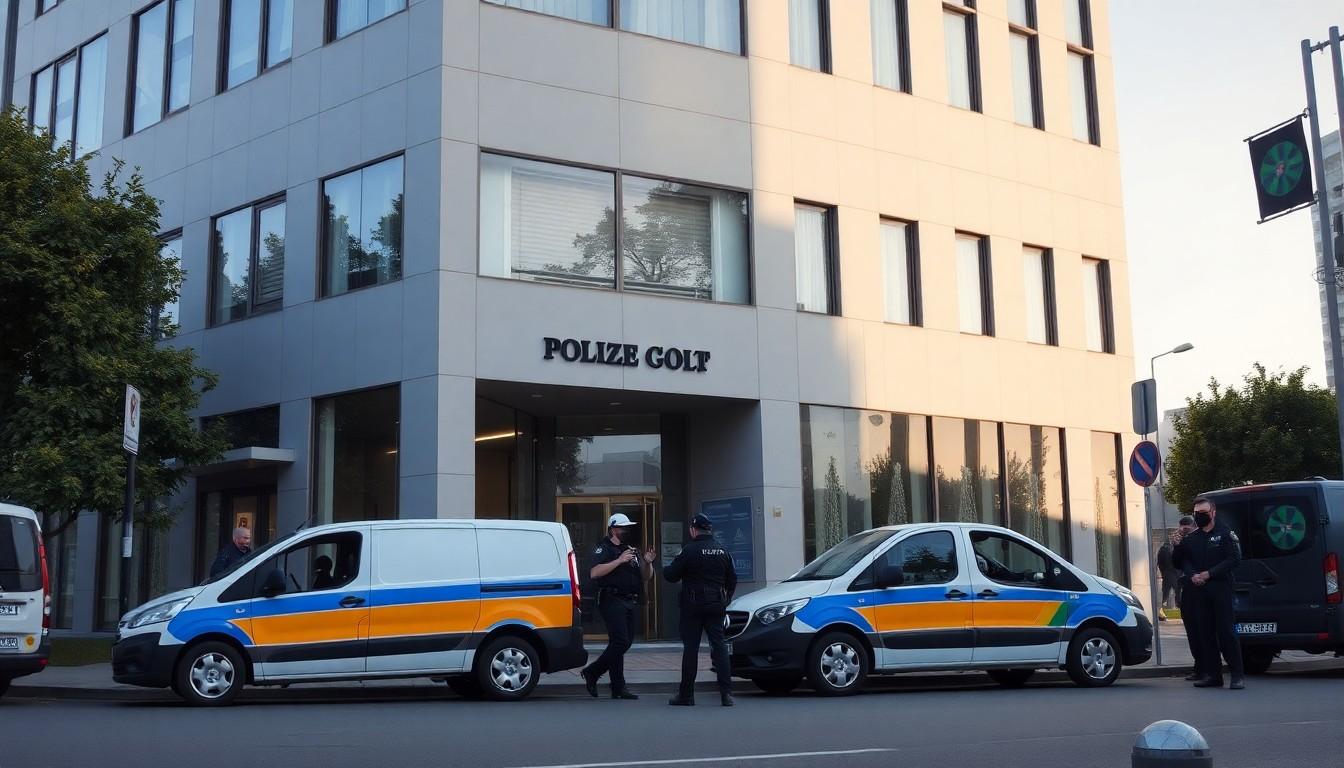
Turkish authorities have launched one of the country’s broadest recent crackdowns on LGBTQ+ organisations, HIV advocates, journalists and protesters. Raids across several cities, justified through sweeping obscenity claims, have triggered fresh concerns over press freedom, civil rights and the increasingly politicised language of family protection.
Essential Takeaways
- Raids spread nationwide: Police targeted groups and venues in Istanbul, Ankara, Izmir, Aydin and Mersin.
- Dozens remain held: Rights monitors say more than 100 people were detained, with 62 reportedly held on remand.
- Journalists were swept up: Kaos GL board members and journalist Tugba Tekerek were among those targeted.
- Protests met force: Demonstrations in Istanbul and Izmir led to further arrests and the use of tear gas.
- Charges remain broad: Authorities have cited obscenity and NGO rules, although the precise allegations are still unclear.
A sweeping operation with an ominous name
The raids began before dawn, with police entering LGBTQ+ rights organisations, HIV-support groups, nightclubs and activists' homes. Images released by Turkey's interior ministry showed officers searching offices, removing rainbow flags and escorting people away in handcuffs.
The operation was named "My Family is Safe" by Justice Minister Akin Gurlek, who said it was designed to protect children, family life and social order. That framing has drawn sharp criticism from rights organisations, which argue that it turns LGBTQ+ identity and advocacy into a public threat. The Guardian reported that Human Rights Watch described the action as the widest crackdown on LGBTQ+ people in Turkey in recent years.
Authorities said they seized digital devices, drugs and a firearm during the Istanbul operation. But the presence of unrelated criminal allegations has made the scale and purpose of the sweep harder to assess, particularly for people detained alongside activists. UPI reported that the raids were part of a broader campaign involving LGBTQ+ and HIV-related organisations.
Why obscenity charges matter
Homosexuality isn't illegal in Turkey, but prosecutors have increasingly used broad obscenity provisions and rules governing non-governmental organisations to target LGBTQ+ groups. Those laws give officials considerable room to argue that advocacy, imagery or public events threaten public morality.
The approach is significant because it avoids the need for a direct ban on LGBTQ+ identity. Instead, organisations can be pressured through investigations, arrests and administrative scrutiny, while prosecutors leave formal accusations relatively vague. The Los Angeles Times reported that HIV-support groups were also caught up in the operation, raising concerns about the impact on public-health work.
A proposed change to Turkey's penal code that could have criminalised LGBTQ+ expression more directly was withdrawn last year. The subsequent reliance on obscenity allegations suggests that the legal pressure hasn't disappeared; it's simply being applied through existing provisions. That distinction may sound technical, but for campaigners it can determine whether an organisation is able to operate at all.
Journalists and protesters caught in the net
The crackdown has moved beyond advocacy offices. The Media and Law Studies Association said seven members of the executive board of Kaos GL, a long-established LGBTQ+ organisation that also runs a news platform, were arrested.
Journalist Tugba Tekerek was reportedly taken from her Istanbul home and transported to Ankara for questioning after publishing an article with Kaos GL about LGBTQ+ people in neighbouring Georgia. The case has intensified fears that reporting on the community is being treated as activism, rather than protected journalism. The Guardian reported that the arrests formed part of a widening campaign that now affects the media as well as civil-society groups.
Protests followed the first raids, but demonstrations brought further detentions. Turkish police used tear gas against protesters in Izmir, while at least 150 people were detained in Istanbul, along with dozens more in Ankara. A banner reading "Being LGBTQ+ is not a crime" became one of the clearest public responses to the operation, according to AFP coverage cited by the Guardian.
The family-values argument under pressure
The government has linked the operation to President Recep Tayyip Erdogan's declaration of a decade focused on family and population growth. Officials have pointed to later marriages, rising divorce rates and falling fertility as evidence of a national crisis.
That argument reflects a wider political trend in which LGBTQ+ rights are presented as part of a debate about birthrates, social stability and children's welfare. Yet critics say the connection is both misleading and dangerous, particularly when the result is the criminalisation of support networks rather than practical help for families.
Emma Sinclair-Webb of Human Rights Watch questioned why protecting families should focus on LGBTQ+ people in a country also facing serious concerns about domestic violence, child abuse and violence against women. It's a pointed observation: family rhetoric can sound reassuring, but its consequences depend entirely on who is being protected and who is being blamed.
What happens next?
The immediate concern is the welfare of those held, including activists, journalists and protesters whose cases may remain unclear for some time. Rights groups say more than 100 people were detained, while 62 are believed to be held on remand. The gap between those figures shows how quickly information can become uncertain during a fast-moving crackdown.
The longer-term issue is whether the authorities' use of obscenity law becomes a repeatable model for suppressing LGBTQ+ organisations without formally outlawing homosexuality. Associated Press reporting has also drawn attention to the arrests and the government's stated justification, while international rights observers are likely to watch the prosecutions closely.
For Turkey's LGBTQ+ community, the raids have created a chilling message: even when identity itself isn't illegal, organising, reporting and protesting can still carry serious risks. The coming court cases may reveal whether the authorities have a sustainable legal case, or whether the operation was chiefly designed to intimidate.
It's a small legal phrase with a very large human cost.
Source Reference Map
Story idea inspired by: [1]
Sources by paragraph: