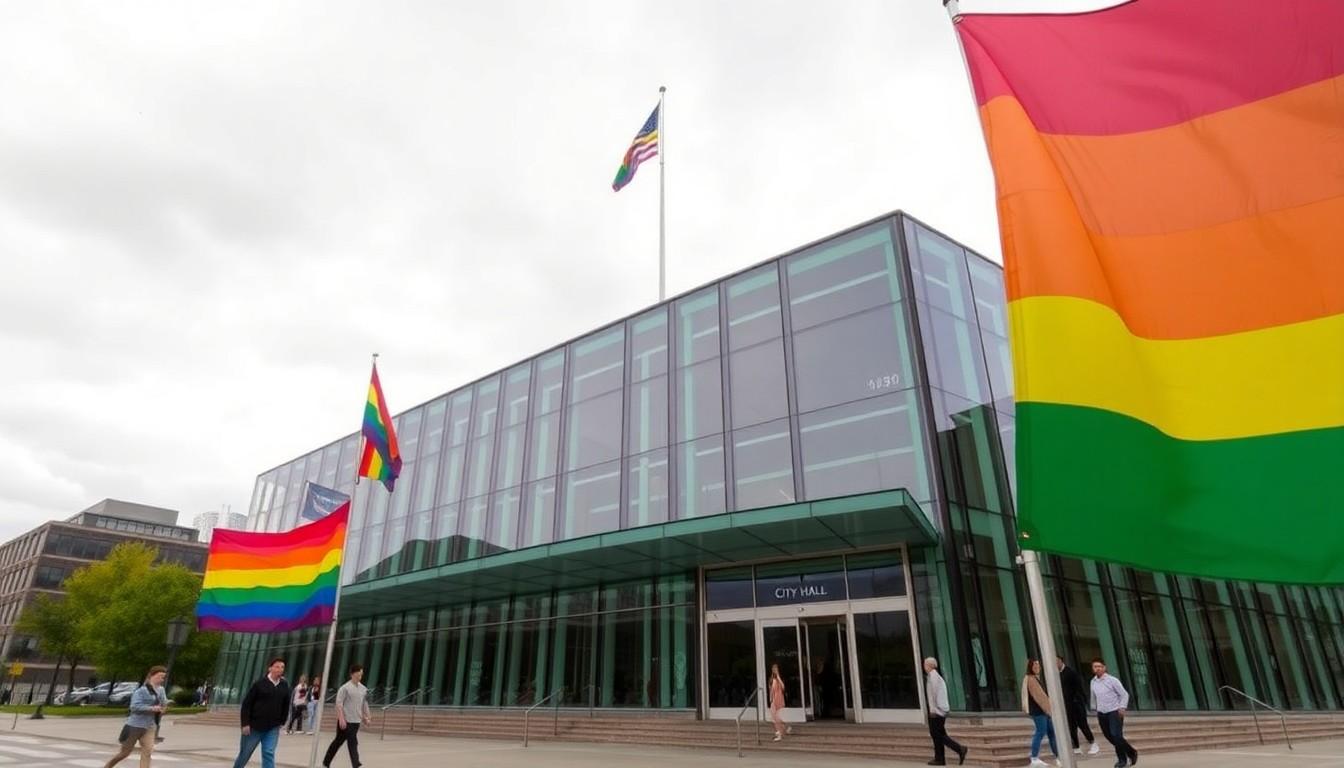
Seattle has approved a landmark measure protecting non-monogamous people, multigenerational households and a wider range of gender identities and sexual orientations. The city’s move, due to take effect in June 2027, reflects a growing push for local civil rights protections as family life and relationships become more diverse across the United States.
Essential Takeaways
- Seattle has acted: The city council approved protections covering non-monogamous residents and multigenerational households.
- The law starts later: The measure is scheduled to take effect in June 2027.
- A growing movement: Seattle becomes the 10th US city to adopt similar protections, according to The Guardian.
- Workplace discrimination matters: Supporters say the measure could help people challenge unfair treatment linked to their relationships or household structure.
- More cities are watching: Similar proposals are reportedly being considered in Baltimore, Denver, Los Angeles and San Francisco.
Seattle widens the definition of protected family life
Seattle’s new measure recognises that households don’t always fit the traditional two-parent model. Alongside protections for non-monogamous people, it covers multigenerational households and adds further gender identities and sexual orientations to the city’s protected classes.
That may sound like a technical change, but its impact could be very practical. For residents, the issue is often less about how a household looks on paper and more about whether someone can work, rent a home or access services without being penalised for their personal life.
The Guardian reported that Seattle is the 10th US city to introduce this kind of policy. Cambridge and Somerville in Massachusetts, along with Berkeley and Oakland in California, have already adopted comparable measures.
Why supporters say local protections matter
Advocates argue that city-level laws can offer a route to accountability when broader political protections feel uncertain. In other words, rights have more weight when people know where to report discrimination and how complaints might be handled.
Jessica Davis, a Seattle advocate and recent member of the Organization for Polyamory and Ethical Non-Monogamy, became involved after her partner allegedly faced workplace discrimination connected to her non-monogamous relationship. Speaking to The Guardian, Davis argued that the issue shouldn't be reduced to a partisan cultural battle.
That point is worth noting. Non-monogamous people aren't one political bloc, and the debate reaches beyond labels. At its heart, it's about whether employment, housing and public services should depend on fitting a familiar relationship template.
A broader shift in how cities define discrimination
Seattle's decision follows a wider expansion of local civil rights policies. Cities are increasingly considering discrimination linked not only to race, sex or disability, but also to family structure, gender identity and sexual orientation.
This reflects a changing social landscape. Multigenerational living has become more visible, while consensual non-monogamy is discussed more openly than it was a generation ago. Families may include grandparents, adult children, co-parents, close friends or several committed partners, and the paperwork doesn't always capture the reality.
For landlords, employers and service providers, the practical message is clear: assumptions about who counts as a family may need a rethink. A tidy-looking household form can conceal a much more complicated life, and real people rarely organise themselves as neatly as administrative boxes suggest.
What the measure could mean in everyday life
The new protections could matter most in ordinary situations, such as applying for a job, seeking accommodation or dealing with a public agency. If someone believes they've been treated unfairly because of a non-monogamous relationship or multigenerational household, the law may provide a clearer basis for seeking help once it takes effect.
Residents should still check the final city guidance before relying on the measure. Implementation details, complaint procedures and the precise definition of protected conduct will be important, particularly for people navigating employment or housing disputes.
For now, the timing gives organisations a chance to prepare. Employers and landlords can review policies, train staff and avoid intrusive questions about private relationships. That sounds basic, but a little administrative common sense can prevent a great deal of needless discomfort.
Seattle’s next chapter in inclusive rights
Seattle has a long record of expanding civil rights protections, and officials have framed the measure as part of that history. The city was also the first in the United States to vote to protect queer people's rights, according to the report.
Supporters say proposals are also being developed in Baltimore, Denver, Los Angeles and San Francisco. Whether those campaigns succeed will depend on local politics, public understanding and the details of each proposal.
Still, Seattle's vote sends a strong signal. The legal definition of family is slowly catching up with the way many people actually live, and that shift is likely to continue quietly, one city ordinance at a time.
It's a meaningful step towards making civil rights protections fit real modern households.
Source Reference Map
Story idea inspired by: [1]
Sources by paragraph:
- Paragraph 1: ,
- Paragraph 2: ,
- Paragraph 3: ,
- Paragraph 4: ,
- Paragraph 5: ,
- Paragraph 6: ,
- Paragraph 7: ,
- Paragraph 8: ,
- Paragraph 9: ,
- Paragraph 10: ,
- Paragraph 11: ,
- Paragraph 12: ,
- Paragraph 13: ,
- Paragraph 14: ,
- Paragraph 15: ,
- Paragraph 16: ,