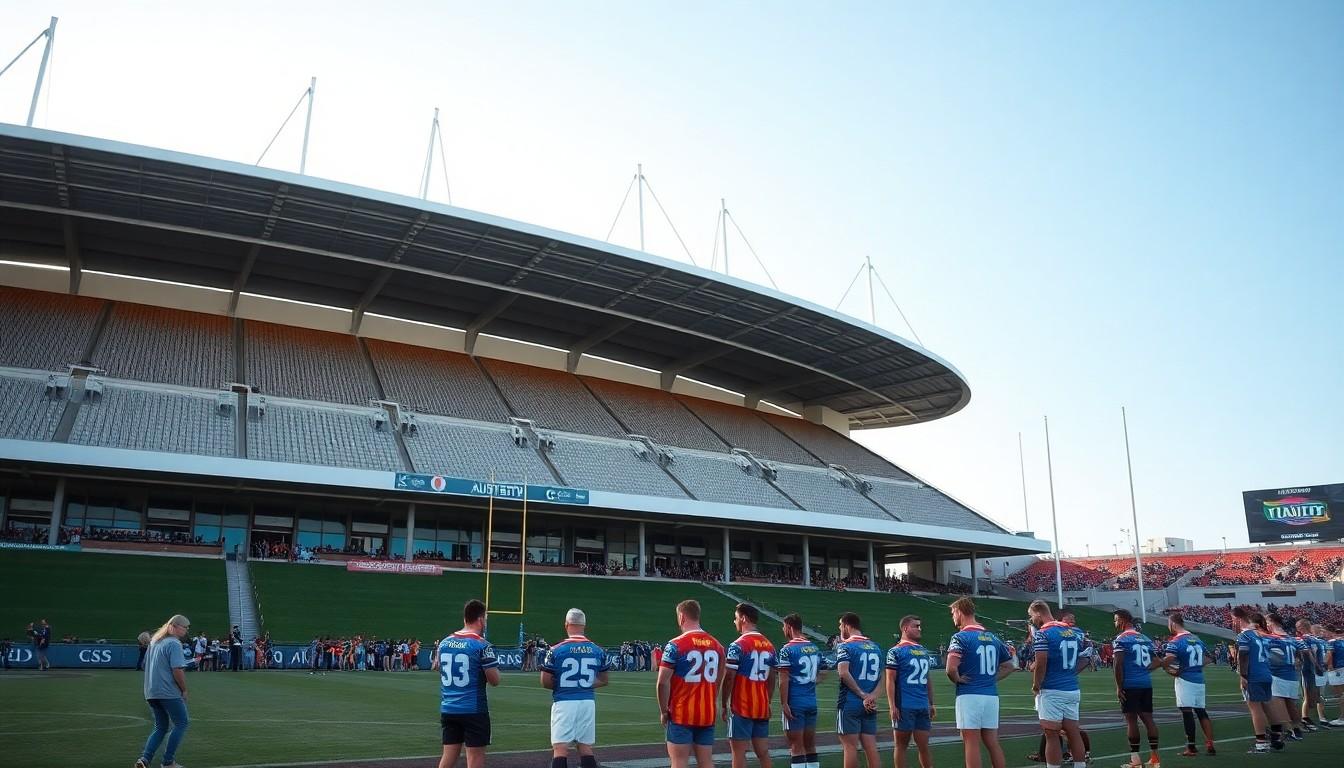
Viewers are turning to ANDY's provocative new music video, featuring former AFL player Mitch Brown and rugby trailblazer Ian Roberts, for a striking take on sport, sexuality and visibility. The Sydney-set visual matters because it puts a bisexual former footballer at the centre of a story that questions who gets to feel safe, seen and desired in sporting spaces.
Essential Takeaways
- A landmark appearance: Mitch Brown, the AFL's first publicly bisexual star, features alongside Ian Roberts.
- A deliberately provocative setting: The video reshapes familiar football and rugby imagery into queer fantasy.
- Sport meets pop: ANDY's track combines victory chants, sexual liberation and personal archive footage.
- A wider cultural question: The project asks what sporting spaces might become with more room for honest self-expression.
- A new era of visibility: Brown's appearance follows his public coming-out story and adds a creative dimension to it.
Mitch Brown brings sporting history into the spotlight
The most arresting thing about Can't Wait is the collision of familiar sporting rituals with imagery that refuses to stay safely coded. Sweat, bodies, locker-room energy and triumphant chants are all present, but the mood shifts from performance to desire.
Brown's role carries particular weight. His public identification as bisexual made headlines across Australia, with the AFL, the Guardian and ABC News reporting on his place in the league's history. Now, rather than being discussed only through the language of sport, he appears in a visual work that lets sexuality take up space on its own terms.
That makes the video feel less like a celebrity cameo and more like a continuation of a conversation. Visibility can be meaningful in a press interview, but it lands differently when someone occupies the frame with confidence, warmth and a little mischief.
Why ANDY turns rugby culture inside out
ANDY has linked the project to his upbringing in Manly, Sydney, and to the intensely masculine, Catholic all-boys environment around him. The artist describes a world where rough humour, physical closeness and homophobia could sit uncomfortably beside one another, creating a confusing mix of threat and fascination.
That tension gives the video its charge. Rather than presenting sport as simply hostile or simply erotic, Can't Wait plays with the uncomfortable overlap between the two. A locker room can be a place of belonging, but it can also teach young men what they must hide.
The result is knowingly theatrical. Viewers are offered the visual language they recognise, then encouraged to look again. It's a clever trick, and one that makes the song's central idea feel bigger than a single steamy video.
A queer football video built around release
The track was written during ANDY's own period of sexual liberation, and the artist has woven personal sexual material into a soundscape shaped by football celebrations. That contrast is central to the song's appeal: public victory and private longing share the same beat.
The video doesn't treat desire as something that needs a tidy explanation. Instead, it makes room for fantasy, awkwardness and pleasure, while asking what might happen if young people had genuine safety to explore who they are.
That question resonates beyond professional sport. The AFL's reporting on Brown's story, alongside coverage from the Sydney Morning Herald and Gay Times, shows how significant it remains when a public sporting figure speaks openly about bisexuality. ANDY's work adds colour, heat and a distinctly artistic provocation to that wider discussion.
Ian Roberts and Mitch Brown give the project extra weight
Ian Roberts' presence matters because he is a major figure in the history of LGBTQ+ visibility in Australian rugby. Pairing him with Brown creates a bridge between two sporting cultures that have often been defined by toughness, tradition and narrow ideas of masculinity.
Director Harry Welsh has said the pair gave the film the authority it needed. That feels right. Without their involvement, the video might risk being read as an outsider's fantasy about sport; with them, it has a stronger sense of lived experience and cultural memory.
There is humour here, but it isn't weightless. The performers understand the codes being played with, which lets the film push further. It can be cheeky, sensual and confrontational without losing sight of why representation still matters.
What this means for queer representation in sport
Brown's music-video appearance arrives at a moment when Australian sport is having a more open conversation about sexuality. Coverage from the Australian Football League, ABC News and The Straits Times has framed his coming out as a significant first, but the next challenge is making such moments feel less exceptional.
That means moving beyond the question of whether a player can come out and asking whether they can remain fully themselves afterwards. Can they flirt, perform, make art, be complicated and be visible without becoming a symbol first and a person second?
Can't Wait offers one possible answer. It's loud, sweaty and intentionally excessive, but that is part of its point. As ANDY prepares a nine-track EP for release in 2026, the video suggests that queer pop doesn't have to ask permission to enter the sporting arena.
Visibility is one thing. Taking over the whole field is another.
Explore the video as both pop spectacle and a bold argument for more open sporting spaces.
Source Reference Map
Story idea inspired by: [1]
Sources by paragraph:
- Paragraph 1: [2], [4]
- Paragraph 2: [3], [6]
- Paragraph 3: [5], [7]
- Paragraph 4: [2], [3]
- Paragraph 5: [4], [6]
- Paragraph 6: [5], [7]
- Paragraph 7: [2], [4]
- Paragraph 8: [3], [6]
- Paragraph 9: [5], [7]
- Paragraph 10: [2], [3]
- Paragraph 11: [4], [6]
- Paragraph 12: [5], [7]
- Paragraph 13: [2], [4]
- Paragraph 14: [3], [6]
- Paragraph 15: [5], [7]
- Paragraph 16: [2], [3]
- Paragraph 17: [4], [6]
- Paragraph 18: [5], [7]