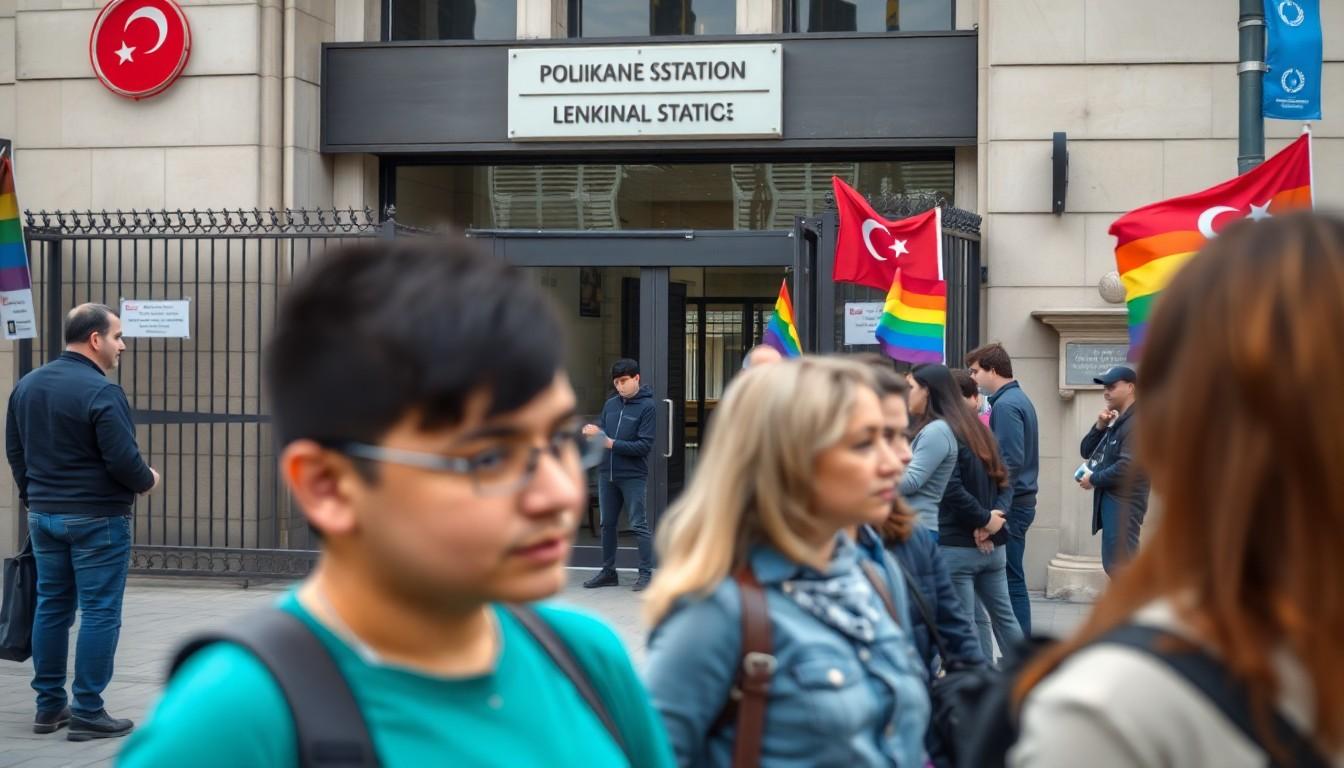
Rights groups are calling for the release of people detained during Turkey's latest LGBT+ crackdown, warning that arrests across several cities threaten freedom of expression, protest and association. The campaign has also renewed concern about prison conditions for trans detainees and the wider space available to queer organisations, journalists and families.
Essential Takeaways
- Rights groups object: Pembe Hayat describes the arrests as political intimidation rather than routine legal action.
- Detentions spread widely: Reports say people were detained in several cities, including protesters and observers outside courthouses.
- Prison safety is central: Advocates are particularly worried about the physical and mental wellbeing of trans prisoners.
- A wider network is affected: LGBT+ groups, feminist campaigners, journalists, families and allies have all been drawn into the dispute.
- Some movement has followed: Pembe Hayat reported the release of Kaos GL editor Yildiz Tar, although wider concerns remain.
A crackdown framed around ‘protecting the family’
The dispute centres on operations that began in mid-September and were presented by authorities through the language of family protection, according to reporting by Bianet. Pembe Hayat and KuirFest argue that this framing disguises a broader effort to restrict LGBT+ visibility and organised activism.
That claim has resonated well beyond Ankara. Euronews reported that 81 people were arrested in connection with LGBT+ operations, while 106 protesters were released. The figures suggest a campaign with consequences not just for named activists, but also for people who gathered outside streets and courthouses to show solidarity.
For those watching from outside Turkey, the human detail is easy to miss among the numbers: a protester waiting near a courthouse, a journalist trying to follow proceedings, or a family member seeking information. Those ordinary moments are where a legal dispute becomes a chilling public experience.
Why organisations say this is bigger than one case
Pembe Hayat says the operation has targeted LGBT+ people, rights defenders, feminists and queer communities in a coordinated way. Bianet reported the organisation's view that the arrests represent political pressure aimed at weakening collective action and mutual support.
The people named in the account include Kaos GL board members, trans activists, an LGBT+ parent and journalist Tuğba Tekerek. Pembe Hayat also linked the arrests to what it described as hostile allegations and smear campaigns, claims that should be assessed alongside official court records and statements from the relevant authorities.
Meanwhile, the case has become a test of how much room remains for civil society groups to organise openly. When activists, reporters and supporters are all exposed to detention while documenting events, the atmosphere can become quiet very quickly, even before any formal restriction is announced.
Prison conditions add an urgent layer
The safety of trans detainees is one of the most serious concerns raised by Pembe Hayat. The organisation said prison administrations and the Justice Ministry carry responsibility for protecting the physical and psychological wellbeing of trans prisoners and everyone else held in custody.
That issue matters because detention isn't experienced equally. Placement, access to healthcare, protection from violence and the ability to maintain contact with lawyers or family can all carry particular weight for trans people. Rights advocates say these safeguards must be treated as basic duties, not optional gestures.
The concern also explains why campaigners are pressing for more than a statement of solidarity. They want transparent information about detention conditions, proper legal access and an end to treatment that could expose prisoners to additional risk.
A release offers relief, but not resolution
Pembe Hayat reported that Yildiz Tar, Kaos GL's editor-in-chief, was released. That development offers a measure of relief, but it doesn't settle the wider questions surrounding the arrests or the people still in custody.
Euronews' account of the wider operation points to a striking gap between those detained and those later released. For families, that uncertainty can be exhausting: a release may arrive suddenly, while information about others remains hard to obtain.
The response from LGBT+ organisations has therefore remained collective. Pembe Hayat says it stands with Kaos GL, trans activists, families, journalists and those detained during protests, arguing that public attention is essential while legal proceedings continue.
What happens next?
The immediate focus is likely to remain on court decisions, detention conditions and whether further releases follow. Bianet's coverage places the arrests within a wider pattern of pressure on LGBT+ organising, while Pembe Hayat's own updates show how quickly the situation can change from one hearing to the next.
For readers trying to follow developments responsibly, the best approach is to distinguish confirmed court outcomes from advocacy groups' allegations, and to look for updates from several established outlets. In a politically charged case, careful wording matters, especially when a person's liberty and safety are involved.
There is also a broader question hanging over the story. If defending a community, reporting from a protest or simply standing outside a courthouse becomes grounds for detention, then the impact reaches far beyond LGBT+ organisations. It touches the everyday freedoms that allow any civil society movement to function.
The coming weeks will show whether the arrests lead to further legal action or a wider pushback from rights groups. For now, campaigners are insisting that visibility and solidarity must not be treated as crimes.
It's a small but vital distinction: protecting families should never mean putting an entire community at risk.
Source Reference Map
Story idea inspired by: [1]
Sources by paragraph:
- Paragraph 1: [2], [3]
- Paragraph 2: [3], [5]
- Paragraph 3: [2], [3]
- Paragraph 4: [3], [6]
- Paragraph 5: [2], [3]
- Paragraph 6: [3], [5]
- Paragraph 7: [3], [6]
- Paragraph 8: [4], [6]
- Paragraph 9: [2], [4]
- Paragraph 10: [2], [3]
- Paragraph 11: [3], [6]
- Paragraph 12: [2], [3]
- Paragraph 13: [3], [5]
- Paragraph 14: [4], [6]
- Paragraph 15: [2], [3]
- Paragraph 16: [3], [6]
- Paragraph 17: [2], [3]
- Paragraph 18: [3], [5]