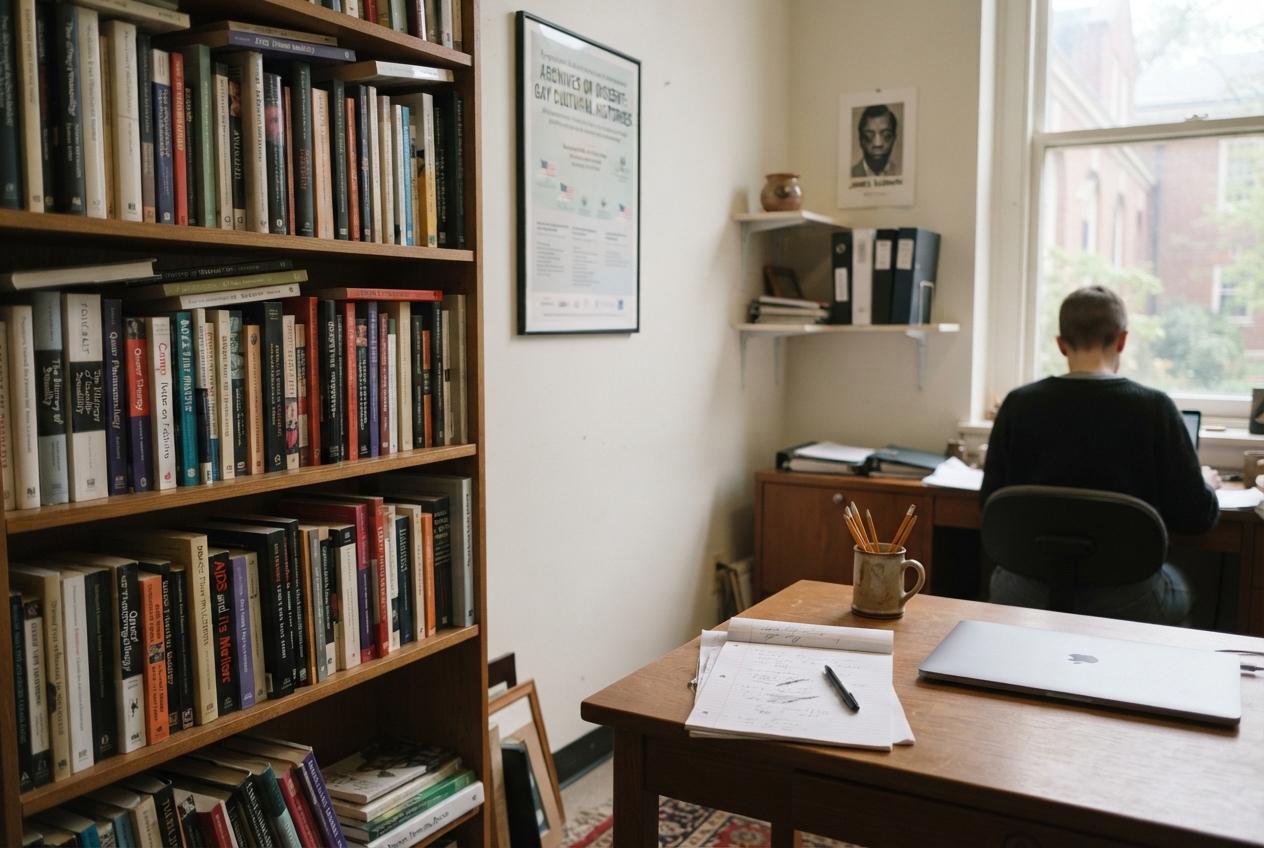
Readers exploring The Closet Professor will find a personal archive of LGBTQ+ history, art, literature, politics and culture, presented with an inclusive spirit and occasional mature imagery. The blog’s broad remit makes it a useful stop for anyone interested in how queer stories, visual art and historical perspectives meet online.
Essential Takeaways
- Broad subject range: The blog covers LGBTQ+ history, art, literature, politics and culture.
- Personal editorial voice: Posts reflect the author’s changing interests rather than a tightly fixed news agenda.
- Mature content notice: Some entries include non-sexual nude photography or artwork.
- Inclusive approach: The site aims to welcome mature readers while acknowledging that not every image suits every visitor.
- Image provenance matters: Much of the visual material comes from elsewhere, with a stated process for handling copyright concerns.
A blog that refuses to stay in one lane
The Closet Professor is best understood as a wide-ranging queer studies blog rather than a single-topic publication. One day, a reader might encounter historical research; another post may turn towards literature, politics, visual culture or a more personal cultural reflection. That variety gives the site an archive-like feel, with discovery often being part of the appeal.
The blog’s own description makes that openness clear. Its author writes about LGBTQ+ subjects and follows whatever topic feels compelling at the time, creating a looser, more conversational alternative to a conventional academic journal. It’s less a syllabus than a well-stocked reading room, with plenty of unexpected shelves. [2] [4]
Why the visual material comes with a warning
Some posts use nude photographs or artwork as illustrations. The published guidance stresses that these images are not depictions of sexual acts, but it still asks younger readers and anyone uncomfortable with nudity to leave the page. That straightforward warning helps visitors decide whether the material is right for them before they continue.
For adult readers, the context is important. The imagery sits alongside discussions of history, gay culture and art, rather than being presented as the sole attraction. Still, the notice is a useful reminder that online cultural archives can move between scholarship, aesthetics and mature subject matter in the same space. [1] [3]
More than a catalogue of queer culture
The blog’s appeal lies in the connections between its subjects. LGBTQ+ history can illuminate political change, literature can reveal shifting ideas of identity, and art can preserve experiences that formal records have overlooked. Those links make the site relevant to readers who want cultural context, not simply a stream of isolated posts.
That breadth also reflects how many people now explore queer history. Instead of beginning with one textbook or institution, readers often follow a chain of images, essays, references and personal commentary. The Closet Professor fits neatly into that browsing habit, offering a route through topics that might otherwise feel scattered or difficult to find. [4] [5]
A useful archive for curious readers
New visitors may find the blog easier to navigate by treating it as an archive rather than expecting a single continuous storyline. Browsing older pages can reveal recurring interests, while searching by subject may help readers move from a striking image to the historical or cultural background behind it.
It’s also worth approaching the visual material with the same care as any online collection. Check the content warning, consider the surrounding context and remember that reproduced images may have different rights holders. The author says images are gathered from various sources and invites copyright owners to request removal, which is a practical, if informal, approach to managing a large visual archive. [1] [6]
Why this kind of independent blog still matters
Independent blogs can preserve a more personal and exploratory style than larger media outlets. They allow one writer to connect overlooked histories, artistic references and contemporary questions without waiting for each subject to fit a rigid category. That freedom can produce uneven browsing, but it can also lead readers towards material they wouldn’t have found through a standard search.
For anyone looking for LGBTQ+ history, gay culture and queer art in one place, The Closet Professor offers a distinctly personal starting point. It won’t replace a library or specialist archive, but it can open the door to both. Sometimes that first unexpected post is enough to send a reader down a very rewarding rabbit hole. [2] [7]
Explore the archive thoughtfully, and let curiosity lead the way.
Source Reference Map
Story idea inspired by: [1]
Sources by paragraph: