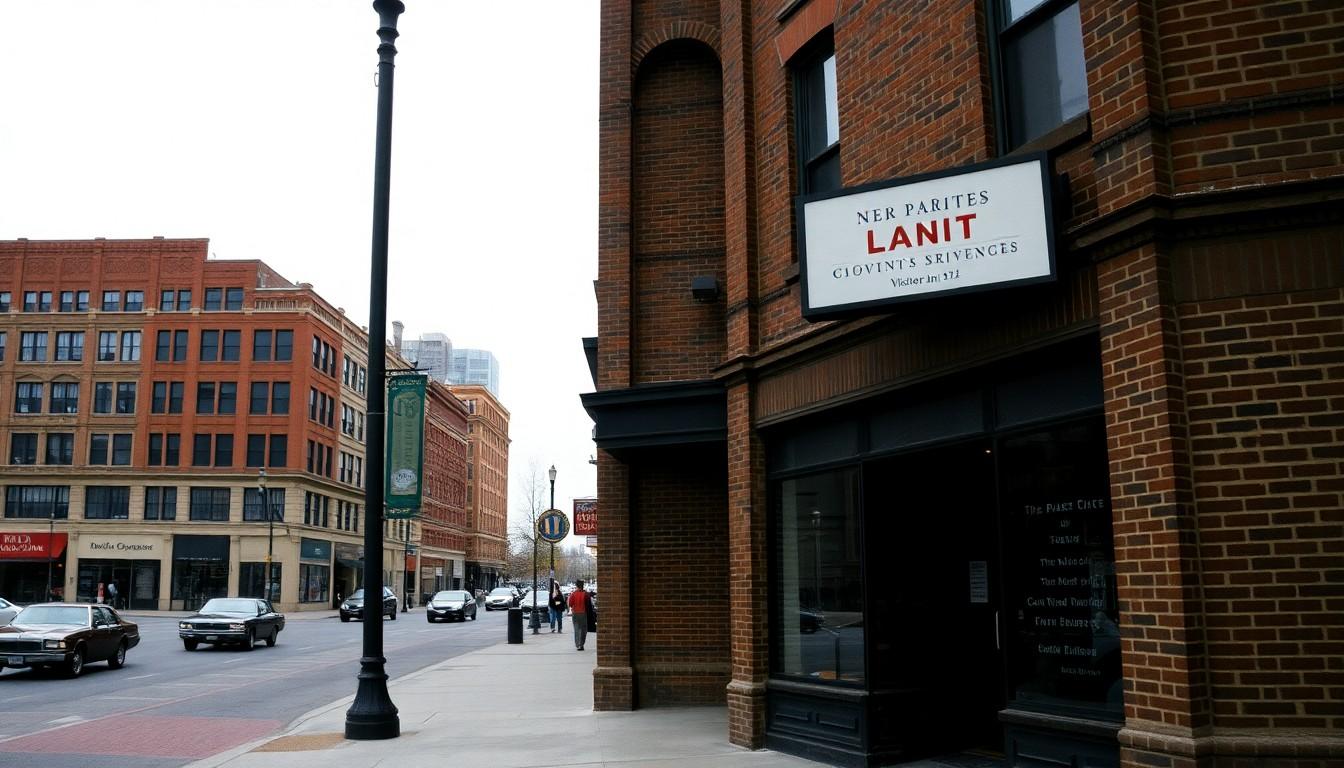
Readers are discovering Cincinnati’s queer history through Jacob Hogue’s new book, Cincinnati Before Stonewall, a deeply researched account of LGBTQ+ life from the Civil War to the late 1960s. By piecing together newspaper archives, medical texts, interviews and coded language, Hogue brings overlooked people and stories into focus.
Essential Takeaways
- A missing history: The book traces Cincinnati’s LGBTQ+ communities before the Stonewall uprising and modern gay-rights movement.
- Research meant decoding: Hogue studied hostile historical terms, newspaper reports, medical writing and “lavender” listings.
- Pain alongside resilience: The stories include cruelty and tragedy, but also humour, community and moments of resistance.
- Activism takes shape: The book closes as organised queer activism begins to emerge.
- More history is coming: Hogue is already researching a follow-up covering Cincinnati after Stonewall.
Cincinnati’s queer past didn’t begin in the 1970s
For years, Cincinnati’s queer history appeared to have a conspicuous blank space. Jacob Hogue wanted to understand what came before the city’s better-known modern LGBTQ+ activism, and his research quickly showed that queer people hadn’t suddenly appeared in the 1970s. Their lives had simply been poorly recorded, mislabelled or ignored.
That gap became the foundation for Cincinnati Before Stonewall: The Untold Queer History of the Queen City. Published by Arcadia Publishing, the book follows LGBTQ+ life in Cincinnati from the Civil War through to the late 1960s, according to the book’s publisher information and coverage from Cincinnati Magazine.
Hogue first imagined creating a podcast about friends and local history. Instead, the project grew into a five-year investigation. It’s the sort of shift familiar to anyone who starts pulling at one loose historical thread and finds an entire, quietly buried tapestry behind it.
Why old newspapers required a new vocabulary
Researching queer lives from periods when same-sex relationships and gender nonconformity were criminalised demanded more than ordinary keyword searches. Hogue had to learn the coded, frequently cruel language used by newspapers, courts and institutions to describe people who were rarely treated with sympathy.
His sources included digitised newspaper archives, medical textbooks, interviews and directories known as lavender listings. Historical phrases relating to cross-dressing, homosexuality and gender expression often appeared in place of modern terminology, making the search both painstaking and emotionally difficult.
According to the interviews and discussions surrounding the book, Hogue found that newspapers were constrained by obscenity laws and social prejudice. The result was reporting that portrayed queer people as scandals, curiosities or threats rather than neighbours with ordinary lives.
The human cost behind the headlines
Some of the book’s most difficult material concerns the way newspapers turned queer suffering into sensational stories. One chapter examines a double suicide that was reported through the bizarre claim that one boy had hypnotised the other, rather than through any meaningful attempt to understand the circumstances.
That kind of reporting reflected a wider pattern. Queer people were often introduced to the public only when something had gone terribly wrong, creating the impression that tragedy was an essential part of their existence. Hogue’s research shows how these accounts distorted both individual lives and the public record.
Still, the book isn’t unrelentingly bleak. Hogue deliberately includes lighter stories and moments of humour, partly because the surviving record contains so much dehumanising material. Those details matter: they allow historical figures to appear as whole people, not merely as victims in old newsprint.
What Cincinnati Before Stonewall adds to queer history
The book’s importance lies in its local focus. National LGBTQ+ history often centres on major cities and famous turning points, but queer communities existed in smaller and mid-sized American cities long before they received widespread attention.
By concentrating on Cincinnati, Hogue makes that broader history tangible. Streets, institutions, newspapers and social networks become part of the story, helping readers see how national laws and attitudes affected daily life close to home. CityBeat and other local coverage have highlighted the book as an effort to document a side of Cincinnati’s past that has too often been left out.
It also challenges the idea that Stonewall was a starting point. The 1969 uprising was a landmark, but activism, friendship networks and private acts of resistance had already been developing for decades. The book ends as organised activism begins to take clearer form, creating a natural bridge to the next chapter.
A history still being written
Hogue’s work with Cincinnati Pride and his Queen City Queer History project reflects a growing appetite for local LGBTQ+ history. Social media, community archives and independent research are helping uncover stories that formal institutions once overlooked.
The timing feels significant. As Urania Institute’s book coverage notes, preserving these accounts matters because memories, records and firsthand witnesses don’t last indefinitely. Every recovered name or anecdote can make the historical picture a little more complete.
Hogue is already working on a post-Stonewall follow-up. That continuation is welcome, because Cincinnati’s queer story didn’t end when activism became more visible. It simply entered a new, more documented and still contested phase.
A fuller past makes the present easier to understand, and Cincinnati’s queer history deserves to be seen in all its complexity.
Source Reference Map
Story idea inspired by: [1]
Sources by paragraph:
- Paragraph 1: [3], [4]
- Paragraph 2: [5], [6]
- Paragraph 3: [2], [3]
- Paragraph 4: [4], [5]
- Paragraph 5: [2], [3]
- Paragraph 6: [4], [6]
- Paragraph 7: [2], [3]
- Paragraph 8: [4], [5]
- Paragraph 9: [3], [6]
- Paragraph 10: [2], [4]
- Paragraph 11: [5], [6]
- Paragraph 12: [3], [4]
- Paragraph 13: [2], [6]
- Paragraph 14: [3], [5]
- Paragraph 15: [4], [6]